
Every British personal trainer knows the challenge of standing out in a crowded fitness market. Defining your ideal client is more than a buzzword; it is the foundation of smart, focused marketing that attracts clients who truly value your expertise. By building a detailed client profile, you save time, grow revenue, and create authentic connections with Londoners ready to commit to their fitness journey. This guide will show you how strategic content marketing transforms client acquisition and deepens engagement.
Table of Contents
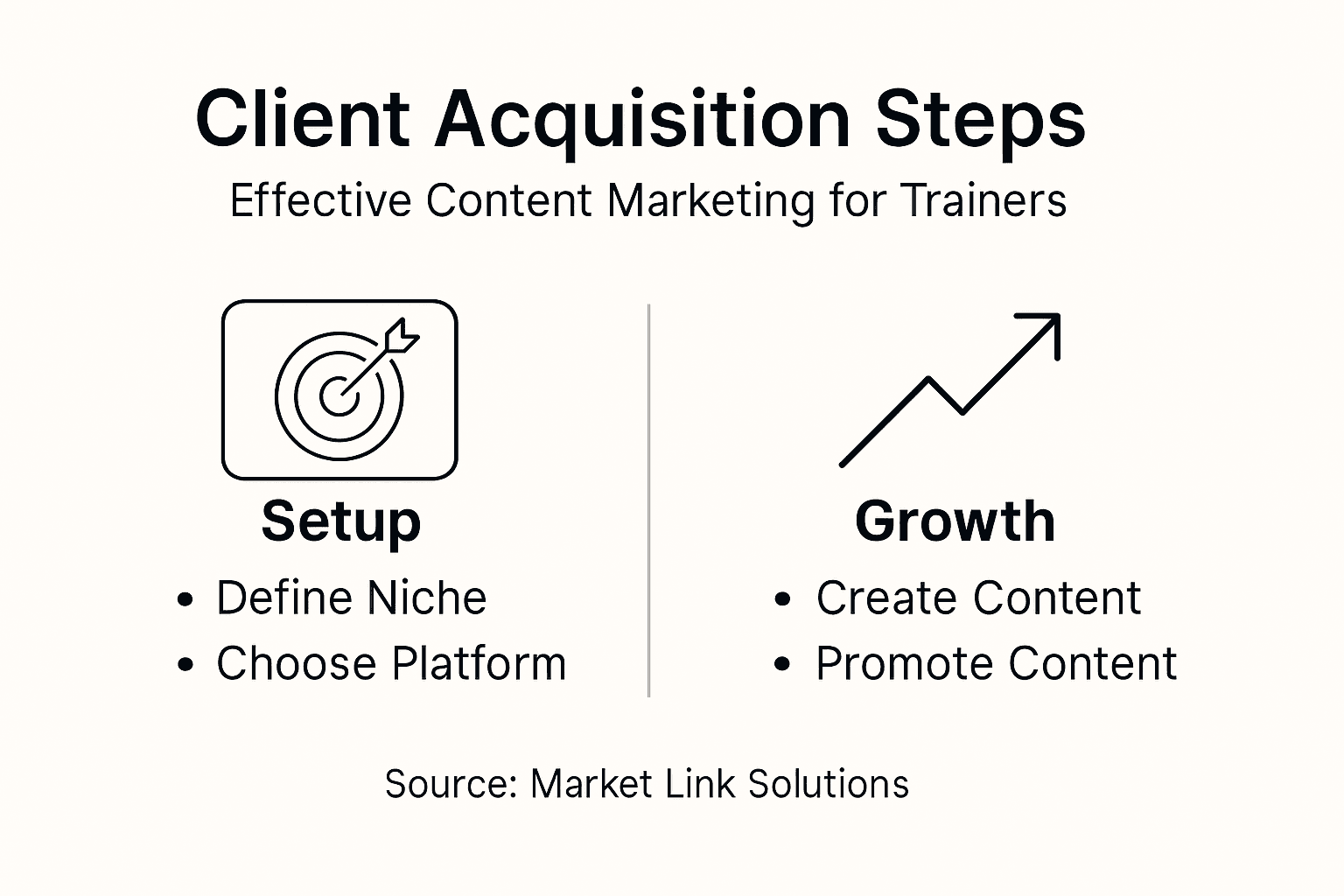
- Step 1: Define Your Ideal Client And Niche
- Step 2: Set Up Your Content Platforms Effectively
- Step 3: Craft Compelling Fitness And Wellness Content
- Step 4: Promote Your Content For Maximum Reach
- Step 5: Measure Results And Refine Your Strategy
Quick Summary
| Key Message | Explanation |
|---|---|
| 1. Define Your Ideal Client | Create a detailed profile of your best clients to target marketing effectively. Understand their demographics, fitness goals, and motivations. |
| 2. Set Up Effective Platforms | Choose user-friendly content platforms that align with your niche to enhance client engagement and streamline service delivery. |
| 3. Develop Targeted Content | Create diverse content that educates, inspires, and addresses your clients’ unique challenges and aspirations, beyond basic fitness advice. |
| 4. Promote Across Multiple Channels | Use a strategic multi-channel approach for content promotion, including social media, SEO, and email marketing to maximise reach. |
| 5. Measure and Refine Strategy | Regularly analyse performance metrics to identify trends and improve your marketing strategy based on what resonates with your audience. |
Step 1: Define your ideal client and niche
Knowing precisely who your ideal client is forms the foundation of effective fitness marketing. By creating a detailed client profile, you’ll transform your marketing from scattered attempts to a laser-focused strategy that attracts exactly the right people.
To build this profile, start by examining your existing customer data. Look for common characteristics among your most successful and enjoyable client relationships. Consider these key dimensions:
- Demographics: Age range, gender, professional background
- Fitness Goals: Weight loss, muscle gain, rehabilitation, athletic performance
- Lifestyle Factors: Work schedule, income level, fitness commitment
- Psychological Triggers: Motivation style, personal challenges, aspirations
The magic happens when you understand not just who your clients are, but what drives them. A corporate professional seeking efficient 30-minute workouts will have radically different needs from a competitive athlete training for marathons.

To help differentiate common fitness client types, see the comparison below:
| Client Type | Key Motivation | Typical Challenges | Preferred Approach |
|---|---|---|---|
| Corporate Professional | Efficiency and time-saving | Limited availability | Short, high-impact sessions |
| Rehabilitation Client | Regaining mobility/health | Injury or health issues | Gentle, phased workouts |
| Competitive Athlete | Performance improvement | Plateauing progress | Advanced, tailored programmes |
| Lifestyle Changer | Wellbeing and longevity | Maintaining motivation | Regular check-ins, accountability |
Crafting an ideal client profile saves time, increases revenue, and ensures you work with clients who genuinely value your expertise.
Once you’ve mapped out these characteristics, create a vivid narrative about your perfect client. Give them a name, imagine their daily routine, and understand their deepest fitness ambitions. This isn’t just an exercise – it’s a strategic roadmap for targeted marketing.
Professional Insight: Interview 5-10 of your best current clients to uncover hidden insights about what truly motivates them beyond surface-level fitness goals.
Step 2: Set up your content platforms effectively
Creating a robust digital presence requires strategically selecting and configuring your content platforms. Your goal is to establish channels that not only showcase your fitness expertise but also make connecting with potential clients seamless and engaging.
Start by evaluating online training platforms that offer comprehensive features for content delivery and client interaction. Consider platforms that provide multiple functionalities such as:
- Video hosting for workout tutorials
- Scheduling systems for booking consultations
- Payment integration for programme purchases
- Communication tools for client engagement
- Analytics dashboards to track content performance
When selecting your platforms, prioritise those that align with your specific training niche and target audience. A platform perfect for group fitness might differ dramatically from one ideal for personalised rehabilitation training.
The right digital infrastructure transforms your fitness business from a local service to a potential global brand.
Ensure your chosen platforms offer user-friendly interfaces that reflect your professional brand. Integrate them seamlessly to create a cohesive client experience that feels intuitive and professional.
The following table summarises core platform features and their potential business impact:
| Platform Feature | Benefit to Fitness Professionals | Impact on Client Experience |
|---|---|---|
| Video Hosting | Displays expertise through visuals | Enables self-paced learning |
| Scheduling Integration | Streamlines bookings and reduces admin | Increases ease of access |
| Analytics Dashboard | Data-driven marketing improvements | Content better tailored to needs |
| Communication Tools | Enhances client retention | Promotes real-time engagement |
Professional Insight: Test each platform thoroughly before full implementation, asking current clients to provide feedback on usability and accessibility.
Step 3: Craft compelling fitness and wellness content
Transforming your expertise into engaging content requires a strategic approach that goes beyond generic fitness advice. Developing targeted content strategies will help you create materials that genuinely resonate with your ideal clients.
Your content strategy should encompass multiple dimensions that showcase your professional insight:
- Educational value: Provide actionable fitness and nutrition guidance
- Personal storytelling: Share transformative client success narratives
- Technical expertise: Demonstrate depth of professional knowledge
- Emotional connection: Address client anxieties and aspirations
- Practical solutions: Offer clear, implementable fitness strategies
Understanding your audience goes far beyond basic demographics. Dive deep into their psychological landscape – their fears, motivations, and unspoken challenges. A rehabilitation client seeking recovery will have dramatically different content needs compared to an athlete targeting peak performance.
Effective content marketing speaks directly to the individual’s unique fitness journey, not just their external goals.
Ensure your content maintains a consistent tone that balances professional credibility with genuine empathy. Mix scientific insights with relatable, human-centred narratives that inspire and motivate your audience.
Professional Insight: Create a content calendar that alternates between educational deep-dives and inspirational client transformation stories to maintain audience engagement.
Step 4: Promote your content for maximum reach
Expanding your fitness content’s visibility requires a multi-channel approach that strategically targets potential clients where they naturally spend their time. Meta platforms offer powerful advertising solutions that can dramatically amplify your professional reach.
Your content promotion strategy should incorporate several key channels:
- Social media platforms: Instagram, Facebook, LinkedIn
- Search engine optimisation: Target fitness-related keywords
- Email marketing: Regular newsletter with valuable content
- Paid advertising: Targeted campaigns with clear objectives
- Networking: Professional fitness and wellness forums
Each promotional channel demands a nuanced approach. Instagram might require visually compelling workout snippets, while LinkedIn could feature more in-depth professional insights about training methodologies and client transformations.
Effective content promotion is about reaching the right audience with the right message at the right time.
Track your content’s performance meticulously. Use analytics to understand which types of posts generate the most engagement, and continuously refine your approach based on real data and audience feedback.
Professional Insight: Allocate 20% of your time creating content and 80% strategically promoting it across multiple channels to maximise visibility and client acquisition.
Step 5: Measure results and refine your strategy
Transforming your content marketing from guesswork to precision requires systematic tracking and intelligent analysis. Content marketing measurement frameworks provide the critical tools for understanding your true performance and driving strategic improvements.
Your measurement approach should focus on key performance indicators that genuinely reflect business growth:
- Engagement metrics: Likes, comments, shares
- Conversion rates: Client inquiries and programme sign-ups
- Website traffic: Unique visitors and time spent on content
- Client acquisition cost: Investment versus new client revenue
- Retention rates: Long-term client relationships
Don’t just collect data – interpret it strategically. Look beyond surface-level numbers to understand underlying patterns and client behaviours. A low engagement post might reveal more about audience preferences than a viral one.
Effective measurement transforms raw data into actionable insights that continuously improve your marketing strategy.
Regularly schedule monthly or quarterly reviews to assess your content’s performance. Be prepared to pivot quickly, experimenting with different content formats, messaging approaches, and promotional channels based on your analytical findings.
Professional Insight: Implement a quarterly content audit, comparing performance metrics against your initial goals and documenting specific learnings to inform future strategy.
Elevate Your Fitness Content Marketing with Proven Digital Strategies
Struggling to convert your hard-earned content into new clients You are not alone Many trainers face challenges like limited visibility and inefficient promotion that hold back their growth This article highlighted essential steps including defining your ideal client niche and promoting content strategically With so many moving parts it can be overwhelming to manage without expert support
At Market Link Solutions we specialise in helping small businesses across London overcome these hurdles through tailored Web Design and Development that captures your brand and powerful PPC Advertising and SEO Optimisation to get your content noticed Our approach transforms your fitness expertise into clear client acquisition results backed by data and creativity Check out our Success Stories Archives – Digital Marketing Agency – Market Link Solutions to see how we helped trainers like you boost online presence and grow rapidly
Ready to stop guessing and start growing Partner with Market Link Solutions today for a custom content marketing strategy that connects you with your ideal fitness clients Visit our website and take the first step toward making your expertise impossible to ignore.
Frequently Asked Questions
How can I define my ideal client for fitness marketing?
To define your ideal client, start with a detailed client profile that includes demographics, fitness goals, lifestyle factors, and psychological triggers. Analyse your existing customer data and create a vivid narrative about your perfect client to focus your marketing strategies effectively.
What platforms should I choose for my fitness content marketing?
Select content platforms that include video hosting, scheduling systems, and communication tools to reach potential clients effectively. Evaluate their user-friendliness and ensure they align with your training niche for a seamless client experience.
How can I create engaging fitness content that attracts clients?
Develop content that provides educational value, personal storytelling, and practical solutions tailored to your audience’s motivations and challenges. Create a content calendar that mixes different types of content, such as educational deep-dives and inspirational success stories, to maintain audience engagement.
What methods can I use to promote my fitness content?
Utilise a multi-channel approach to promote your content, including social media platforms, email marketing, and paid advertising. Focus on delivering the right message to the right audience at the right time to expand your reach effectively.
How do I measure the success of my content marketing efforts?
Track key performance indicators like engagement metrics, conversion rates, and client acquisition costs to evaluate your content’s effectiveness. Conduct regular reviews—monthly or quarterly—to identify patterns and adjust your strategy for improved results.
What is the best way to refine my content marketing strategy?
Refine your strategy by interpreting the data collected through your measurement methods. Schedule quarterly content audits to compare performance metrics against your goals, identifying specific learnings to inform future content and marketing strategies.
Recommended
- Digital Marketing for Personal Trainers: Expert Guide – Digital Marketing Agency – Market Link Solutions
- SEO for Personal Trainers: London Success Blueprint
- Personal Trainer SEO Guide for Increased London Clients
- How Market Link Transformed Ray Conway’s Online Presence: A Success Story – Digital Marketing Agency – Market Link Solutions
- How to Optimize Workout Nutrition for Peak Results – MyGymSupplements