
Many London restaurant and aesthetics clinic owners believe digital branding is just a logo or a splash of colour, yet that view misses the heart of what makes a business memorable online. In a city where customers search and compare instantly, your online presence acts as your public face and voice at every touchpoint. Building a consistent visual and messaging identity is the fastest way to earn trust, attract more bookings, and set your business apart in London’s crowded local market.
Table of Contents
- Digital Branding Defined And Common Myths
- Key Types Of Digital Branding Channels
- Core Elements Of A Strong Digital Brand
- Benefits For London Small Businesses
- Risks, Mistakes, And Practical Solutions
Key Takeaways
| Point | Details |
|---|---|
| Digital Branding is Essential | Small businesses must establish a strong digital brand to compete effectively in crowded markets like London. Consistent branding leads to recognition and trust among customers. |
| Ongoing Maintenance is Crucial | Digital branding requires continual updates and monitoring across all platforms to remain relevant and accurate. Regular audits help maintain brand consistency. |
| Customer Engagement is Key | Engaging with customer reviews, both positive and negative, is vital for building credibility and trust. Prompt responses demonstrate a commitment to customer experience. |
| Coherent Messaging Drives Success | Clear and consistent messaging across all channels reinforces your brand identity and helps attract the right customers. Ensure all communications align with your brand values. |
Digital branding defined and common myths
Digital branding is far more than a logo or a colour scheme. It’s the complete collection of how your restaurant or aesthetics clinic presents itself across every online platform your customers encounter. Think of it as your business’s personality living on the internet. From your website’s design and tone of voice to the images you post on Instagram, the reviews you respond to on Google, and even the emails you send to customers, all of these elements combine to create a single, recognisable identity. When done well, consistent visual and messaging identity builds trust and makes customers immediately recognise your business, whether they’re scrolling through social media or searching for “best Italian restaurant in Shoreditch” or “aesthetic treatments near Canary Wharf.”
Now, here’s where the myths start to crumble. The first major misconception is that digital branding only matters for large corporations with massive budgets. This couldn’t be further from the truth. In fact, small businesses benefit even more from strong digital branding because you’re competing directly with larger chains and need to stand out in a crowded local market. A boutique restaurant in Mayfair with a carefully crafted brand identity can absolutely compete with a chain establishment if customers feel a genuine connection to your story and values. The second myth is that branding is purely about aesthetics. Many business owners assume it’s just picking nice colours or a pretty font. Reality check: branding is about the entire experience. It includes how quickly your website loads, whether your team responds professionally to negative reviews, whether your messaging feels authentic, and whether customers can easily book a table or appointment online. An aesthetics clinic with stunning photography but a confusing website and slow customer service will damage its brand reputation faster than you’d expect.
Another common myth is that once you’ve created a brand, the work is done. Digital branding is not a one-time project. It requires consistent maintenance and evolution. Your competitors are constantly improving their online presence, and customer expectations shift over time. This is why many London restaurant owners and aesthetics practitioners benefit from working with a partner who understands the full picture. Effective digital branding connects directly to measurable business outcomes, whether that’s more footfall through your door or bookings for treatments. When your branding is clear, consistent, and strategically optimised across your website, Google Business Profile, and social channels, it naturally performs better in search results and drives higher-quality customer inquiries.
Pro tip: Start by auditing your current digital presence across every platform where customers might find you (your website, Google Business Profile, Instagram, Facebook, and review sites). Write down exactly how you’re presenting yourself on each one. If the messaging, tone, or visual style feels inconsistent across these channels, that’s your first opportunity to strengthen your brand identity.
Key types of digital branding channels
Your digital branding strategy needs to live across multiple channels, and each one plays a distinct role in how customers perceive your business. The main digital branding channels for restaurants and aesthetics clinics in London include your website, social media platforms, Google Business Profile, email marketing, and review sites. Your website serves as your digital headquarters. It’s where customers go to learn about you, browse menus or treatment options, check prices, and most importantly, book a table or appointment. Consistent use of brand elements such as colour palette, typography, and logos across all these channels builds recognition and trust with your audience. Social media platforms like Instagram, Facebook, and TikTok are where you build community and showcase your personality. For a Shoreditch restaurant, Instagram is where you post food photography that makes people hungry. For an aesthetics clinic in Knightsbridge, it’s where before and after photos build credibility. Google Business Profile is the channel most people overlook despite its critical importance. When someone searches “Italian restaurant near me” or “best Botox clinic London,” your Google Business Profile is often the first thing they see. It’s where reviews live, where your hours and location appear, and where customers can book directly.
Email marketing deserves special attention because it’s one of the most cost-effective channels for customer retention. You’re sending messages directly to people who have already chosen to hear from you, whether that’s reservation confirmations, treatment reminders, or special offers. Review platforms like Google Reviews, TripAdvisor, and Trustpilot function as branding channels too, even though you’re not actively controlling the content. How you respond to both positive and negative reviews shapes your brand perception significantly. Choosing the right channels requires understanding which platforms your specific audience actually uses. A fine dining restaurant might prioritise Instagram and their website, whilst a beauty clinic might also invest heavily in TikTok to reach younger customers. The goal isn’t to be everywhere. The goal is to be consistently present on the channels where your customers actually spend their time.
What ties all these channels together is consistency. Your brand voice, visual identity, and messaging should feel familiar whether a customer is reading your website, scrolling your Instagram, or checking your Google Business Profile. This doesn’t mean cookie-cutter sameness. Your email tone might be warmer than your website copy, and your TikTok might be more playful than your Google Business Profile. But the core of who you are should shine through everywhere. Many small business owners try managing all these channels alone and end up with inconsistent messaging, outdated information on one platform whilst another is current, and burnt out from the constant juggling. This is precisely why channel selection should consider your capacity and which platforms deliver the highest return for your specific business.
Pro tip: Create a simple audit spreadsheet listing every digital channel where your business appears (website, Google Business Profile, Instagram, Facebook, TikTok, email, review sites). Note when each was last updated and whether the branding (colours, tone, photos, business description) matches across all platforms. This gives you a clear roadmap for bringing everything into alignment.
Here is a comparison of major digital branding channels and how each supports business growth for restaurants and aesthetics clinics:
| Channel | Main Role | Typical Content | Business Impact |
|---|---|---|---|
| Website | Acts as digital headquarters | Menus, bios, booking forms | Drives bookings and conversions |
| Social Media (e.g., Instagram) | Builds brand personality and community | Images, stories, customer posts | Boosts engagement and awareness |
| Google Business Profile | Local search visibility and instant info | Reviews, hours, location | Attracts nearby, high-intent customers |
| Email Marketing | Retains and nurtures existing customers | Offers, reminders, updates | Increases loyalty and repeat visits |
| Review Sites | Manages reputation and credibility | Customer feedback | Builds trust and influences decisions |
Core elements of a strong digital brand
A strong digital brand rests on several foundational elements that work together to create a recognisable and trustworthy presence. The first pillar is visual identity. This includes your colour palette, typography, logo design, and imagery style. These visual elements should be instantly recognisable to your customers. When someone sees your restaurant’s deep burgundy and gold colour scheme on Instagram, they should immediately know it’s you. When a potential client scrolls through an aesthetics clinic’s website and sees consistent use of calming blues and professional photography, trust begins to build before they even read a word. Consistent visual identity elements such as colour palettes, typography, and distinctive logos create cohesion across every platform. A Mayfair fine dining establishment needs a different visual language than a casual pizza place in Soho, but within each business, every touchpoint should feel like it belongs to the same family. Your logo should work on a business card and on a mobile phone. Your colour palette should look equally good on your website and on Instagram Stories. Your typography should be readable at every size.

The second core element is messaging and tone of voice. This is how you speak to your customers, and it should be consistent whether they’re reading your website, your Instagram captions, your email newsletters, or your Google Business Profile responses. An upmarket aesthetics clinic in Knightsbridge might use sophisticated, reassuring language that emphasises expertise and discretion. A trendy restaurant in Shoreditch might use more casual, playful language that invites exploration and community. Neither approach is wrong. What matters is that your tone reflects your brand personality and remains consistent. When customers interact with your business across different platforms, they should recognise not just your visual style but the way you communicate.
The third element is brand messaging consistency. Beyond just tone, your core messages should stay aligned. Your value proposition (why customers should choose you over competitors) should be clear whether someone is visiting your website, reading your Instagram bio, or calling after seeing a Google ad. For a restaurant, this might be “authentic Italian cuisine using seasonal British produce.” For an aesthetics clinic, it might be “natural-looking results with personalised treatment plans.” These core messages act as the North Star for everything you create. When you’re deciding what to post on social media or what to highlight in your email newsletter, you ask yourself, “Does this support our core brand message?” If it doesn’t, it probably shouldn’t go out.
The fourth element is brand consistency in practice. This means maintaining consistency in messaging tone and visual style across all digital platforms. It’s the difference between having a beautiful brand identity and actually using it correctly. Your website uses your brand colours and fonts, your social media uses them, your email templates use them. Your team knows how to respond to customer enquiries in a way that matches your brand voice. When a negative review appears, you respond professionally and constructively, never breaking character. Accessibility also matters here. Your fonts need to be readable for people with visual impairments. Your colour contrast needs to be sufficient. Your website needs to load quickly on mobile devices. A strong brand is not just pretty. It’s functional and inclusive.
Pro tip: Create a simple one-page brand guidelines document that includes your logo usage rules, colour hex codes, approved fonts, core messaging statements, and tone of voice examples (do say this, don’t say that). Share this with anyone on your team who creates content or responds to customers. This becomes your brand’s instruction manual and prevents inconsistency as your business grows.
Benefits for London small businesses
Investing in digital branding isn’t a luxury for London restaurants and aesthetics clinics. It’s become a necessity for survival and growth. The first tangible benefit is increased market visibility. London is brutally competitive. You’re not just competing with the restaurant next door or the aesthetics clinic across the street. You’re competing with every option your potential customers can find with a quick Google search. A strong digital brand with consistent presence across your website, Google Business Profile, Instagram, and review sites makes you visible to people actively searching for what you offer. When someone types “best Italian restaurant Soho” or “Botox clinic Mayfair,” appearing prominently in search results means the difference between them choosing you or a competitor. Digital branding and adoption provide small businesses with avenues to increase market visibility and customer engagement, which directly translates to more bookings and revenue.
The second benefit is customer trust and credibility. A poorly maintained digital presence screams unprofessionalism. Inconsistent branding, outdated information, and unanswered reviews suggest your business isn’t thriving or doesn’t care about customer experience. Conversely, a polished digital brand with professional imagery, regular social media updates, and thoughtful responses to reviews builds immediate credibility. Customers are far more likely to book a table or schedule a consultation with a business that looks like it has its act together. For aesthetics clinics especially, where clients are trusting you with their appearance and comfort, professional branding is directly linked to conversion rates. A well-designed website with before and after photos, clear pricing, and testimonials converts browsers into clients at significantly higher rates than a basic site.
The third benefit is competitive advantage in a crowded market. London has roughly 7,000 restaurants and countless aesthetics providers. Standing out requires a differentiated digital presence. Your branding tells your story in a way that mass market competitors can’t replicate. A family-run Italian restaurant can highlight their heritage and recipes passed down through generations. A boutique aesthetics clinic can emphasise their bespoke approach and years of specialisation. Your digital brand becomes the vehicle for communicating what makes you different. This directly impacts your ability to attract higher-value customers who choose you specifically because they connect with your brand, not just because you offer the lowest prices.
The fourth benefit is improved customer retention and loyalty. Email marketing, consistent social media engagement, and personalised communication keep existing customers connected to your brand. A regular customer who receives a birthday discount email or sees engaging behind-the-scenes content on Instagram feels valued. They’re more likely to return and recommend you to friends. This is where digital transformation programs empower small business leaders to leverage emerging technologies and build stronger market presence. A customer management system integrated with your email marketing platform allows you to track preferences and personalise communication. These operational improvements backed by strong branding create a flywheel effect where loyalty compounds over time.
Pro tip: Track your digital branding efforts using Google Analytics on your website, Instagram Insights for social media, and Google My Business insights for your profile. Pay attention to which platforms and content types generate the most qualified enquiries. Double down on what works and adjust what doesn’t. Your digital branding strategy should evolve based on actual data about your customers’ behaviour, not just assumptions.
Risks, mistakes, and practical solutions
Digital branding done poorly can damage your business faster than no branding at all. The biggest risk is inconsistent messaging across platforms. Imagine a potential customer discovers your restaurant through a Google search where your description emphasises fine dining and seasonal menus, but when they visit your Instagram, all they see are pictures of fast food style dishes with casual captions. They’re confused about who you are, what you offer, and whether you’re worth their money. They move on to a competitor with clearer messaging. Inconsistent messaging without a unified approach leads to loss of public trust and confusion. For aesthetics clinics, this is even more critical. If your website emphasises natural results but your Instagram shows heavily filtered before and after photos that look unrealistic, clients will doubt your credibility. The practical solution is simple: audit your messaging across every platform and document what your core brand promise actually is. Write it down. Then ensure every platform reflects that promise consistently.
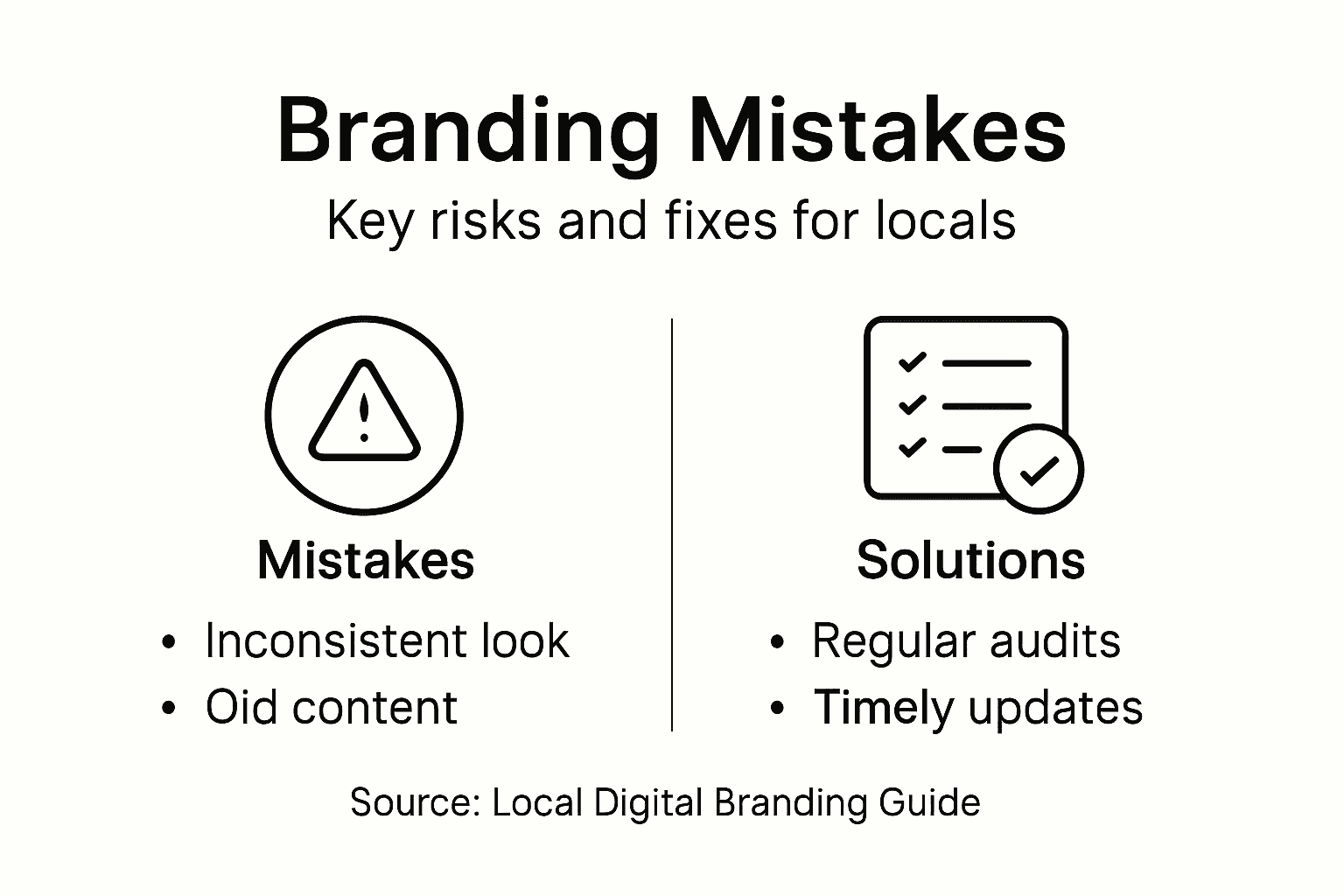
The second major mistake is misaligned brand values. You’re presenting yourself as an ethical, sustainable business committed to fair treatment of staff and suppliers, but customers discover you’re cutting corners or treating employees poorly. This disconnect destroys trust instantly. Social media has made reputation damage happen at lightning speed. One disgruntled employee posting about poor conditions, one customer sharing a negative experience, and your carefully crafted brand crumbles. Ethical branding is critical to maintaining company reputation and brand loyalty, with mistakes including neglecting ethical considerations and failing to align branding with core values. The practical solution requires honesty. Your brand should reflect who you actually are, not who you wish you were. If you’re a casual neighbourhood restaurant, don’t pretend to be fine dining. If you’re a high-volume aesthetics clinic, don’t market yourself as boutique and exclusive. Authenticity builds loyalty. Fakeness builds resentment.
The third mistake is neglecting review management. Reviews are a form of branding whether you like it or not. A restaurant with two hundred five-star reviews and professionally written responses to every review has a stronger brand than one with a hundred reviews and zero responses. An aesthetics clinic with unanswered negative reviews looks like they don’t care about client feedback. The practical solution is to treat reviews like customer conversations, not complaints to ignore. Respond to every review, positive or negative, within 48 hours. Thank people for compliments. Address concerns professionally and offer solutions. This transforms reviews from a passive liability into active brand building. Your responses show other potential customers how you treat people.
The fourth mistake is neglecting to update your digital presence. Outdated website copy, old photos, incorrect hours, or social media posts from months ago signal that your business isn’t active. A restaurant with menu prices from 2022 on its website looks like it’s closed. An aesthetics clinic with no new Instagram posts in three months looks like they’re not taking clients. Maintenance matters. The practical solution is to establish a content calendar and assign responsibility. Even one social media post per week is better than silence. Update your website quarterly. Respond to customer messages promptly. Digital branding requires ongoing attention, not just a one-time investment.
Pro tip: Set a monthly brand audit reminder on your calendar. Spend one hour checking that your website, Google Business Profile, Instagram, Facebook, and email newsletter all reflect the same core messages, visual style, and brand promise. Document any inconsistencies and fix them before customers notice. This single monthly habit prevents brand drift and catches problems early.
Below is a summary of common digital branding mistakes and practical solutions for small London businesses:
| Mistake | Negative Impact | Practical Solution |
|---|---|---|
| Inconsistent messaging | Confuses and deters customers | Audit all platforms regularly |
| Misaligned brand values | Damages trust and reputation | Align public image with reality |
| Ignoring customer reviews | Erodes credibility and confidence | Respond professionally to all |
| Outdated digital presence | Suggests inactivity or neglect | Maintain a schedule for updates |
Elevate Your Local Business Visibility with Expert Digital Branding Support
Struggling with inconsistent messaging or outdated digital presence as highlighted in the article? Many London small businesses face these exact challenges when trying to build trust, stand out from competitors, and attract high-value customers online. Market Link Solutions specialises in overcoming these pain points by delivering comprehensive digital branding solutions including bespoke website design, SEO optimisation, and PPC advertising tailored for the local market. We help ensure your brand is consistently presented across every digital channel so that your customers recognise and connect with your unique story.
Discover how our proven strategies have transformed other small businesses by visiting our Success Stories Archives – Digital Marketing Agency – Market Link Solutions. Take the next step now and boost your local visibility with a trusted partner who understands the London market. Start building a strong digital brand today by exploring how we can help at https://market-link.co.uk.
Frequently Asked Questions
What is digital branding?
Digital branding encompasses how a business presents itself online, including its website, social media, and overall online presence. It creates a cohesive identity that helps customers recognise and trust the brand.
Why is digital branding important for small businesses?
Digital branding is crucial for small businesses as it enhances visibility in a competitive market. A well-defined digital brand helps attract and retain customers, distinguishing the business from larger competitors.
How can I ensure consistency across my digital branding channels?
To maintain brand consistency, regularly audit your digital presence across all platforms. Use a brand guidelines document detailing your visual elements, tone of voice, and core messaging to ensure uniformity in your online communication.
What are the key elements of a strong digital brand?
A strong digital brand consists of visual identity (such as logos and colour schemes), consistent messaging and tone, and a reliable online presence across various channels. Together, these factors build trust and recognition among customers.
Recommended
- Role of Branding in Digital Marketing Success
- Building a Strong Online Presence: A Step-by-Step Guide for Small Businesses – Digital Marketing Agency – Market Link Solutions
- 7 Top Marketing Strategies for Local Businesses in London
- Why SEO for Small Businesses: Complete Guide – Digital Marketing Agency – Market Link Solutions
- Why Choose Local Contractors for Home Projects – J. A. Kelly Contracting Services
- Hypnotherapy as a business