
Many independent restaurants and aesthetics studios across London hit a wall when their digital marketing efforts seem scattered. Without clear insight into channel performance, money and energy can be wasted chasing the wrong audiences. A well-structured strategy built on a tailored workflow framework brings focus, making digital channels truly work for your business goals. This guide shows how a step-by-step approach helps refine your workflow for more impact with both SEO and PPC.
Table of Contents
- Step 1: Assess Existing Marketing Channels
- Step 2: Design a Tailored Workflow Framework
- Step 3: Implement SEO and PPC Integration
- Step 4: Optimise Performance with Analytics
- Step 5: Verify and Refine Workflow Efficiency
Quick Summary
| Key Message | Explanation |
|---|---|
| 1. Audit your marketing channels | Regularly assess each digital channel for performance, uncovering gaps and optimisation opportunities to enhance overall strategy. |
| 2. Design a flexible workflow framework | Create a tailored digital marketing process that aligns with goals and adapts to changes, streamlining tasks and improving efficiency. |
| 3. Integrate SEO with PPC efforts | Use consistent keywords across SEO and PPC campaigns to boost visibility and drive traffic through combined strategies. |
| 4. Leverage analytics for insight | Establish key performance indicators and regularly review data to make informed decisions that enhance marketing effectiveness. |
| 5. Continuously refine workflow processes | Implement regular audits of marketing workflows to identify bottlenecks and opportunities for automation, improving operational efficiency. |
Step 1: Assess Existing Marketing Channels
Understanding your current marketing landscape helps create strategic improvements. Small businesses must carefully audit their digital marketing channels to identify performance gaps and optimisation opportunities. Comprehensive channel evaluation techniques enable precise insights into how effectively you are reaching potential customers.
Start by mapping out every digital channel currently used in your marketing strategy. This includes social media platforms, email marketing lists, Google Ads campaigns, organic search presence, and any content marketing efforts. Document the performance metrics for each channel such as engagement rates, conversion percentages, and return on investment. Pay special attention to which channels generate genuine customer interest and actual sales versus those generating minimal interaction.
Carefully analyse the data to understand where your marketing efforts are most successful. Look for patterns in customer behaviour across different platforms and identify which channels deliver the most valuable leads. Some channels might require significant refinement while others could be candidates for increased investment. The goal is creating a lean marketing strategy focused on high-performing channels that deliver meaningful business growth.
Top tip: Create a simple spreadsheet tracking channel performance metrics monthly to maintain ongoing visibility into your marketing ecosystem.
Here’s a summary of essential digital marketing channels and their typical strengths for small businesses:
| Channel Type | Primary Benefit | Common Metric | Business Impact |
|---|---|---|---|
| Social Media | Brand awareness boost | Engagement rate | Expands audience reach |
| Email Marketing | Personalised customer updates | Open and click rates | Supports repeat business |
| Google Ads | Immediate traffic generation | Conversion percentage | Drives paid lead acquisition |
| Organic Search | Sustainable website growth | Search rankings | Builds long-term credibility |
| Content Marketing | Educates potential clients | Time on page | Nurtures customer interest |
Step 2: Design a Tailored Workflow Framework
Creating a personalised digital marketing workflow is essential for small businesses seeking strategic growth and operational efficiency. Digital marketing framework strategies provide structured approaches to coordinate marketing efforts and respond dynamically to evolving customer needs.

Begin by mapping out your specific business objectives and identifying key performance indicators that align with your marketing goals. Break down your workflow into distinct stages including content creation, channel distribution, audience targeting, performance tracking, and continuous refinement. Consider integrating automation tools that can streamline repetitive tasks and provide real-time analytics to support data driven decision making.
Your workflow framework should remain flexible and adaptable. Implement regular review cycles to assess channel performance, audience engagement, and return on investment. Utilise machine learning insights and analytics to continuously optimise your approach, ensuring your marketing strategy remains responsive to changing market dynamics and customer preferences.
Top tip: Design your workflow framework with built-in flexibility to allow quick pivots and adjustments based on emerging marketing insights and performance data.
Step 3: Implement SEO and PPC Integration
Successfully blending search engine optimisation and pay per click advertising creates a powerful digital marketing strategy for small businesses. PPC advertising strategies enable precise audience targeting while building comprehensive online visibility across multiple digital platforms.
Align your SEO and PPC efforts by using consistent keyword strategies across both channels. Analyse the search terms generating the most engagement in your PPC campaigns and incorporate these insights into your organic content development. Leverage PPC data to identify high performing keywords that can improve your website’s search rankings, creating a synergistic approach that maximises your digital marketing investment.
Establish a continuous feedback loop between your SEO and PPC activities. Track conversion rates, click through percentages, and audience behaviour metrics to refine your targeting and content strategies. Use PPC campaigns as rapid testing environments to validate keyword effectiveness before implementing them in long term SEO strategies, allowing for more intelligent and responsive marketing approaches.
Top tip: Develop a centralised dashboard that integrates SEO and PPC performance metrics to enable real-time strategic decision making and holistic marketing insights.
For reference, here is a comparison of SEO and PPC integration benefits for small businesses:
| Aspect | SEO Focus | PPC Focus | Combined Approach |
|---|---|---|---|
| Speed of Results | Long-term growth | Fast traffic | Gradual + rapid gains |
| Budget Flexibility | Low ongoing cost | Flexible spend | Controlled investment |
| Targeting Precision | Broad audience | Narrow targeting | Enhanced segmentation |
| Measurement | Organic metrics | Paid performance | Unified analytics dashboard |
Step 4: Optimise Performance with Analytics
Understanding and leveraging digital marketing analytics is crucial for small businesses seeking measurable growth. Digital marketing performance strategies transform raw data into actionable insights that drive intelligent business decisions.
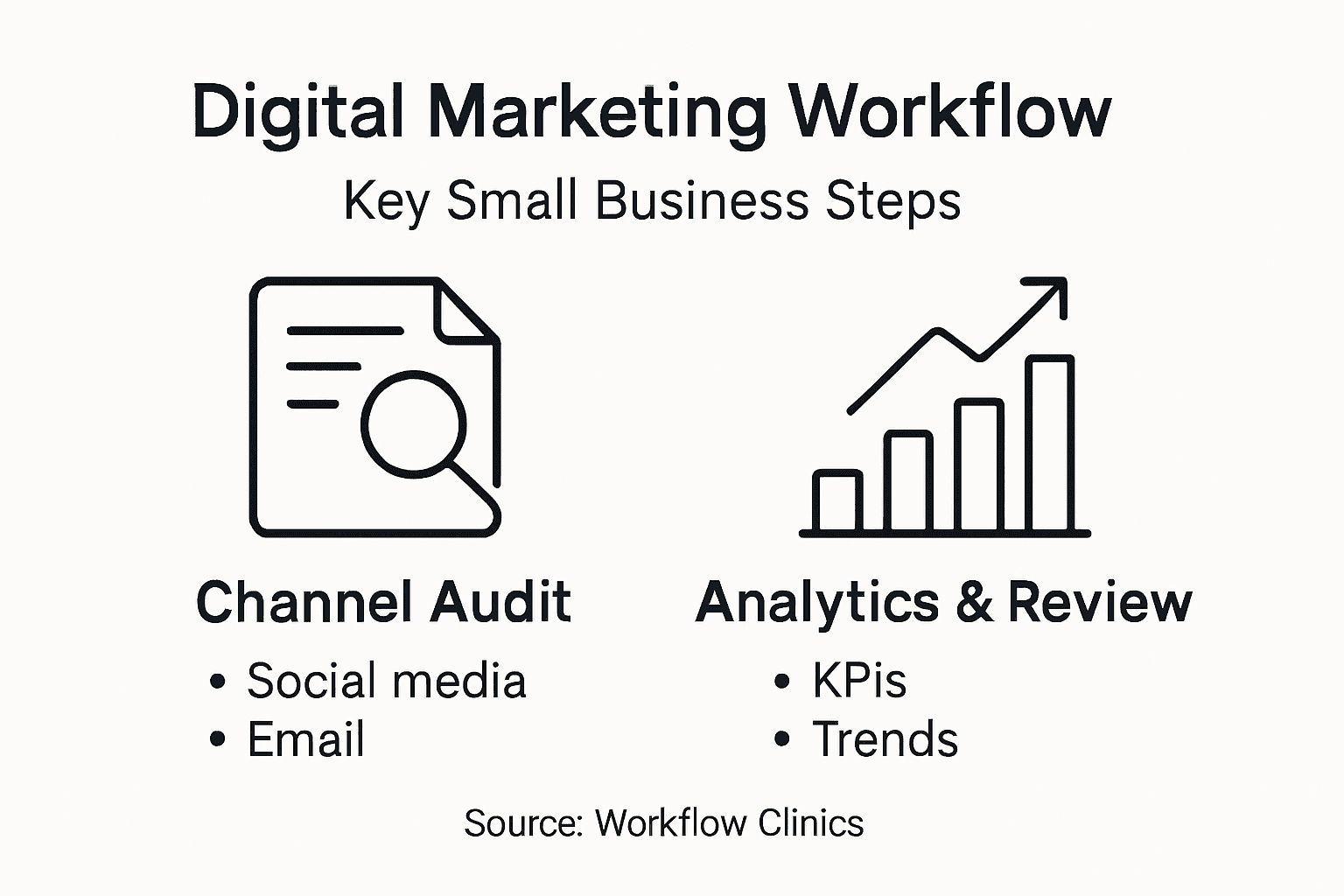
Start by establishing clear key performance indicators that align directly with your business objectives. Track metrics such as conversion rates, customer acquisition costs, engagement percentages, and return on marketing investment. Configure your analytics tools to provide comprehensive dashboards that offer real-time snapshots of your digital marketing performance, enabling you to make swift and informed strategic adjustments.
Implement a systematic approach to data analysis by creating monthly review processes. Compare current performance against historical benchmarks, identify trends, and pinpoint areas requiring immediate attention or potential optimization. Utilise advanced segmentation techniques to understand specific audience behaviours, allowing you to refine targeting strategies and allocate marketing resources more effectively across different digital channels.
Top tip: Invest in continuous learning about analytics tools and techniques to stay ahead of evolving digital marketing measurement strategies.
Step 5: Verify and Refine Workflow Efficiency
Ensuring your digital marketing workflow operates at peak performance requires continuous assessment and strategic refinement. Marketing workflow improvement strategies help small businesses eliminate inefficiencies and streamline their operational processes.
Conduct regular workflow audits by mapping out each step of your current marketing processes and identifying potential bottlenecks or redundant activities. Evaluate the time spent on each task, analyse communication pathways between team members, and assess the technological tools supporting your workflow. Look for opportunities to automate repetitive tasks, reduce manual interventions, and create more seamless communication channels that enhance overall productivity and team collaboration.
Implement a systematic approach to workflow optimization by establishing clear performance benchmarks and creating feedback mechanisms. Schedule quarterly reviews to assess your workflow efficiency, gathering input from team members about challenges they encounter. Use these insights to make incremental improvements, gradually refining your processes to create a more agile and responsive marketing ecosystem that adapts quickly to changing business needs.
Top tip: Document your workflow processes comprehensively, enabling easier identification of improvement opportunities and smoother knowledge transfer between team members.
Unlock Your Small Business Potential with Expert Digital Marketing Workflows
Mastering a tailored digital marketing workflow is essential for small businesses aiming for growth and efficiency. If you find yourself struggling to assess existing channels, integrate SEO with PPC, or streamline your marketing operations this article’s insights highlight the crucial steps you need to succeed. At Market Link Solutions we understand these challenges and provide expert Web Design and Development alongside targeted PPC Advertising and SEO Optimisation specifically crafted for small businesses in London.
Discover how our proven strategies can help you refine your digital marketing framework, improve performance with data analytics, and ultimately drive meaningful results. See how we have empowered other clients by visiting our Success Stories Archives – Digital Marketing Agency – Market Link Solutions.

Transform your marketing workflow today with support from a trusted local agency. Don’t let inefficiencies hold your business back. Visit Market Link Solutions now to explore our specialised digital marketing services and take the next step towards sustainable growth.
Frequently Asked Questions
How can I assess my current digital marketing channels?
Start by mapping out every digital channel you currently use, such as social media, email marketing, and Google Ads. Document performance metrics like engagement rates and conversion percentages to determine which channels are most effective.
What steps should I take to design a tailored workflow for my digital marketing?
Identify your specific business objectives and establish key performance indicators. Break down your workflow into stages like content creation and audience targeting to streamline your marketing efforts.
How do I integrate SEO and PPC for better results?
Align your SEO strategies with your PPC campaigns by using consistent keyword tactics across both. Use PPC data to identify high-performing keywords and incorporate them into your organic content for maximum impact.
What metrics should I focus on when optimising my digital marketing performance?
Focus on key metrics such as conversion rates, customer acquisition costs, and return on marketing investment. Regularly track these metrics and adjust your strategies as needed to enhance your marketing effectiveness.
How can I verify and refine my marketing workflow efficiency?
Conduct regular audits of your marketing processes to identify bottlenecks and automate repetitive tasks. Implement quarterly reviews to gather team feedback and make incremental improvements to enhance overall productivity.
Recommended
- Building a Strong Online Presence: A Step-by-Step Guide for Small Businesses – Digital Marketing Agency – Market Link Solutions
- Why Invest in Digital Marketing: Complete Guide
- Digital Marketing Channels Explained: Practical Insights for London SMEs
- Blog Posts Archives – Digital Marketing Agency – Market Link Solutions