
Most British small businesses competing in London quickly learn that success in online advertising relies on more than just a big budget. With over 90 percent of London consumers turning to digital search before making a purchase, understanding how to reach your audience has never been more urgent. These strategies are designed to help British entrepreneurs make the most of PPC advertising by connecting with the right people and driving real results in an ever-crowded market.
Table of Contents
- 1. Understand Your Target Audience for Precise Ads
- 2. Choose the Right Keywords for Local Reach
- 3. Set Smart Budgets and Bids for Cost Efficiency
- 4. Craft Compelling Ad Copy That Converts
- 5. Use Location Targeting to Attract London Customers
- 6. Monitor Campaign Performance and Adjust Regularly
- 7. Leverage Remarketing to Re-Engage Interested Visitors
Quick Summary
| Takeaway | Explanation |
|---|---|
| 1. Understand your audience deeply | Develop detailed buyer personas to effectively target advertisements and speak directly to customer needs. |
| 2. Choose location-specific keywords | Use neighbourhood names and local identifiers to enhance targeting for London-based PPC campaigns. |
| 3. Set a conservative budget | Start with a modest daily spend to test PPC strategies, adjusting based on performance metrics. |
| 4. Craft compelling ad copy | Write attention-grabbing advertising text that clearly conveys your unique selling propositions and value. |
| 5. Implement remarketing strategies | Reconnect with past visitors through tailored ads to improve conversion rates and advertising efficiency. |
1. Understand Your Target Audience for Precise Ads
Successful PPC advertising starts with deep audience comprehension. Your ability to craft precise, targeted advertisements hinges on understanding exactly who your potential customers are and what motivates their purchasing decisions.
To create truly effective PPC campaigns, you must develop detailed buyer personas that go far beyond basic demographic information. This means diving into psychographic details such as interests, pain points, online behaviours, and specific challenges faced by small businesses in London. Creating comprehensive audience profiles allows you to design advertisements that speak directly to your ideal customer’s needs and aspirations.
Start by analysing your existing customer data. Look at characteristics like age range, professional background, income levels, and specific problems your product or service solves. For London small businesses, this might mean understanding the unique challenges of operating in a competitive urban marketplace.
Utilise tools like Google Analytics and social media insights to gather granular information about your audience’s online interactions. Track metrics such as website engagement, click through rates, and conversion patterns to refine your understanding continuously.
Pro tip: Create a minimum of three distinct audience segments with unique targeting strategies. This approach allows you to test different messaging and identify which resonates most powerfully with each specific group.
2. Choose the Right Keywords for Local Reach
Selecting the right keywords is crucial for small businesses in London looking to maximise their PPC advertising effectiveness. Your keyword strategy determines how precisely your advertisements will reach potential customers in your specific geographical area.
Understanding keyword match types is fundamental to crafting a successful PPC campaign. Keyword research strategies help you identify terms that potential customers are actively searching for in London. These match types include broad match, phrase match, and exact match, each offering different levels of targeting precision.
Broad match keywords allow your ads to appear for related searches, providing wider reach but potentially less precision. Phrase match keywords offer more targeted visibility by showing ads when search terms include your specific phrase. Exact match provides the most precise targeting, displaying ads only when the search query exactly matches your selected keywords.
For London small businesses, focus on location specific keywords that include geographical identifiers. This might mean incorporating neighbourhood names, local landmarks, or area specific terms like “London graphic designer” or “Shoreditch web developer” to attract nearby customers.
Utilise keyword research tools to analyse search volumes, competition levels, and cost per click for different terms. Look for keywords with strong commercial intent that indicate a potential customer is ready to make a purchase.
Pro tip: Create a negative keyword list to exclude irrelevant searches and prevent wasting your advertising budget on clicks that won’t convert.
3. Set Smart Budgets and Bids for Cost Efficiency
Successful PPC advertising requires strategic financial planning that balances cost with potential returns. For small businesses in London, every advertising pound must work intelligently to maximise marketing impact.
The foundation of smart budgeting lies in setting precise campaign goals and budget allocations. Understanding your financial constraints and potential return on investment allows you to create targeted campaigns that deliver measurable results.
Start with a Conservative Budget: Begin with a modest daily spending limit that allows you to test and refine your approach. Many London small businesses find success by allocating between £10 and £50 daily, depending on their sector and target audience.
Utilise Google Ads bidding strategies that align with your specific objectives. Automated bidding can help optimise your spend by adjusting bids based on potential conversion likelihood. Strategies like maximise conversions or target cost per acquisition can stretch your budget further.
Track key performance metrics meticulously. Monitor click through rates, conversion rates, and cost per acquisition to continuously refine your spending strategy. Small adjustments can significantly improve your advertising efficiency.
Consider implementing bid adjustments for specific variables such as device type, location, and time of day. For instance, you might increase bids during peak business hours or for mobile users in central London.
Pro tip: Allocate approximately 10 percent of your total budget for experimental campaigns that test new audience segments or messaging approaches.
4. Craft Compelling Ad Copy That Converts
Effective ad copy is the cornerstone of successful PPC advertising for small businesses in London. Your advertisement must capture attention, communicate value, and inspire immediate action within a few critical seconds.
Creating persuasive messaging requires a deep understanding of your target audience’s specific needs and pain points. Your ad copy should speak directly to the challenges faced by potential customers in London’s competitive marketplace.
Focus on Unique Selling Propositions: Clearly articulate what makes your business different. Are you offering faster service? More competitive pricing? Specialised expertise? Communicate these advantages succinctly and powerfully.
Incorporate specific, measurable benefits into your ad text. Instead of generic statements, use concrete language that demonstrates real value. For example, “Save 30 percent on first service” is more compelling than “Great deals available”.
Utilise strong, action oriented language that creates a sense of urgency. Words like “Book Now”, “Limited Offer”, and “Exclusive to London Businesses” can motivate potential customers to click through.
Ensure your ad copy aligns perfectly with the landing page content. Consistency between advertisement and destination builds trust and improves conversion rates. Misaligned messaging can quickly discourage potential customers.
Pro tip: Test multiple ad variations simultaneously to identify which messaging resonates most powerfully with your target audience.
5. Use Location Targeting to Attract London Customers
Location targeting represents a powerful strategy for small businesses looking to maximise their PPC advertising effectiveness within London’s competitive marketplace. By precisely defining your geographical reach, you can ensure your advertisements are seen by the most relevant potential customers.
Advanced location targeting techniques allow you to narrow your advertising focus to specific London areas, neighbourhoods, and postcodes. This granular approach enables businesses to connect with customers most likely to engage with their services.
Implement Radius Targeting: Create advertising campaigns that target customers within a specific kilometre radius of your business location. For instance, a Shoreditch graphic design studio might set a 10 kilometre radius to capture potential clients across East London.
Utilise Google Ads location options that include radius targeting, neighbourhood targeting, and postcode level precision. These settings enable you to exclude areas outside your primary service region, preventing wasted advertising spend.
Consider creating multiple location targeted campaigns with different messaging. A restaurant in Camden might craft distinct advertisements for nearby office workers versus weekend tourists, tailoring language and offers to each audience segment.
Monitor location performance metrics carefully. Track which geographical areas generate the highest engagement rates, conversion percentages, and return on investment. Use these insights to continually refine your targeting strategy.
Pro tip: Experiment with bid adjustments for different London locations to optimise your advertising budget based on each area’s performance potential.
6. Monitor Campaign Performance and Adjust Regularly
Successful PPC advertising requires ongoing attention and strategic refinement. Your campaign’s effectiveness depends on continuous monitoring and intelligent adjustments based on real performance data.
Performance monitoring techniques are crucial for small businesses seeking to maximise their advertising return. Regular analysis helps you understand which strategies generate genuine results and which need immediate improvement.
Key Performance Indicators to track include click through rate, conversion rate, cost per click, and overall return on investment. These metrics provide a comprehensive view of your advertising effectiveness across different audience segments and geographic locations.
Establish a weekly review schedule where you examine your campaign analytics. Look for patterns such as time of day with highest engagement, specific keywords driving most conversions, and demographic groups showing strongest interest in your services.
Implement A/B testing for different advertisement variations. Create multiple versions of your ad copy, test them simultaneously, and identify which messaging resonates most powerfully with your target London audience. Small changes in wording can significantly impact performance.
Utilise Google Ads built in reporting tools to track granular performance metrics. Pay special attention to search term reports, which reveal the exact phrases potential customers are using to find businesses like yours.
Pro tip: Set up automated alerts for significant performance changes to ensure you can respond quickly to emerging trends or potential issues in your advertising campaigns.
7. Leverage Remarketing to Re-Engage Interested Visitors
Remarketing represents a powerful strategy for reconnecting with potential customers who have previously shown interest in your business but did not complete a purchase. By strategically targeting these warm leads, you can dramatically improve your conversion rates and advertising efficiency.
Sophisticated remarketing techniques enable small businesses to create personalised advertising experiences that reignite customer interest. These targeted campaigns remind potential clients about your services precisely when they are most likely to convert.
Create Segmented Remarketing Lists: Develop distinct audience segments based on specific website interactions. For example, create separate lists for visitors who viewed product pages, abandoned shopping carts, or spent significant time exploring your services.
Utilise Google Ads and Facebook Pixel tracking to build comprehensive remarketing audiences. These tools allow you to create custom audiences based on specific behaviours such as page visits, time spent on site, and interaction depth.
Design tailored advertisement messaging that speaks directly to each audience segment’s unique interests. A potential customer who viewed your services page might respond differently to an advertisement compared to someone who abandoned a shopping cart midway.
Implement frequency capping to prevent advertisement fatigue. Limit the number of times a potential customer sees your remarketing advertisements to maintain a positive brand perception and avoid seeming intrusive.
Pro tip: Develop multiple creative variations for your remarketing advertisements to test which messaging resonates most powerfully with your target audience.
Below is a comprehensive table summarising the key strategies and steps for effective PPC advertising for small businesses in London as discussed in the article.
| Strategy | Implementation | Expected Results |
|---|---|---|
| Understand Target Audience | Create detailed buyer personas using psychographic data. Use tools like Google Analytics for insights. Segment audience into three groups with unique targeting. | More precise and impactful advertisements that resonate with customer needs. |
| Choose Right Keywords | Implement keyword research focusing on location-specific terms. Understand match types: broad, phrase, and exact. Include negative keywords. | Enhanced local reach and reduced irrelevant clicks, ensuring ads reach potential customers. |
| Set Smart Budgets and Bids | Start with a conservative budget (£10-£50 daily). Utilise automated bid strategies like maximising conversions. Adjust bids based on variables such as device and location. | Improved cost efficiency and maximised marketing impact with clear budget alignment. |
| Craft Compelling Ad Copy | Focus on unique selling propositions and use action-oriented language. Ensure alignment between ad copy and the landing page. Test multiple ad variations. | Higher engagement and conversion rates, maintaining message consistency. |
| Use Location Targeting | Leverage advanced targeting by neighbourhood or radius. Tailor ads to different audience segments within London. | Effective engagement with relevant customers, optimising geographic reach. |
| Monitor and Adjust Campaigns | Regularly track performance indicators like click-through and conversion rates. Use A/B testing and Google Ads reporting tools. | Continual improvement and optimisation based on real performance data. |
| Leverage Remarketing | Create segmented lists for remarketing based on website interactions. Implement frequency capping. | Re-engaged visitors with tailored messages, improving conversion likelihood. |
Unlock Your Small Business Potential with Expert PPC Support in London
Navigating the complex world of PPC advertising can be overwhelming for many small businesses in London. Challenges like precise audience targeting, budget management, and crafting compelling ad copy can stall your growth and leave potential customers undiscovered. If you want to truly harness the power of strategies like location targeting, smart bidding, and remarketing to accelerate your success, expert guidance is essential.
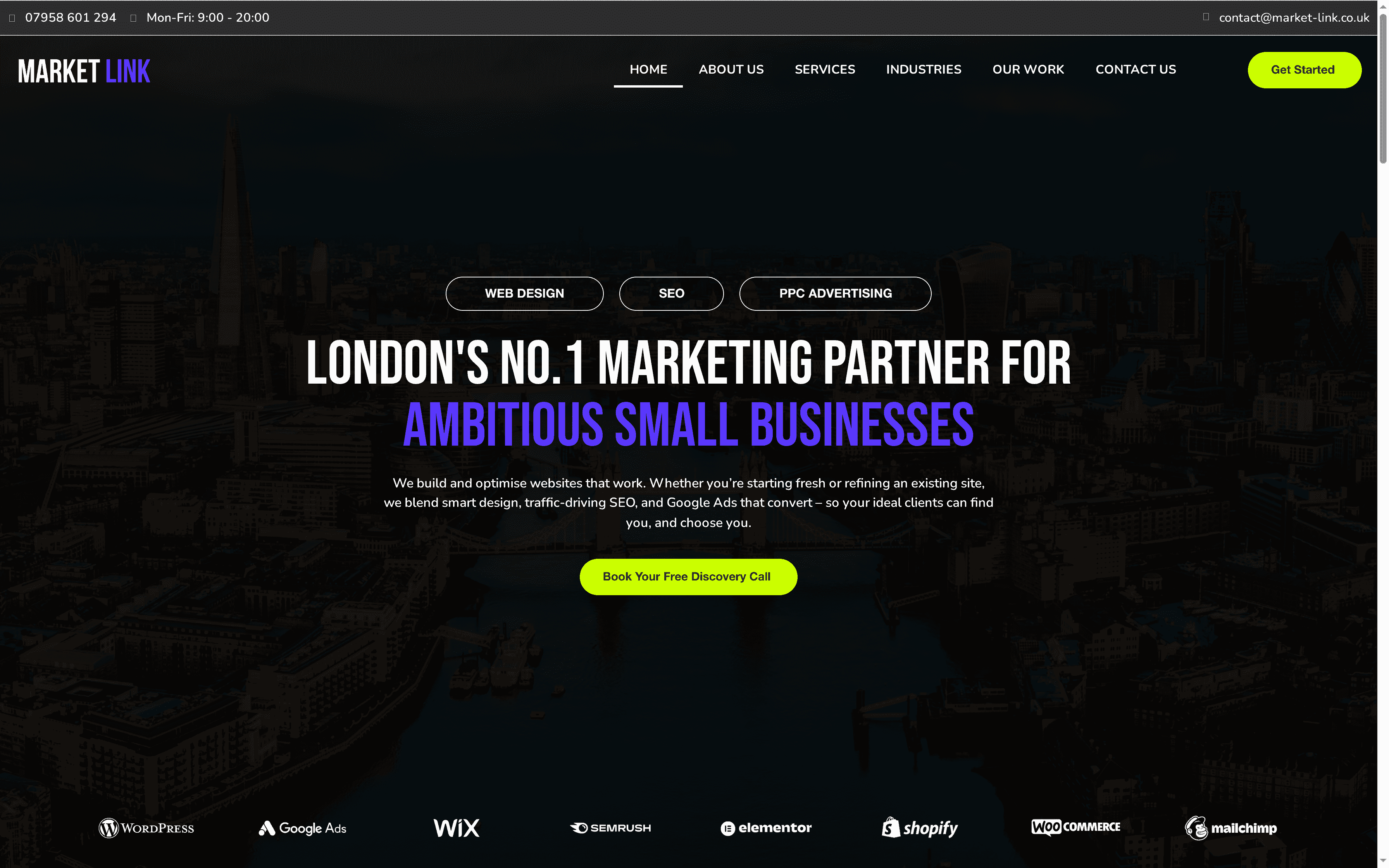
Discover how Market Link Solutions, a London based digital marketing agency, specialises in helping small businesses build their online presence and maximise ad performance through Google and Instagram PPC campaigns. With tailored solutions in Web Design, PPC Advertising, and SEO Optimisation, we help you overcome obstacles, connect with the right audience, and convert clicks into loyal customers. Don’t wait to elevate your marketing efforts. Explore our proven success stories at Success Stories Archives – Digital Marketing Agency – Market Link Solutions and take your next step at Market Link Solutions. Your London business deserves to thrive with the right strategy today.
Frequently Asked Questions
What are the essential strategies for effective PPC advertising for small businesses in London?
Effective PPC advertising for small businesses in London hinges on understanding your target audience, choosing the right keywords, setting smart budgets, crafting compelling ad copy, using location targeting, monitoring performance, and leveraging remarketing. Start by developing detailed buyer personas and focus on specific location-based keywords relevant to your services.
How can I create targeted ads that resonate with my audience in London?
To create targeted ads, develop detailed buyer personas that include psychographic details like interests and pain points. Use this information to tailor your ad copy and messaging, ensuring that it speaks directly to the unique challenges faced by small businesses in London.
What steps should I take to select the right keywords for my PPC campaigns?
Begin by conducting thorough keyword research to identify terms that potential customers are actively searching for. Focus on using location-specific keywords and consider match types to enhance targeting precision – for example, using phrases like “London graphic designer” or “Shoreditch web developer”.
How can I maximise my PPC budget for small business advertising in London?
Start with a conservative daily budget and utilise automated bidding strategies to optimise your spending. Regularly track key performance metrics and adjust bids based on performance data to ensure you get the best return on your advertising investment.
What is the importance of location targeting in PPC advertising for small businesses?
Location targeting allows you to reach potential customers in specific areas relevant to your business, increasing the likelihood of engagement. Implement radius targeting features to focus your ads on audiences within a certain distance from your business location, helping to maximise your visibility in key neighbourhoods.
Why is monitoring campaign performance essential for PPC success?
Regularly monitoring campaign performance helps you identify which strategies are most effective and where improvements are needed. Establish a weekly review schedule to analyse performance metrics and implement A/B testing to refine your ad copy and targeting based on real data.