
Nearly 90 percent of british consumers use Google to discover local businesses, making targeted advertising in London more crucial than ever. With fierce competition and a savvy audience, it is not enough to simply run generic ads and hope for results. This guide reveals practical steps for honing your strategy, so you can reach the right customers, write persuasive copy, and fine tune every element for measurable success in the busy London market.
Table of Contents
- 1. Set Clear Local Targeting For London Customers
- 2. Write Compelling Ad Copy That Drives Action
- 3. Use Smart Keyword Research For Your Industry
- 4. Optimise Landing Pages For High Conversion Rates
- 5. Track Results With Conversion Tracking Tools
- 6. Adjust Budgets For Peak Times And Local Trends
- 7. Test And Refine Ads For Ongoing Improvement
Quick Summary
| Takeaway | Explanation |
|---|---|
| 1. Focus on Local Targeting | Targeting specific London locations enhances ad effectiveness and reduces costs. |
| 2. Craft Compelling Ad Copy | Persuasive ad copy addressing customer needs fosters higher engagement and click-through rates. |
| 3. Conduct Effective Keyword Research | Understanding local search terms increases relevance and allows better targeting of potential customers. |
| 4. Optimise Landing Pages for Conversions | A well-designed landing page matching ad promises converts clicks into customers effectively. |
| 5. Implement Conversion Tracking | Monitoring key metrics reveals campaign performance, enabling data-driven refinements for better results. |
1. Set Clear Local Targeting for London Customers
Successful Google Ads campaigns begin with precise geographic targeting. By strategically focusing your ads on London customers, you can dramatically improve your advertising effectiveness and reduce unnecessary spending.
Geotargeting allows businesses to pinpoint their audience with remarkable precision. According to Measured DM, Google Ads enables businesses to show advertisements only to users within specific geographic locations. This means your marketing budget is spent reaching potential customers who are most likely to engage with your business.
Key Targeting Strategies for London Businesses:
- Target specific London boroughs or neighbourhoods
- Use location-based keywords like “Digital Marketing Agency Covent Garden”
- Set radius targeting around your business location
- Exclude areas outside your primary service zone
By implementing location-specific targeting, you can lower competition and reduce cost-per-click. Rooster Marketing suggests that narrowing your geographical focus helps attract more qualified leads and increases overall ad relevance.
To get started, access your Google Ads location settings and select “United Kingdom” as your country. Then drill down to specific London areas where your ideal customers reside. Consider your business type location demographic and customer movement patterns when defining these boundaries.
2. Write Compelling Ad Copy That Drives Action
Your Google Ads success hinges on writing ad copy that instantly captures attention and motivates potential customers to click. Creating persuasive advertisements is an art form that combines strategic messaging with clear communication.
According to O’Reilly, effective ad copy must reflect the search query, adhere to Google’s editorial guidelines, and showcase a unique selling proposition. The key is distinguishing between mere features and compelling benefits that resonate with your target audience.
Core Elements of High Converting Ad Copy:
- Address customer pain points directly
- Highlight specific benefits
- Create a sense of urgency
- Include clear call to action
- Match ad messaging to landing page content
The Google Services Creative Team recommends maintaining simplicity in your message while ensuring each advertisement includes a unique selling point. Your ad copy should speak directly to your London customers’ needs and motivations.
For local London businesses, this means crafting copy that feels personal and specific. Instead of generic statements, use language that demonstrates you understand your customers’ exact challenges. A plumber might write “Emergency Plumbing Services in Hackney Within 30 Minutes” rather than a bland “Plumbing Services Available”.
Remember that mobile optimization is crucial. With most searches happening on smartphones, your ad copy must be concise yet impactful. Every word counts when you have limited screen space to make your pitch.
3. Use Smart Keyword Research for Your Industry
Keyword research is the foundation of any successful Google Ads campaign. Understanding how potential customers in London search for your products or services can dramatically improve your advertising effectiveness.
Why Keyword Research Matters:
- Identifies precise search terms your customers use
- Reveals customer intent and pain points
- Helps reduce wasted ad spend
- Improves ad relevance and performance
Successful keyword research goes beyond simply picking popular terms. You need to understand the specific language your target audience uses when searching for businesses like yours in London. For instance, a restaurant in Shoreditch might target keywords like “best brunch Shoreditch” or “weekend dining east London” instead of generic restaurant terms.
Content SEO: Rank Higher with High Quality Keyword Rich Content suggests using a mix of broad and specific keywords. Look for terms with reasonable search volume and lower competition.
Practical keyword research involves using tools like Google Keyword Planner, understanding search intent, and considering local modifiers. Think about the specific problems your business solves and the exact phrases potential customers might type into Google.
For London businesses, local keywords are gold. A plumber might use “emergency plumber Hackney” or “boiler repair Islington” to attract highly targeted local customers. The more specific your keywords, the more likely you are to attract customers who are ready to purchase.
4. Optimise Landing Pages for High Conversion Rates
Your Google Ads campaign is only as effective as the landing page it leads to. A well designed landing page can transform casual clicks into committed customers and dramatically improve your advertising return on investment.
Effective landing pages speak directly to your potential customer’s needs and expectations. When someone clicks your ad, they should immediately find exactly what they were promised in the advertisement.
Critical Landing Page Elements:
- Clear and compelling headline
- Concise value proposition
- Simple and prominent contact forms
- Mobile responsive design
- Fast loading speed
- Minimal distractions
Why You Need Landing Pages for Google Ads highlights the importance of creating dedicated landing pages that align precisely with your ad messaging. This means if your Google Ad promises emergency plumbing services in Hackney, your landing page should immediately showcase emergency plumbing solutions specific to that area.
For London businesses, localisation matters. Your landing page should reflect local imagery, use local language, and address region specific pain points. A personal trainer in Shoreditch might include images of local landmarks or reference neighbourhood specific fitness challenges.
Technical performance is equally crucial. Your landing page must load quickly on mobile devices, have a clean intuitive design, and make it ridiculously easy for potential customers to take the next step. Whether that means booking a consultation, making a purchase, or requesting a quote your conversion path should be crystal clear.
5. Track Results With Conversion Tracking Tools
Knowing exactly how your Google Ads perform is the difference between guesswork and strategic marketing. Conversion tracking tools transform raw data into actionable insights that can dramatically improve your advertising effectiveness.
Key Metrics to Monitor:
- Total number of conversions
- Conversion rate
- Cost per conversion
- Click through rate
- Return on ad spend
Google Analytics and Google Ads conversion tracking provide powerful ways to understand how potential customers interact with your advertisements. These tools help you see precisely which ads drive phone calls, website purchases, or form submissions for your London business.
Websites That Convert vs Websites That Dont emphasises the critical nature of understanding your digital performance. For a restaurant in Shoreditch or a personal trainer in Hackney tracking conversions means knowing exactly how many people clicked your ad and then took a meaningful action.
Setup is straightforward. Install a conversion tracking pixel on your thank you page or website. This allows you to track specific actions like bookings, purchases or contact form submissions. By understanding which ads generate real business results you can continuously refine your strategy and eliminate underperforming campaigns.
Remember that conversion tracking is not just about collecting data. It is about transforming those numbers into smarter marketing decisions that grow your London business.
6. Adjust Budgets for Peak Times and Local Trends
Successful Google Ads campaigns are not static. They breathe and adapt with your business cycles, local events, and customer behaviour. Smart budget allocation means understanding when your potential customers are most likely to engage with your advertisements.
Strategic Budget Allocation Techniques:
- Identify peak business hours
- Track seasonal demand fluctuations
- Analyse local event impacts
- Monitor competitor advertising patterns
- Adjust spending based on conversion data
For London businesses, this means recognising unique local dynamics. A restaurant in Shoreditch might increase ad spend during weekend brunches or during major cultural events. A personal trainer could boost marketing budgets around New Year when fitness resolutions are high.
Google Ads provides flexible bidding strategies that allow real time budget adjustments. You can set maximum daily budgets, schedule ads during specific hours, and even create custom bid adjustments for different times of day or week.
Understand your specific business rhythm. A wedding photographer might see peak interest during engagement season. A heating engineer will experience higher demand during winter months. By dynamically adjusting your ad spend, you ensure every pound is strategically invested where it generates maximum return.
Consider using Google Ads automated bidding strategies that leverage machine learning to optimise your budget allocation. These tools can analyse thousands of signals to determine the most effective spending patterns for your specific business goals.
7. Test and Refine Ads for Ongoing Improvement
Successful Google Ads campaigns are not set and forgotten. They require continuous testing, learning, and refinement to ensure maximum performance and return on investment.
A B Testing Fundamentals:
- Compare different ad variations
- Test one element at a time
- Collect statistically significant data
- Implement winning variations
- Continuously iterate
How to Master Audience Targeting for Google and Facebook Ads highlights the importance of systematic ad optimization. For London businesses this means methodically experimenting with different approaches to discover what resonates most with your target audience.
Start by creating multiple ad variations with slight differences. A restaurant in Shoreditch might test headlines like “Brunch Spots That Locals Love” versus “Best Weekend Dining in East London”. A personal trainer could experiment with different call to action phrases or imagery.
Google Ads provides robust split testing tools allowing you to automatically rotate and analyse ad performance. Focus on metrics like click through rate conversion rate and cost per acquisition. Small incremental improvements can compound into significant marketing gains over time.
Remember that testing is an ongoing process. What works today might not work tomorrow. By maintaining a culture of continuous experimentation and data driven decision making you ensure your Google Ads strategy remains dynamic and effective.
Below is a comprehensive table summarising the key strategies and considerations for optimising Google Ads campaigns for London-based businesses described in the article.
| Strategy | Implementation | Expected Results |
|---|---|---|
| Local Targeting | Focus ads on specific London boroughs, use location-based keywords, set radius targeting, exclude non-service areas. | Dramatically improved advertising effectiveness and reduced unnecessary spending. |
| Compelling Ad Copy | Write ads that address pain points, highlight benefits, create urgency, include clear calls to action. | Increased click rates and relevance to potential customers in London. |
| Keyword Research | Use a mix of broad and specific local keywords relevant to customer search behaviour in London. | Improved ad relevance, reduced wasted spend, and attracted ready-to-purchase customers. |
| Landing Page Optimisation | Ensure clear headlines, value propositions, mobile-responsive design, and fast loading speeds. | Higher conversion rates and better alignment with ad messaging. |
| Conversion Tracking | Monitor metrics like conversion rate, cost per conversion via Google Analytics. | Actionable insights leading to smarter marketing decisions. |
| Budget Adjustments | Increase spend during peak hours, events, and based on local trends. | Maximum return on investment by targeting high engagement times. |
| Testing and Refinement | Conduct A/B testing and continual experimentation with ad variations. | Continuous improvement in ad performance and return on investment. |
Unlock Greater Success with Expert Google Ads Support for Your London Business
Navigating the complexities of Google Ads strategies such as local targeting, keyword research, and conversion tracking can feel overwhelming when trying to grow your business in a competitive London market. You want to reduce wasted budget while attracting highly relevant customers right in your area. It is essential to have a partner who understands these challenges and can help you craft compelling ads that convert and optimise landing pages for maximum impact.
Discover how our London based digital marketing agency specialises in empowering small businesses with tailored solutions including PPC advertising, SEO optimisation, and web design. Our proven approach has helped many local businesses thrive as shown in our Success Stories Archives – Digital Marketing Agency – Market Link Solutions. 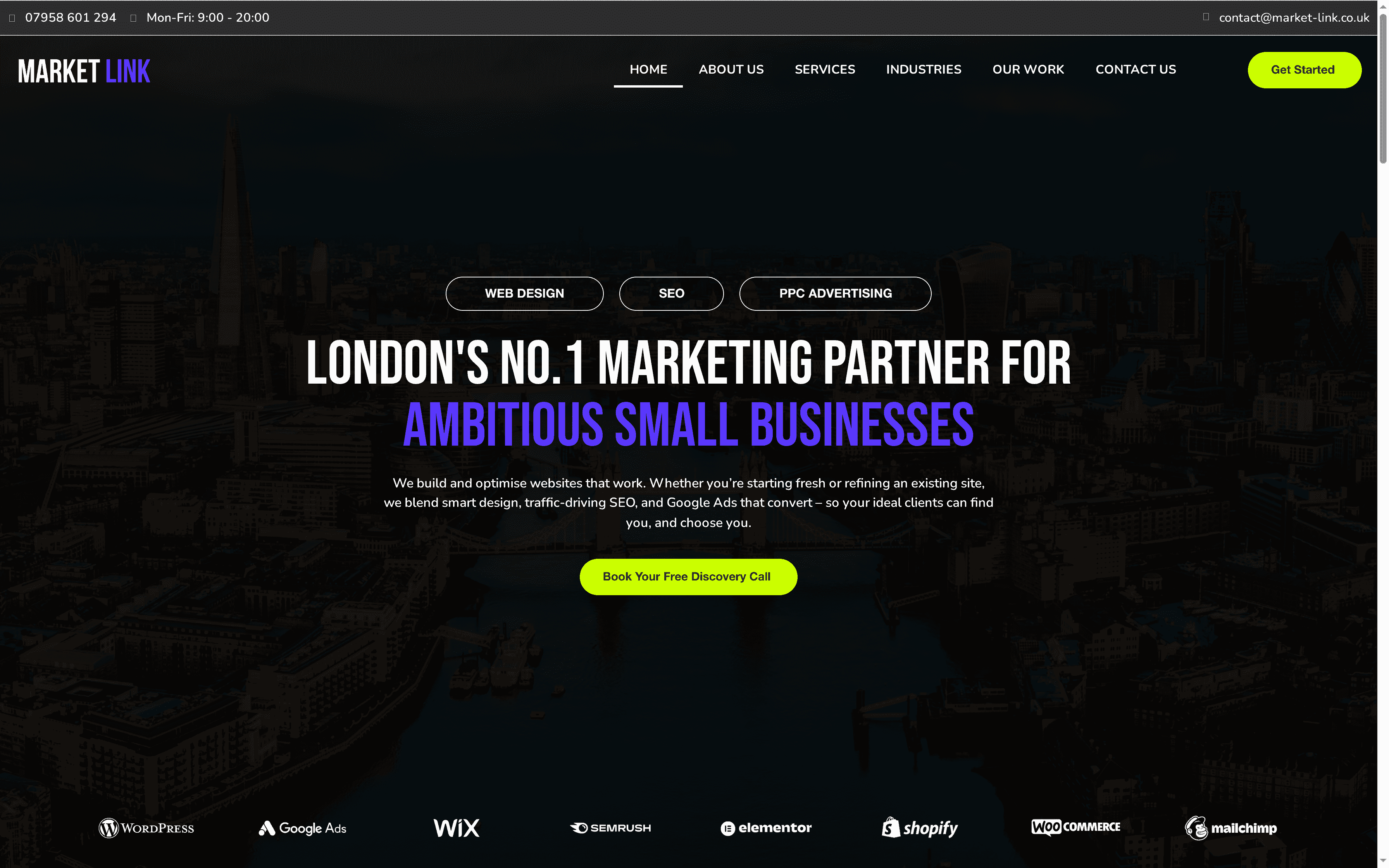
Don’t let opportunities pass you by. Visit Market Link Solutions today for expert advice and start turning your Google Ads campaigns into measurable growth. Take the next step now and see how we can build your online presence and boost your business with targeted, effective advertising.
Frequently Asked Questions
How can I set effective local targeting for my Google Ads?
To set effective local targeting, focus your ads on specific areas within London that are relevant to your business. Use Google Ads features to select boroughs or neighbourhoods, incorporate location-based keywords, and adjust radius targeting according to your ideal customer locations.
What should I include in my ad copy to attract London customers?
Ad copy should directly address the pain points of your audience and highlight unique benefits. Include a clear call to action and ensure that your ad messaging is aligned with the content on your landing page to maximise relevance and conversions.
How do I conduct keyword research for my Google Ads campaign in London?
Begin by identifying the specific terms that potential customers are likely to use when searching for your products or services. Use a combination of broad and specific keywords, considering local modifiers to enhance relevance, and check the competition and search volume for your selected terms.
What key elements should I optimise on my landing page for conversions?
Focus on creating a clear and compelling headline, a concise value proposition, and an easy-to-navigate contact form. Ensure your landing page matches the ad messaging and is mobile responsive to provide a seamless experience, leading to more conversions.
How can I track the performance of my Google Ads effectively?
Use conversion tracking tools to monitor metrics such as conversion rate, cost per conversion, and click-through rate. Implement tracking pixels on thank-you pages or websites to gain insights into which ads drive meaningful actions, then refine your strategy based on this data.
What strategies can I use to adjust my Google Ads budgets for peak times?
Identify the peak business hours and seasonal demand periods specific to your business. Adjust your budget dynamically by increasing spending during times of high engagement and monitor your competitors’ advertising to enhance your campaign’s effectiveness.
Recommended
- Why Your Google Ads Aren’t Working—5 Fixes You Can Apply Now
- Choosing the Right Online Advertising Strategy for Your Business: A Comprehensive Guide – Digital Marketing Agency – Market Link Solutions
- Google Ads & Instagram Ads Management – High-ROI Paid Advertising – Digital Marketing Agency – Market Link Solutions
- Restaurant PPC Advertising Guide for London Success – Digital Marketing Agency – Market Link Solutions
- How to Sell on Instagram – Hexrate
- Maximize Visibility with Google AI Overviews – FAII