
Running a restaurant in London means competing with hundreds of flavours and faces just around the corner. Online advertising helps you stand out, reaching customers across platforms like Google and Facebook exactly when they are deciding where to eat. From targeted promotions to precise audience segmentation, these digital advertising strategies can transform how local diners discover your restaurant and make booking decisions.
Table of Contents
- What Are Online Ads for Restaurants?
- Types of Online Advertising Platforms
- How Targeting and Bidding Systems Operate
- Costs, Common Pitfalls, and Best Practices
- Legal Considerations and Data Privacy Essentials
Key Takeaways
| Point | Details |
|---|---|
| Targeted Digital Marketing | Online ads enable restaurants to attract local diners by showcasing unique offerings through various ad formats. |
| Utilising Multiple Platforms | Leveraging platforms like Google Ads, Facebook, and Instagram can enhance visibility and reach specific audiences effectively. |
| Effective Budget Management | Allocating an appropriate budget and tracking performance metrics is crucial for maximising return on investment. |
| Compliance with Legal Standards | Restaurants must adhere to GDPR and ensure transparent data practices in their online advertising efforts. |
What Are Online Ads for Restaurants?
Online ads for restaurants are targeted digital marketing strategies designed to attract potential diners, increase bookings, and boost restaurant visibility across digital platforms. These advertisements leverage platforms like Google, Instagram, and Facebook to reach local customers actively seeking dining experiences in London and surrounding areas.
Restaurants can create digital advertising campaigns that showcase their unique offerings through various ad formats:
- Search ads: Appear when potential customers search for restaurant-related keywords
- Display ads: Visual advertisements shown across websites and mobile apps
- Social media ads: Targeted promotions on platforms like Instagram and Facebook
- Remarketing ads: Reconnect with previous website visitors
The primary goal of these restaurant digital marketing strategies is to connect local diners with restaurant offerings precisely when they’re most likely to make a dining decision. Unlike traditional advertising, online ads provide granular targeting options, allowing restaurants to reach specific demographics, interests, and geographic locations with unprecedented precision.
Modern restaurant advertising goes beyond simple promotion—it’s about creating compelling visual narratives that entice potential customers. High-quality images of signature dishes, special promotions, and inviting restaurant atmospheres can transform a casual browser into a committed diner.
Pro tip: Invest time in creating visually stunning ad content that genuinely represents your restaurant’s unique personality and culinary offerings.
Types of Online Advertising Platforms
Restaurants in London have access to multiple digital advertising platforms that offer unique opportunities to showcase their culinary offerings and attract local diners. Each platform provides distinct targeting capabilities and audience reach, enabling restaurant owners to create strategic marketing campaigns tailored to their specific business goals.
The primary online advertising platforms for restaurants include:
- Google Ads: Search and display network targeting local customers
- Facebook Advertising: Demographic and interest-based targeting
- Instagram Ads: Visual platform ideal for food-related imagery
- LinkedIn Ads: Professional networking for corporate catering and business dining
- YouTube Advertising: Video-based promotional content
Restaurants can leverage online advertising strategies to maximise their digital marketing potential. These platforms offer sophisticated targeting mechanisms that allow precise audience segmentation based on location, dining preferences, age groups, and previous online behaviours.
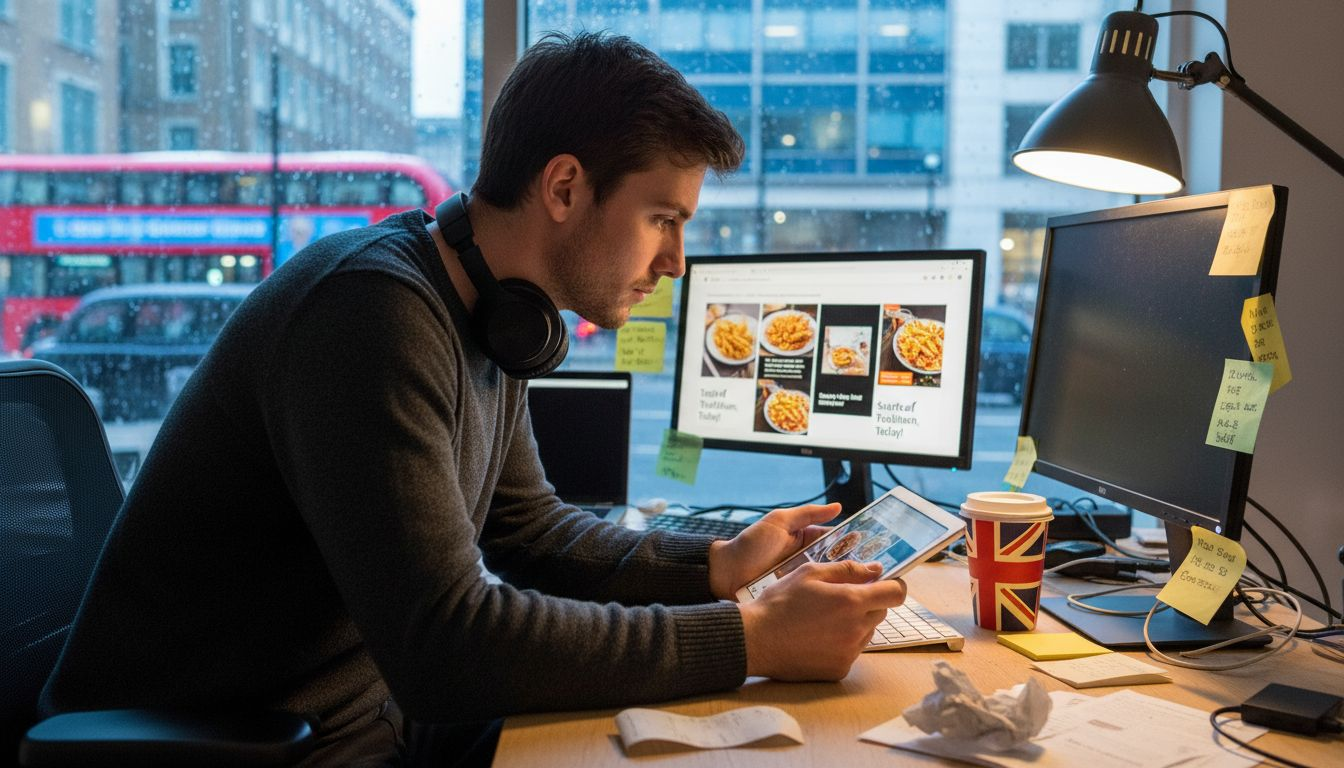
Each advertising platform comes with unique strengths and limitations. Google Ads excel in capturing immediate dining intent, while social media platforms like Instagram offer visually compelling storytelling opportunities. Facebook’s robust targeting options enable restaurants to reach specific demographic groups interested in dining experiences.
Here’s a concise comparison of major online advertising platforms for London restaurants:
| Platform | Best For | Unique Advantage |
|---|---|---|
| Google Ads | Immediate dining intent | High search visibility |
| Facebook Ads | Demographic targeting | Detailed audience segmentation |
| Instagram Ads | Visual storytelling | Photogenic, food-centric content |
| LinkedIn Ads | Corporate dining/catering | Access to business professionals |
| YouTube Ads | Video promotions | Engaging video-based brand building |
Pro tip: Experiment with multiple advertising platforms and track performance metrics to identify which channels deliver the most cost-effective customer acquisitions for your restaurant.
How Targeting and Bidding Systems Operate
Digital advertising platforms use sophisticated targeting and bidding mechanisms that allow London restaurants to reach potential customers with unprecedented precision. These complex systems analyse multiple data points to determine the most effective way to display advertisements to the right audience at the optimal moment.
The key components of targeting and bidding systems include:
- Demographic targeting: Age, location, income, and interests
- Behavioural targeting: Previous online search and dining preferences
- Contextual targeting: Matching ads with relevant content and websites
- Geographical targeting: Focusing on specific London neighbourhoods and postcodes
- Bid strategies: Automated and manual approaches to ad placement
Audience targeting techniques have revolutionised how restaurants connect with potential diners. The bidding system works like an automated auction, where restaurants compete for ad placement by setting maximum bid amounts and defining specific audience parameters.
Each platform uses unique algorithms to determine ad visibility. Google Ads, for instance, considers factors like ad relevance, expected click-through rates, and landing page experience when ranking advertisements. Social media platforms similarly employ complex scoring systems that balance advertiser budgets with audience engagement potential.
Pro tip: Continuously monitor and adjust your targeting parameters to improve ad performance and reduce unnecessary spending.
Costs, Common Pitfalls, and Best Practices
Online advertising for London restaurants involves complex financial considerations and strategic challenges that can significantly impact marketing effectiveness. Understanding the potential costs, avoiding common mistakes, and implementing proven strategies are crucial for maximising return on investment.
Common pitfalls in restaurant online advertising include:
- Budget mismanagement: Overspending without tracking results
- Poorly defined target audiences: Broad, unfocused ad targeting
- Weak visual content: Unappealing or low-quality food imagery
- Inconsistent messaging: Misaligned brand communication
- Neglecting performance analytics: Failing to analyse ad performance
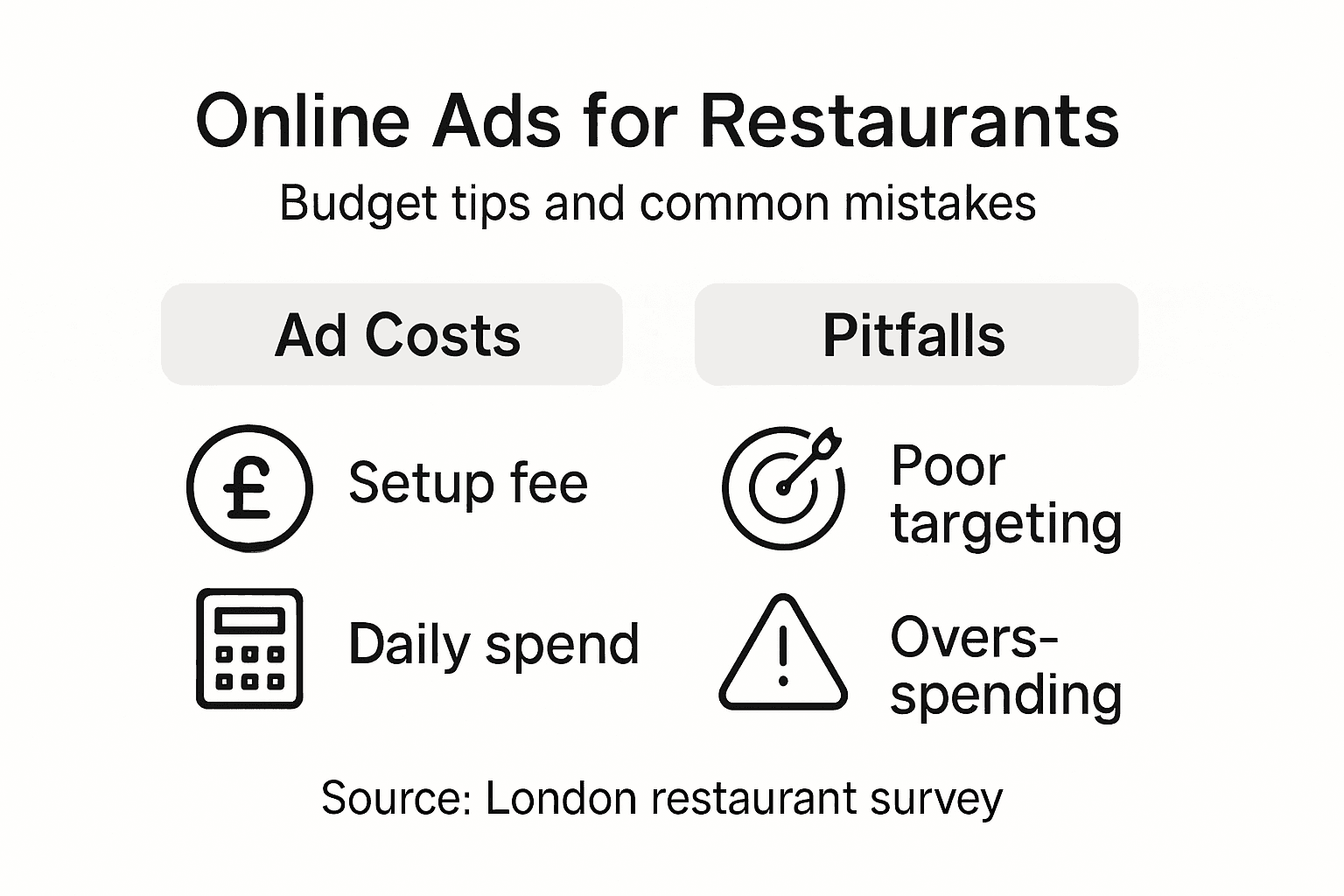
PPC advertising strategies require careful budget allocation and continuous optimisation. Most restaurants can expect to spend between £5-£20 per day on digital advertising, with costs varying based on platform, competition, and targeting specificity. Google Ads and Facebook typically charge on a cost-per-click (CPC) or cost-per-impression (CPM) basis.
Successful restaurants implement rigorous testing and refinement of their advertising approaches. This involves creating multiple ad variations, tracking key performance indicators, and rapidly adjusting strategies based on real-time data. Platforms like Google Ads provide detailed analytics that enable precise measurement of advertisement effectiveness, allowing restaurants to make data-driven marketing decisions.
The following table summarises best practices and common mistakes in restaurant online advertising:
| Best Practice | Why It Matters | Common Pitfall to Avoid |
|---|---|---|
| Test multiple ad formats | Identifies top-performing creatives | Using repetitive visual content |
| Track performance metrics closely | Informs data-driven decisions | Neglecting campaign analysis |
| Allocate budget for experimentation | Uncovers new market segments | Spending solely on familiar tactics |
| Regularly refine audience targeting | Reduces waste and improves results | Targeting overly broad audiences |
Pro tip: Allocate approximately 10-15% of your advertising budget to experimental campaigns, enabling you to discover unexplored audience segments and marketing opportunities.
Legal Considerations and Data Privacy Essentials
Online advertising for London restaurants involves complex legal and data privacy requirements that demand careful navigation of regulatory landscapes. Restaurants must understand and comply with multiple legislative frameworks to protect customer information and maintain ethical digital marketing practices.
Key legal considerations for digital advertising include:
- General Data Protection Regulation (GDPR) compliance
- Cookie consent mechanisms
- User tracking limitations
- Transparent data collection policies
- Customer information protection standards
Online advertising strategies must prioritise customer consent and data transparency. Restaurants are required to implement clear opt-out mechanisms, provide detailed privacy policies, and ensure that any collected customer data is securely managed and used only for specified purposes.
The Information Commissioner’s Office (ICO) provides strict guidelines for digital advertising practices in the United Kingdom. Restaurants must obtain explicit consent before collecting personal data, clearly communicate how information will be used, and provide customers with the ability to request data deletion. Failure to comply can result in significant financial penalties and potential legal challenges.
Pro tip: Consult a legal professional specialising in digital marketing regulations to develop a comprehensive data protection strategy for your restaurant’s online advertising efforts.
Elevate Your London Restaurant with Targeted Online Advertising
Struggling to stand out in the competitive London dining scene The article highlights common challenges like budget mismanagement, poor audience targeting, and the critical importance of compelling visual content Our expert team at Market Link Solutions specialises in helping London restaurants overcome these hurdles by crafting tailored PPC advertising campaigns on Google and Instagram and optimising your presence with SEO and professional web design We understand that precise targeting, engaging ad creatives, and efficient budget use are essential to convert curious browsers into loyal diners
Discover how our proven digital marketing strategies can transform your restaurant’s online visibility and drive foot traffic Today is the best time to act and start building campaigns that reach the right customers with the right message Explore inspiring examples in our Success Stories Archives – Digital Marketing Agency – Market Link Solutions and learn more about our services at Market Link Solutions Partner with us to unlock your restaurant’s full digital potential and grow sustainably in London’s dynamic market
Frequently Asked Questions
How do online ads work for restaurants?
Online ads for restaurants target potential diners through digital platforms, showcasing their offerings at critical decision-making moments. Ads can be displayed via search results, social media, or as visual content on various websites, making them highly effective in reaching local customers.
What types of advertising platforms can restaurants use?
Restaurants can utilise platforms like Google Ads for search visibility, Facebook and Instagram for demographic targeting and visual storytelling, LinkedIn for corporate catering, and YouTube for video promotions. Each platform offers unique advantages based on audience engagement and marketing goals.
How do targeting and bidding systems enhance online ads?
Targeting and bidding systems analyse various data points to ensure ads reach the right audience at optimal times. This includes demographic and behavioural targeting as well as geographical focus, while bid strategies determine how competently restaurants can secure ad placements based on set budgets.
What costs should restaurants expect with online advertising?
Restaurants typically spend between £5-£20 per day on online ads, depending on the platform, competition, and targeting scope. Understanding cost structures like cost-per-click (CPC) or cost-per-impression (CPM) is crucial for effective budgeting and maximising return on investment.