
Every London business owner knows the competition for local attention is fierce, whether you run a Notting Hill bistro or a Kensington aesthetics clinic. When your customers rely on Google to choose where to dine or refresh their look, standing out in searches becomes crucial to your success. By focusing on London-specific keyword strategies, you lay the groundwork for higher visibility and strong connections with the audiences that matter most to your business.
Table of Contents
- Step 1: Define Local Keywords For London Audiences
- Step 2: Optimise Your Website Content For Relevance
- Step 3: Enhance Your Site With Local SEO Signals
- Step 4: Build Quality Links From Reputable UK Sources
- Step 5: Monitor Rankings And Refine Your Strategy
Quick Summary
| Essential Insight | Detailed Explanation |
|---|---|
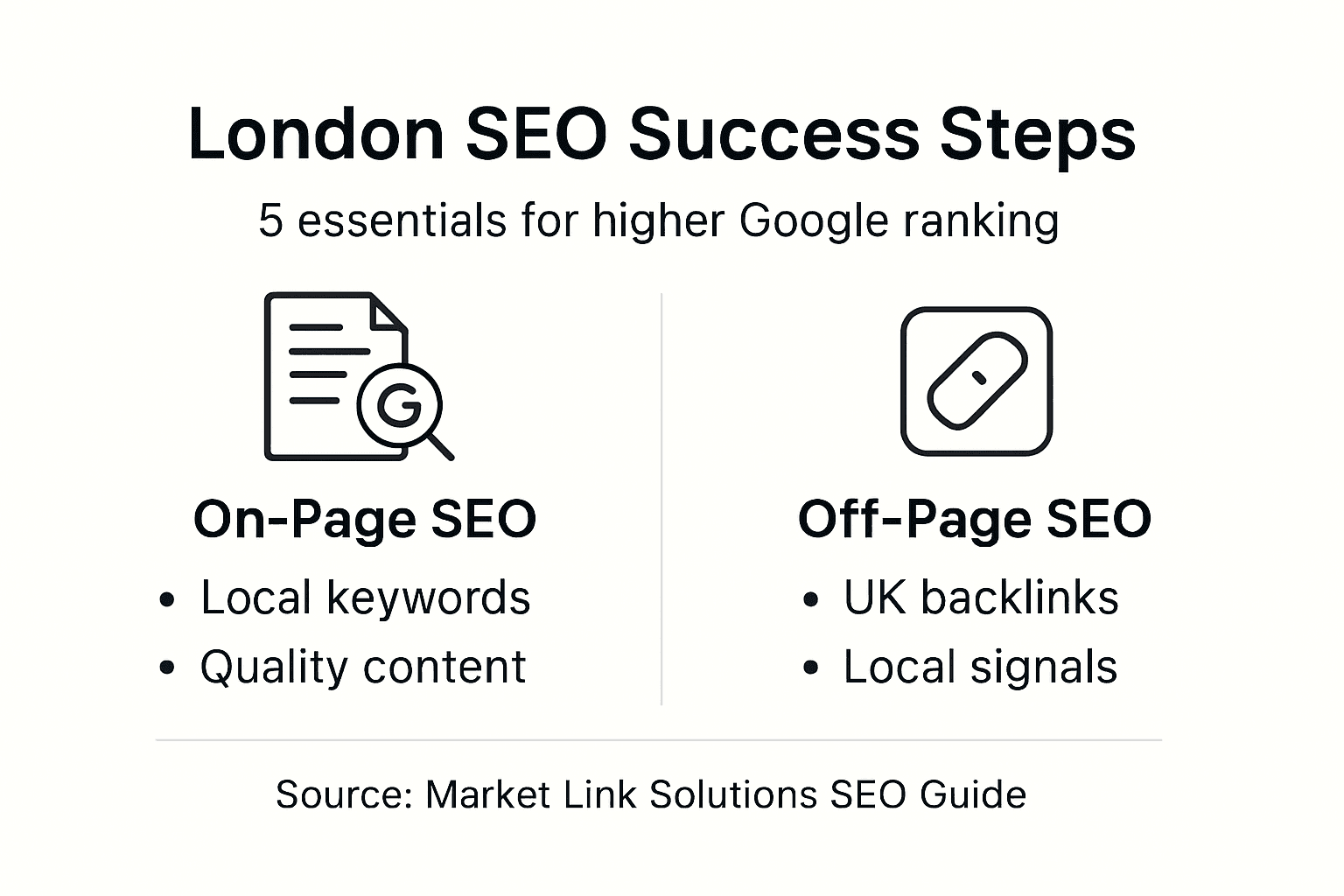
| 1. Identify Local Keywords | Conduct in-depth keyword research tailored for London, using local slang and geographic modifiers to connect with the audience. |
| 2. Create Relevant Content | Produce high-quality, engaging content that directly addresses London locals’ needs and matches their search behaviours. |
| 3. Boost Local SEO Signals | Incorporate location-specific elements and ensure consistency in contact details to enhance credibility and visibility. |
| 4. Acquire Authoritative Backlinks | Focus on building quality backlinks from respected UK sources to improve search engine trust and relevance. |
| 5. Monitor and Adjust Strategies | Regularly assess website performance and SEO metrics to make informed adjustments that maintain or improve search rankings. |
Step 1: Define local keywords for London audiences
Defining effective local keywords is crucial for London businesses seeking to improve their Google rankings and attract targeted local customers. By understanding the nuanced language and search patterns of London audiences, you can craft a strategic keyword approach that resonates with potential clients.
To begin developing your local keyword strategy, start by exploring the specific characteristics of London’s diverse market. Consider how cultural sector insights reveal unique linguistic patterns and interests. Your keyword research should incorporate several key elements:
- Geographic modifiers specific to London (neighbourhoods, boroughs)
- Industry-specific terms relevant to your business sector
- Local slang and colloquial language
- Service-related search terms Londoners commonly use
London’s search behaviour is distinct – your keywords must reflect local nuance.
To effectively target London audiences, map out keywords that combine your core business offering with local identifiers. For instance, a restaurant might use keywords like “Shoreditch brunch spot”, “Soho fine dining”, or “City of London corporate catering”.
Research tools like Google Keyword Planner and local SEO platforms can help you discover precise search volumes and competition levels for these targeted phrases. Pay special attention to long-tail keywords that demonstrate specific local intent.
Top tip: Always prioritise keywords that demonstrate clear local commercial intent, focusing on phrases potential customers would use when seeking immediate services.
Here’s how different local keyword elements can impact your London business SEO:
| Keyword Element | Purpose | Example Impact |
|---|---|---|
| Geographic Modifier | Targets searches by location | Higher Shoreditch visibility |
| Industry-Specific Term | Attracts relevant sector audiences | More restaurant bookings |
| Local Slang/Colloquialism | Builds local trust and relevancy | Better connection with locals |
| Service-Related Search Term | Captures commercial intent | More conversion opportunities |
Step 2: Optimise your website content for relevance
To improve your Google rankings, creating high-quality, targeted content is essential for London businesses seeking digital visibility. Your website must speak directly to local audiences while demonstrating clear expertise and addressing user needs.

Begin by understanding content design principles that prioritise user experience and search intent. This means crafting content that goes beyond simple keyword stuffing and instead focuses on providing genuine value to your potential customers.
Key strategies for content optimisation include:
- Develop locally-relevant, industry-specific content
- Use natural language matching London search patterns
- Create comprehensive, in-depth articles addressing specific user queries
- Incorporate location-specific references and examples
- Ensure content is readable, engaging, and well-structured
Relevance trumps volume – quality always matters more than quantity.
Structure your content with clear headings, concise paragraphs, and strategic keyword placement. Aim to answer your target audience’s questions comprehensively while maintaining a conversational, approachable tone that resonates with London professionals and consumers.
Utilise analytics and user feedback to continuously refine your content strategy, ensuring your website remains dynamic and responsive to changing market needs.
Pro tip: Regularly update your content to reflect current trends and maintain ongoing relevance in the competitive London market.
Step 3: Enhance your site with local SEO signals
Improving your website’s local SEO signals is crucial for helping London businesses stand out in competitive digital landscapes. By strategically incorporating location-specific elements, you can significantly boost your visibility and attract more targeted local customers.
Start by leveraging authoritative local data to enhance your website’s credibility and relevance. This involves integrating precise local information that demonstrates your deep understanding of the London market and your specific neighbourhood.
Key local SEO signal strategies include:
- Add your complete business address and contact details
- Embed Google Maps location on your website
- Create location-specific content pages
- Include London-specific keywords naturally
- Use schema markup for local business information
- Ensure consistent NAP (Name, Address, Phone) across all online platforms
Local SEO signals are your digital neighbourhood markers – make them count.
Pay special attention to technical details like mobile responsiveness and page loading speed, which are critical for local search rankings. Google prioritises websites that offer seamless user experiences, particularly for mobile users searching on the go.
Regularly audit your local SEO signals, checking for accuracy and updating information to maintain optimal search performance. The digital landscape evolves quickly, and staying current is key to maintaining your competitive edge.
Pro tip: Cross-reference your local business information across multiple platforms to ensure consistent, accurate representation of your London business.
Step 4: Build quality links from reputable UK sources
Establishing a robust network of authoritative backlinks is essential for London businesses seeking to improve their Google search rankings. Quality links act as digital endorsements, signalling to search engines that your website is trustworthy and relevant.
Start by exploring linking strategies from official sources that can elevate your website’s credibility. Focus on securing backlinks from respected UK institutions such as government websites, educational establishments, and prominent industry associations.
Strategies for acquiring high-quality backlinks include:
- Create exceptional, shareable content
- Engage in digital PR and outreach
- Collaborate with local London business networks
- Participate in industry conferences and events
- Write guest articles for reputable UK publications
- Develop relationships with sector-specific influencers
Not all links are created equal – quality trumps quantity every time.
Prioritise contextual relevance when building links, ensuring that connected websites align closely with your business sector and local London market. This approach demonstrates genuine authority and helps search engines understand your website’s specific niche.
Consistently monitor your link profile, removing any low-quality or potentially harmful connections that might negatively impact your search rankings.
Pro tip: Always prioritise building genuine relationships over transactional link exchanges to create sustainable, high-value backlink strategies.
Step 5: Monitor rankings and refine your strategy
Successfully ranking on Google requires continuous monitoring and strategic refinement of your SEO approach. Your digital presence is an evolving landscape that demands consistent attention and proactive optimisation.
Understand the evolving search landscape by implementing robust tracking mechanisms that help you stay ahead of algorithm changes and competitive shifts. Regular performance analysis is your key to sustained digital success.
Essential tracking and refinement strategies include:
- Use Google Search Console for detailed ranking insights
- Monitor keyword performance and search positions
- Track organic traffic and conversion rates
- Analyse competitor SEO strategies
- Review website technical performance
- Set up custom analytics dashboards
Small, consistent improvements compound into significant ranking gains.
Focus on data-driven decision making when adjusting your SEO strategy. This means looking beyond surface-level metrics and understanding the deeper patterns in your website’s search performance.
Regularly audit your content, technical infrastructure, and link profile to identify opportunities for improvement. Be prepared to pivot quickly when your analytics reveal emerging trends or potential optimisation pathways.
Pro tip: Schedule monthly SEO performance reviews to maintain a dynamic and responsive digital marketing approach.
The following table summarises ongoing tasks vital for maintaining strong Google rankings in London:
| Task | Frequency | Main Benefit |
|---|---|---|
| Content Audit | Quarterly | Keeps information current |
| Technical Performance Check | Every 2 months | Improves site user experience |
| Link Profile Review | Monthly | Prevents negative SEO impact |
| Keyword Tracking | Weekly | Monitors ranking changes |
Unlock Your London Business Potential with Expert SEO Support
Ranking on Google in London requires a deep understanding of local SEO signals, targeted content, and consistent strategy refinement. If you find it challenging to define the right local keywords or to build quality backlinks that genuinely boost your search presence, you are not alone. Many London small businesses struggle with tailoring their digital marketing efforts to meet the city’s unique demands and search behaviours highlighted in this guide
Our London-based digital marketing agency specialises in helping businesses overcome these exact challenges. From professional SEO optimisation and website design to targeted PPC advertising on Google and Instagram, we provide the expertise you need to shine in your neighbourhood. Interested to see how we have transformed other local brands? Explore our Success Stories Archives – Digital Marketing Agency – Market Link Solutions for real examples of businesses that went from obscurity to being found by their customers online

Ready to take control of your Google rankings and attract more London customers today Visit Market Link Solutions and let us craft a personalised digital strategy that drives growth and puts your business on the map. Don’t let competitors outpace you in this fast-moving market Start your journey with our expert team now
Frequently Asked Questions
How can I define effective local keywords for my London business?
To define effective local keywords, start by exploring specific neighbourhoods and colloquial terms relevant to your industry. Combine your core offerings with geographical modifiers, such as ‘Shoreditch coffee shop’ or ‘City of London event venue’, to attract targeted local customers.
What content strategies should I use to optimise my website for London audiences?
Focus on creating high-quality, locally relevant content that speaks to the needs and interests of Londoners. Use clear headings, natural language, and incorporate local examples to enhance relevance; aim to produce at least one comprehensive article per month addressing common queries within your sector.
How can I improve my local SEO signals for better Google rankings?
To improve local SEO signals, ensure your business address, contact details, and keywords are accurately represented across your website and online platforms. Embed a Google Maps location and create dedicated location-specific content pages; regularly audit this information every quarter to maintain accuracy.
What steps can I take to build quality backlinks for my London business?
Start by creating exceptional, shareable content that engages audiences and encourages links from other reputable websites. Engage in digital public relations and seek opportunities for guest articles to build connections; aim for at least three to five quality backlinks per month from trusted sources.
How should I monitor my Google rankings and refine my SEO strategy?
Regularly track your keyword performance using analytics tools to understand shifts in search rankings. Schedule monthly reviews of your SEO strategy to identify areas for improvement and make data-driven adjustments to enhance your website’s performance over time.
Why is it important to prioritise local colloquial terms in my keyword strategy?
Using local colloquial terms helps you connect with your target audience more authentically and demonstrates your understanding of their search behaviour. Incorporate such terms into your content to resonate better with Londoners, enhancing both engagement and conversion rates.