
Every british small business competing in the London market faces tough digital choices. With over 75 percent of local companies investing in online advertising, standing out requires more than just a few clicks. Whether your aim is rapid growth, steady lead generation, or simply making every marketing pound count, understanding pay per click strategy can transform your results. This guide reveals the step by step approach London businesses use to turn advertising spend into real business impact.
Table of Contents
- Step 1: Define Your PPC Goals And Budget
- Step 2: Choose Your Target Audience And Platforms
- Step 3: Create Compelling Ad Copy And Visuals
- Step 4: Set Up Campaigns And Ad Groups In Your PPC Platform
- Step 5: Track Results And Refine Your Ads
Quick Summary
| Key Point | Explanation |
|---|---|
| 1. Set Clear PPC Goals | Define specific, measurable objectives that align with business growth, tailoring your strategy to meet these targets. |
| 2. Develop a Strategic Budget | Allocate between £500 to £1500 monthly based on sector; adjust as you monitor campaign performance. |
| 3. Understand Your Audience | Create a detailed customer profile to effectively target potential customers on appropriate platforms. |
| 4. Craft Compelling Ads | Use engaging copy and high-quality visuals to convey your unique selling points and drive engagement. |
| 5. Track and Optimise Campaigns | Regularly analyse key performance metrics to refine advertising strategies incrementally for better results. |
Step 1: Define your PPC goals and budget
Setting precise goals and establishing a strategic budget are fundamental first steps in crafting successful pay per click advertising campaigns for London small businesses. Your PPC objectives will directly shape how you allocate resources and measure campaign performance, making this initial planning phase crucial for driving meaningful results.
Begin by identifying clear, measurable objectives that align with your business growth targets. Are you seeking to increase website traffic, generate qualified leads, boost online sales, or enhance brand visibility? Different goals require distinct approaches. For instance, realistic PPC budget planning depends critically on understanding your specific industry benchmarks and competitive landscape. A restaurant might prioritise local customer acquisition, while a professional services firm could focus on lead generation.
When determining your initial budget, start conservatively and plan for iterative investment. Most small businesses in London should allocate between £500 to £1500 monthly for PPC advertising, depending on their sector and competitive intensity. Track your key performance indicators meticulously during the first three months, analysing metrics like click through rates, conversion costs, and return on ad spend. This data will enable you to progressively refine and optimise your strategy, ensuring your marketing pounds deliver maximum impact.
Warning: Avoid the common mistake of spreading your budget too thinly across multiple platforms. Concentrate your initial efforts on one or two channels where your target audience is most active, whether that is Google Ads, Facebook, or Instagram. Quality targeting trumps quantity every time.
Step 2: Choose your target audience and platforms
Selecting the right target audience and advertising platforms is a critical step in developing an effective pay per click strategy for your London small business. This decision will determine how precisely you can reach potential customers and maximise your marketing investment.
Start by developing a detailed understanding of your ideal customer profile. Consider demographic factors like age, location, income level, and professional characteristics. Effective B2B audience targeting through PPC requires a nuanced approach that goes beyond basic demographics. For professional services or business to business enterprises, platforms like LinkedIn Ads can provide laser focused targeting options. Conversely, local service businesses such as restaurants or tradespeople might find greater success on Google Search Ads or Facebook Advertising.
Each digital advertising platform offers unique strengths. Google Ads excels at capturing high intent search traffic, while Facebook and Instagram are powerful for demographic and interest based targeting. Microsoft Advertising can offer lower competition and potentially cheaper click rates. Your selection should align closely with where your target customers are most likely to be searching or engaging online. Critically analyse your audience’s online behaviour research their preferred digital channels and match your platform strategy accordingly.
Warning: Avoid spreading your advertising budget across too many platforms initially. Focus on mastering one or two channels where you can achieve the most precise audience targeting and track your results meticulously. Quality of targeting matters significantly more than quantity of platforms.
Step 3: Create compelling ad copy and visuals
Crafting persuasive ad copy and visuals is your gateway to capturing potential customers attention and driving meaningful engagement in your pay per click campaigns. Your advertisement must instantly communicate value and spark curiosity among your target audience.
Effective pay per click marketing demands creating clear concise messages that highlight your unique selling points and include powerful calls to action. Each advertisement should address a specific customer pain point while presenting your business as the ideal solution. For London small businesses this means developing copy that speaks directly to local needs and preferences. Use language that resonates with your target demographic be it professional corporate speak for business services or warm conversational tones for local hospitality businesses.

Visual elements play an equally critical role in your advertisement strategy. Select high quality images or graphics that align with your brand identity and immediately capture viewer interest. Professional photographs showcasing your products or services work exceptionally well. Ensure your visuals are crisp clean and optimised for mobile viewing since a significant portion of digital advertising traffic comes through smartphone devices. Test multiple visual and copywriting variations to determine which combinations generate the most engagement and conversions.
Warning: Avoid generic stock images or overly complicated messaging. Your advertisement should be distinctive memorable and communicate your value proposition within seconds of a potential customer viewing it.
Step 4: Set up campaigns and ad groups in your PPC platform
Setting up your pay per click campaigns and ad groups is a strategic process that requires careful planning and precise configuration. This crucial step will determine how effectively your advertisements reach potential customers and generate meaningful business results.
The essential guide to PPC advertising recommends starting by creating a clear campaign structure that aligns with your specific business objectives. Begin by establishing a primary campaign that reflects your overall marketing goal such as increasing website traffic generating leads or driving product sales. Within each campaign create targeted ad groups that segment your audience based on specific characteristics like location service type or customer intent.
When configuring your ad groups focus on developing tightly themed keyword clusters that relate directly to each specific audience segment. For London small businesses this might mean creating separate ad groups for different service offerings or customer demographics. Utilise the platform settings to set precise geographical targeting ensuring your advertisements are shown exclusively to potential customers within your desired London postcodes or service areas. Pay close attention to your bidding strategies selecting options that match your budget and campaign objectives whether that involves maximising clicks generating conversions or maintaining a specific cost per acquisition.
Warning: Avoid creating too many ad groups or keywords initially. Start with a focused approach that allows you to track performance effectively and gradually expand your campaigns as you gather more data and insights.
Step 5: Track results and refine your ads
Tracking and refining your pay per click advertising performance is an ongoing process that transforms raw data into strategic marketing insights. Successful London small businesses understand that continuous optimisation is the key to maximising your advertising return on investment.
Effective Google Ads strategies begin with understanding your key performance metrics. Focus on tracking critical indicators such as click through rates conversion rates cost per click and overall return on ad spend. Most PPC platforms provide comprehensive dashboards that allow you to drill down into granular performance data. Pay special attention to which keywords ad variations and audience segments are generating the most valuable results for your specific business.
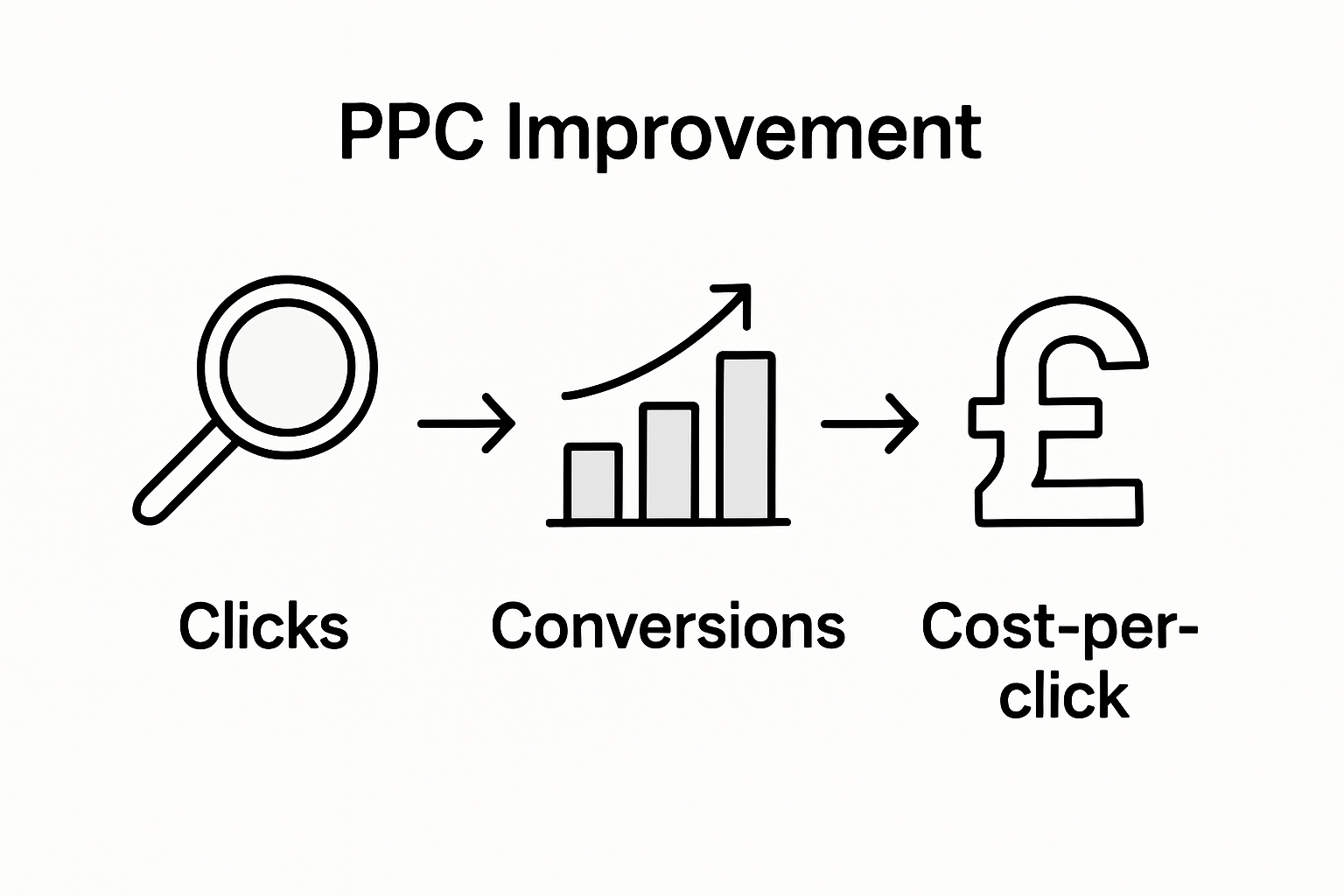
The refinement process involves making incremental adjustments based on your performance data. This might include pausing underperforming keywords reducing bids on expensive clicks adjusting audience targeting or rewriting ad copy to improve engagement. Create a regular review schedule perhaps weekly or fortnightly where you analyse your campaign metrics and implement strategic changes. Remember that PPC advertising is an iterative process small consistent improvements can significantly boost your overall campaign effectiveness over time.
Warning: Avoid making drastic changes too quickly. Implement refinements gradually and track the impact of each modification to understand precisely what drives your advertising success.
Elevate Your London Small Business with Expert PPC Support
Navigating the complexities of pay per click advertising for London small businesses can be challenging. The article highlights common hurdles like defining clear PPC goals, selecting the right platforms, and crafting compelling ads that truly resonate. These pain points often leave small business owners uncertain about how to maximise their advertising budget and reach the ideal customers effectively. At Market Link Solutions, we understand these challenges and specialise in creating targeted PPC campaigns on Google and Instagram designed specifically for London-based small businesses. We help you set clear objectives, select powerful audience targeting, and develop eye-catching ad copy and visuals that drive real results.
Boost your confidence by exploring real success stories from businesses like yours in our Success Stories Archives – Digital Marketing Agency – Market Link Solutions.
Ready to transform your PPC campaigns into a growth engine? Visit Market Link Solutions today to discover how our bespoke web design and PPC advertising services can put your London small business on the path to success. Don’t wait until your competitors gain the upper hand—take the next step and contact us now to create a plan that delivers measurable returns.
Frequently Asked Questions
What are the first steps to set up PPC ads for my small business in London?
Start by defining your PPC goals and budget. Identify clear objectives based on your desired outcomes, such as increasing website traffic or generating leads, and allocate a monthly budget that reflects your business’s financial capacity.
How should I select my target audience for PPC advertising?
Develop a detailed customer profile that considers factors like demographics, location, and interests. Focus on understanding where your potential customers spend their time online and tailor your ad strategy to those platforms.
What should I include in my ad copy and visuals?
Create compelling ad copy that addresses specific customer pain points and includes strong calls to action. Use high-quality images that align with your brand identity to enhance engagement and ensure your visuals are optimised for mobile viewing.
How do I structure my PPC campaigns and ad groups?
Establish a clear campaign structure based on your business objectives and create segmented ad groups. Utilise tightly themed keyword clusters for each ad group to target specific audience segments effectively.
How can I track and refine my PPC ad performance?
Regularly monitor key performance metrics such as click-through rates and conversion rates to gauge effectiveness. Implement incremental adjustments based on these metrics and review performance at least every two weeks to optimise your approach.