
Over eighty percent of british consumers start their search for restaurants or personal trainers online, yet many small businesses in London miss critical opportunities to connect with these customers. Whether you run a local eatery or a fitness studio, understanding how to structure SEO content can mean the difference between standing out and getting lost. This article shows practical steps for identifying local keywords, researching competitors, crafting compelling copy, and refining your content, so your London business attracts real customers searching for british services.
Table of Contents
- Step 1: Identify Target Keywords For Your Local Audience
- Step 2: Research Competitors’ Top-Performing Content
- Step 3: Plan Your Content Structure With SEO In Mind
- Step 4: Craft Engaging And Optimised SEO Copy
- Step 5: Review And Refine Content For Best Results
Quick Summary
| Key Insight | Explanation |
|---|---|
| 1. Identify Local Keywords | Focus on keywords specific to your location and services to enhance online visibility. |
| 2. Analyse Competitor Content | Research your competitors’ top-performing content to identify successful strategies and gaps. |
| 3. Plan SEO-Friendly Content | Structure content clearly and strategically, aligning with user needs and search intent. |
| 4. Create Engaging SEO Copy | Write compelling copy that addresses audience needs while optimising for search engines. |
| 5. Review and Refine Regularly | Continuously monitor and update your content based on performance metrics and audience engagement. |
Step 1: Identify target keywords for your local audience
Successfully targeting local keywords can dramatically improve your London small business’s online visibility. Your goal is to uncover search terms that potential customers are actually using when seeking services like yours in the city.
Start by thinking from your customer’s perspective. For London businesses, this means understanding local search intent and specifics about your neighbourhood, service area, and unique offerings. A personal trainer in Hackney would target different keywords than a restaurant in Shoreditch. Consider location specific phrases like “fitness trainer in Hackney” or “best pizza restaurant near Brick Lane” that reflect precise local search behaviour.
Utilise keyword research tools like Google Keyword Planner, SEMrush, or Ahrefs to discover search volumes and competition levels for your identified terms. Prioritise keywords with moderate search volume and lower competition where you can realistically rank. Look for long tail keywords that combine location, service type, and specific customer needs.
Expert Advice: Focus on creating a keyword list that balances specificity with search volume, ensuring you target terms your ideal local customers are actually typing into search engines.
Here is a comparison of popular keyword research tools for London businesses:
| Tool | Main Benefit | Useful For | Notable Limitation |
|---|---|---|---|
| Google Keyword Planner | Accurate Google search volumes | Budget-conscious users | Limited competition data |
| SEMrush | Detailed competitor insights | Comprehensive research | Costly for small businesses |
| Ahrefs | Robust backlink analysis | Deep domain exploration | Steeper learning curve |
Step 2: Research competitors’ top-performing content
Understanding your competitors’ content strategy is crucial for developing a winning SEO approach for your London small business. Your objective is to identify what content performs best in your specific market segment and learn from their successful tactics.

Begin by investigating competitor search visibility using tools like SEMrush or Ahrefs. These platforms allow you to analyse which keywords your competitors rank for, their top-performing content, and the strategies driving their search engine success. Pay close attention to the type of content that generates the most engagement such as blog posts, videos, or infographics specific to London businesses in your sector.
Analyse the content structure, depth, and quality of your top three competitors. Note the topics they cover, their writing style, and how they address customer pain points. Look for gaps in their content that you can fill with more comprehensive, targeted information. Remember that while researching, you must maintain ethical standards when comparing content, ensuring your analysis remains factual and adds genuine value to your audience.
Expert Advice: Create a spreadsheet tracking competitors’ top content, noting their keyword strategies, content types, and engagement metrics to inform your own SEO approach.
Step 3: Plan your content structure with SEO in mind
Planning your content structure strategically is fundamental to creating SEO friendly materials that attract and engage your London business audience. Your goal is to develop a clear, user focused content framework that both search engines and potential customers will appreciate.
Content design principles emphasise creating information that helps users find and act quickly. Start by mapping out a content hierarchy that breaks down complex topics into digestible sections. For a London personal training business, this might mean creating cornerstone content about fitness that branches into specific topics like nutrition, workout techniques, and local training options. Ensure each piece of content has a clear purpose, addresses specific user questions, and includes relevant keywords naturally within headings, subheadings, and body text.
Consider your content’s logical flow and how different pieces interconnect. Group related topics together, create internal links between complementary articles, and maintain a consistent URL structure that reflects your content taxonomy. Pay attention to readability by using short paragraphs, descriptive headings, and multimedia elements like images or videos that support your written content. Your structure should guide readers through a seamless journey while simultaneously signalling topical relevance to search engine algorithms.
Expert Advice: Create a content blueprint that maps out your key topics, ensuring each piece serves a specific user need and connects strategically with other content on your site.
Step 4: Craft engaging and optimised SEO copy
Creating compelling SEO copy that resonates with your London audience requires a strategic blend of creativity, clarity, and technical understanding. Your mission is to write content that speaks directly to potential customers while satisfying search engine algorithms.
Writing for web audiences demands a laser focus on clarity and user intent. Start by understanding your target audience deeply. For a London personal training business, this means crafting copy that addresses specific fitness challenges, local lifestyle considerations, and specific neighbourhood needs. Use natural language that incorporates your researched keywords seamlessly, avoiding awkward stuffing. Each paragraph should solve a problem, answer a question, or provide genuine value to your reader.
Structure your content with readability in mind. Use clear headings, break text into digestible paragraphs, and incorporate relevant keywords naturally. Your sentences should flow conversationally while maintaining a professional tone. Include specific examples that resonate with London small business owners, demonstrating your understanding of their unique market challenges. Ensure your copy includes clear calls to action that guide readers towards their next steps, whether that is booking a consultation, signing up for a newsletter, or exploring your services further.
Expert Advice: Write as if you are having a direct conversation with your ideal client, focusing on their specific needs and challenges while maintaining a professional and authoritative tone.
Step 5: Review and refine content for best results
Once you have created your SEO content, the journey does not end there. Continuous improvement and strategic refinement are crucial for maintaining and enhancing your online performance.
Analytics tools provide critical insights into how your content performs. Regularly monitor metrics such as organic traffic, time on page, bounce rate, and conversion rates. For a London personal training business, this might mean tracking how many website visitors turn into consultation bookings or newsletter sign ups. Pay attention to which content pieces attract the most engagement and use these insights to inform future content strategies.
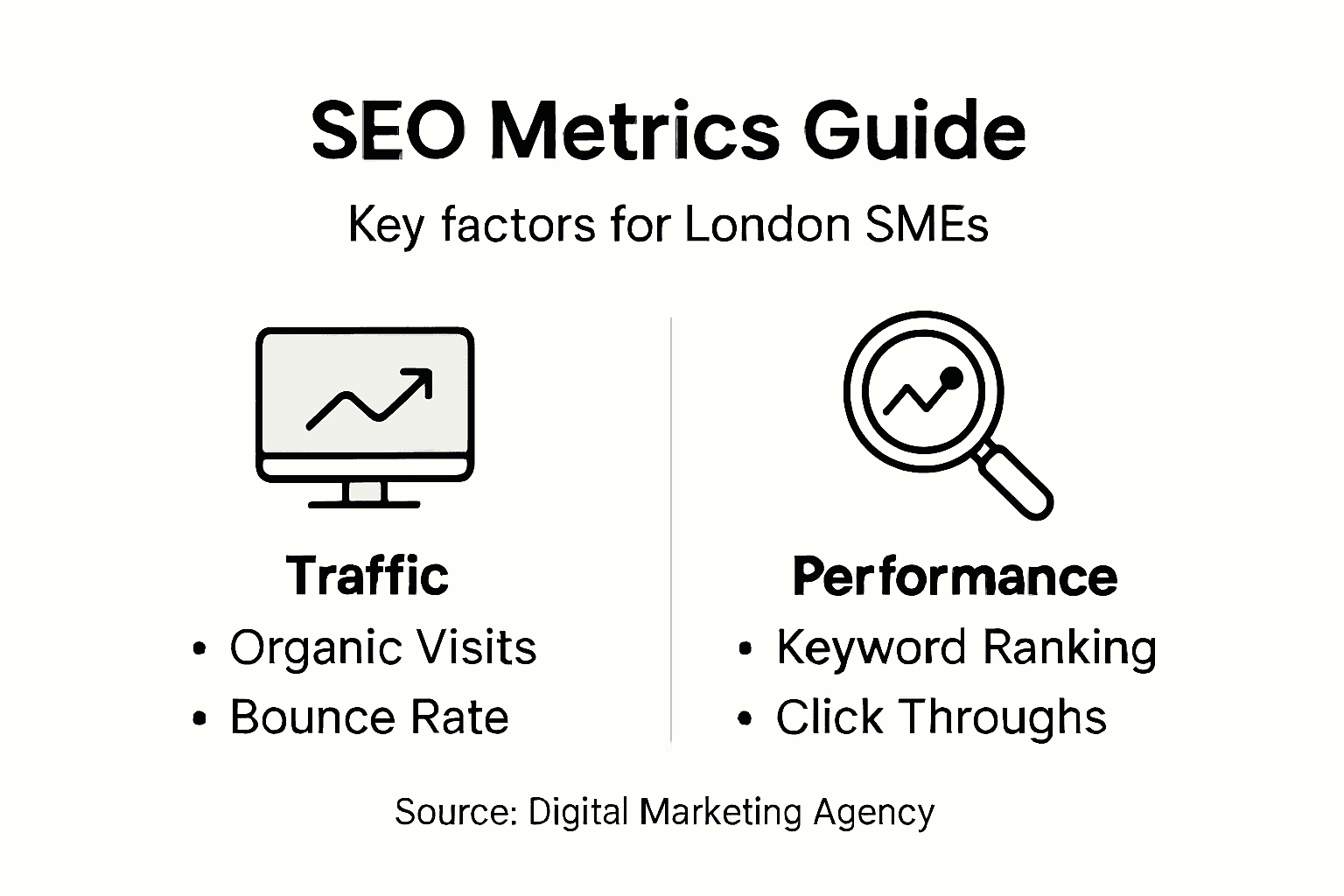
This summary highlights key SEO content performance metrics and their significance:
| Metric | What It Measures | Why It Matters for London SMEs |
|---|---|---|
| Organic Traffic | Visitors from search | Indicates SEO visibility |
| Time on Page | Average reader stay time | Suggests engagement quality |
| Bounce Rate | Single-page visits | Highlights content relevance issues |
| Conversion Rate | Desired action completion | Reveals ROI of content strategy |
Refine your content based on real user behaviour and search engine performance. Look for opportunities to update existing articles with fresh information, more targeted keywords, or additional value for your audience. Remove or consolidate underperforming content, and consider creating new pieces that fill identified gaps in your current content strategy. Remember that SEO is an ongoing process of testing, learning, and adapting to both user needs and search engine algorithms.
Expert Advice: Treat your content as a living document that requires regular check ups and strategic updates to remain relevant and effective.
Elevate Your London Small Business with Expert SEO Content Support
Writing effective SEO content tailored to London small businesses can feel overwhelming. The article highlights challenges such as identifying precise local keywords, analysing competitor strategies, and continuously refining content to engage your audience and improve visibility. If you are striving to craft content that truly connects with your local customers and drives real results, expert guidance is essential. From keyword research to content optimisation, every step must align with your goals to overcome common SEO hurdles and compete in the busy London market.
Unlock proven strategies that deliver growth by exploring our Success Stories Archives – Digital Marketing Agency – Market Link Solutions and see how businesses like yours have transformed their online presence.
Take the next step now and partner with a London-based digital marketing agency dedicated to small businesses. We provide bespoke Web Design and Development, PPC Advertising on Google and Instagram, plus SEO optimisation to help you climb search rankings and attract your ideal customers. Visit us at Market Link to start your journey towards sustainable business growth with results that matter.
Frequently Asked Questions
How can I identify the right keywords for my London small business?
To identify the right keywords, think from your customers’ perspective and use localised phrases that reflect your specific services. Prioritise keywords that have moderate search volumes and lower competition, and consider utilising keyword research tools to refine your choices.
What types of content should I focus on for SEO for my small business?
Focus on creating content that resonates with your target audience, such as blog posts, videos, or infographics that address their specific needs. Analyse your competitors’ top performing content to identify gaps that your business can fill.
How do I structure my content for optimal SEO?
To structure your content effectively, create a clear hierarchy that breaks topics into manageable sections, using headings and subheadings. Ensure your content flows logically, is easy to read, and contains relevant keywords naturally integrated throughout.
What techniques can I use to improve my SEO copywriting?
To improve your SEO copywriting, ensure you write directly to your audience’s needs, using clear language and natural keyword integration. Create engaging paragraphs that provide value, and use calls to action to guide readers towards the next steps they should take.
How often should I review and update my SEO content?
Regularly review and update your SEO content at least every few months to ensure it remains relevant and effective. Monitor performance metrics like organic traffic and engagement rates to identify opportunities for improvement or necessary updates.