
For restaurant and aesthetics clinic owners in London, the difference between a thriving business and missed opportunities often starts with your website. Customers will judge your professionalism in seconds, and that first click can determine whether they book a table or explore your competitor. By focusing on web design that prioritises clear purpose and strong user experience, you create trust, encourage more enquiries, and lay the groundwork for measurable business growth.
Table of Contents
- What Web Design Means For Small Businesses
- Types Of Web Design Solutions Available
- How Web Design Impacts Trust And Growth
- SEO And Marketing Advantages Explained
- Common Pitfalls When Skimping On Design
Key Takeaways
| Point | Details |
|---|---|
| Web Design is Crucial for SMEs | A well-designed website builds credibility and drives customer engagement, leading to higher conversions. |
| Focus on User Experience | Prioritise intuitive navigation, mobile responsiveness, and fast loading times to retain visitors. |
| Choose the Right Design Solution | Evaluating between template-based, CMS, and custom designs is essential for long-term scalability. |
| Invest in Professional Design | Allocate a reasonable budget for web design as it is a vital investment in your business’s success. |
What Web Design Means for Small Businesses
For London small businesses, web design represents far more than a digital brochure—it’s a strategic asset that directly impacts customer perception, engagement, and conversion potential. Modern web design goes beyond aesthetic appeal, functioning as a critical communication platform that can significantly influence a company’s market positioning and growth trajectory.
At its core, web design serves several fundamental business objectives:
- Creating a powerful first impression
- Establishing credibility and professionalism
- Communicating brand identity and values
- Providing seamless user experience
- Driving customer enquiries and conversions
Small businesses particularly benefit from strategic web design that focuses on clarity and user experience. Unlike large corporations with extensive marketing budgets, SMEs must leverage every digital interaction to build trust and showcase their unique value proposition. This means crafting websites that are not just visually appealing, but also intuitive, informative, and optimised for immediate customer action.
The technical aspects of web design are equally crucial. Mobile responsiveness, fast loading speeds, and clean navigation are no longer optional—they’re essential requirements for capturing and retaining online visitor attention. Research indicates that 57% of users will abandon a website if it takes more than 3 seconds to load, underscoring the direct correlation between design quality and business performance.
User Experience Priorities:
- Intuitive navigation
- Mobile device compatibility
- Fast page loading
- Clear call-to-action buttons
- Consistent branding elements
Pro tip: Invest in a professional web design audit to identify potential user experience barriers and conversion opportunities.
Types of Web Design Solutions Available
London small businesses have multiple web design pathways to choose from, each offering distinct advantages and challenges. Small business web design solutions typically fall into three primary categories: template-based platforms, content management systems (CMS), and custom-developed websites.
Template-based solutions provide the most accessible entry point for businesses with limited digital budgets:
- Low initial investment
- Quick deployment
- Pre-designed layouts
- Limited customisation options
- Suitable for basic online presence
Content Management Systems (CMS) like WordPress offer a more flexible middle ground for growing businesses. These platforms provide greater control over website content and design, allowing entrepreneurs to make updates without extensive technical knowledge. They strike a balance between affordability and functionality, enabling small businesses to create more sophisticated online experiences.
Bespoke web design represents the most comprehensive solution, offering tailored digital experiences precisely aligned with a company’s brand and specific requirements. While typically the most expensive option, custom websites deliver:
- Unique brand representation
- Advanced functionality
- Scalable design architecture
- Enhanced user experience
- Competitive differentiation
Investment Considerations:
Here’s a quick comparison of web design solution types and their long-term business implications:
| Solution Type | Key Business Benefit | Potential Limitation |
|---|---|---|
| Template-based | Minimal upfront cost | Restricts future branding |
| CMS (e.g., WordPress) | Easy to update and expand | May need periodic upgrades |
| Custom Development | Full control over features | Requires larger investment |
- Template sites: £50-£500
- CMS-managed sites: £500-£2,500
- Custom web design: £2,500-£10,000+
Pro tip: Evaluate your business goals and budget carefully before selecting a web design solution, considering long-term scalability and brand representation.
How Web Design Impacts Trust and Growth
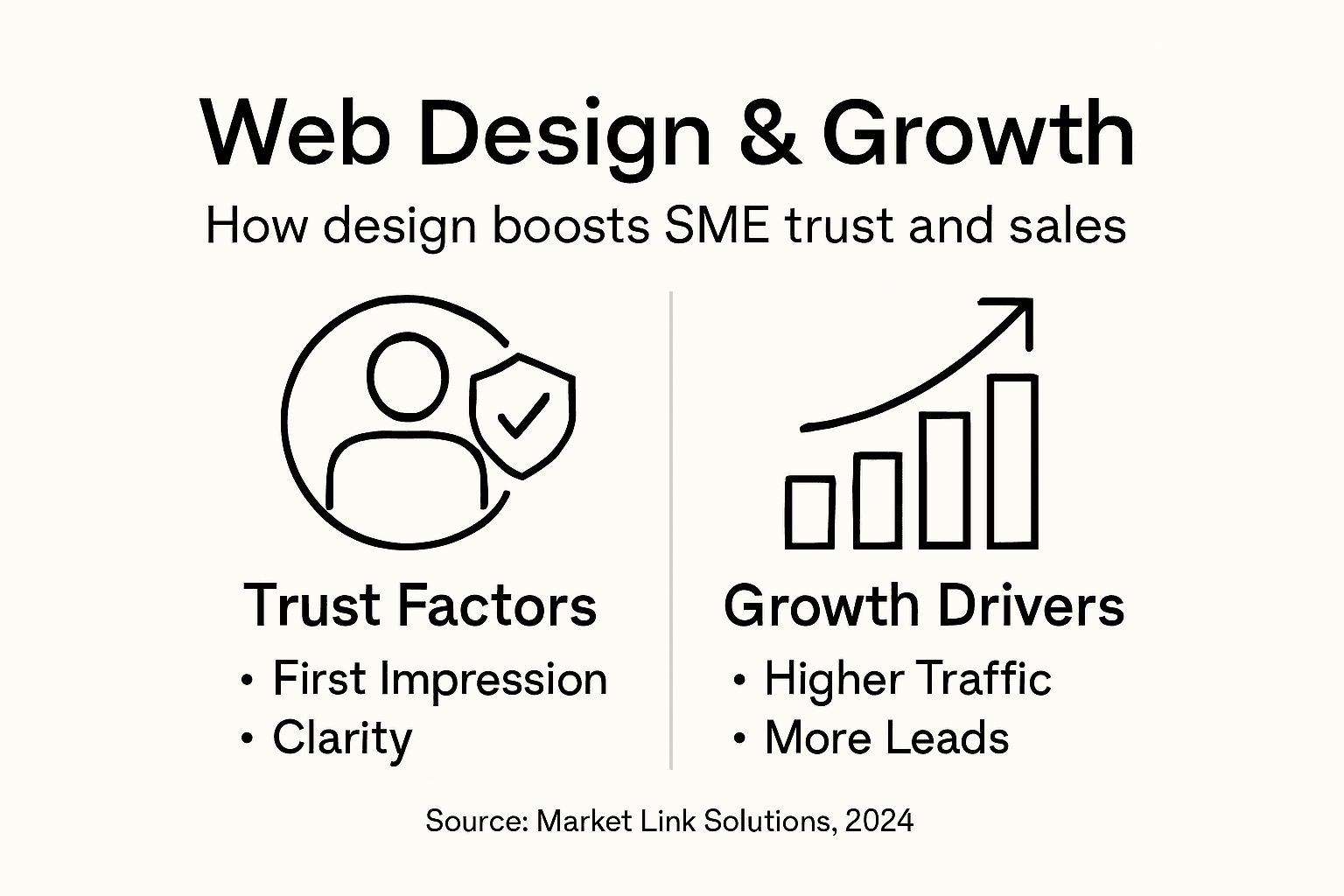
In the competitive London business landscape, web design serves as a critical mechanism for building digital credibility and driving organisational growth. Web design’s impact on business performance extends far beyond aesthetic appeal, functioning as a sophisticated communication tool that directly influences customer perception and engagement.
Trust-building elements in web design are multifaceted and strategically crucial:
- Professional visual consistency
- Clear, readable typography
- High-quality imagery
- Intuitive navigation
- Transparent contact information
- Security indicators (SSL certificates)
- Mobile responsiveness
Potential customers make instantaneous judgments about a business’s reliability within milliseconds of landing on a website. A poorly designed interface can immediately erode confidence, whereas a thoughtfully crafted digital experience signals professionalism, competence, and attention to detail. This psychological mechanism translates directly into tangible business outcomes, with studies consistently showing that well-designed websites can increase conversion rates by up to 200%.
Beyond initial impressions, sophisticated web design supports ongoing business growth through several key mechanisms:
- Enhanced user experience
- Improved search engine visibility
- Seamless customer interaction
- Effective brand storytelling
- Data collection and analytics integration
A website is no longer just a digital brochure—it’s a dynamic business asset that continuously works to attract, engage, and convert potential customers.
Pro tip: Regularly audit your website’s design and functionality, treating it as a living business tool that requires consistent refinement and strategic updates.

The following table summarises how design quality influences business growth and customer perception:
| Design Aspect | Customer Impact | Growth Contribution |
|---|---|---|
| Consistent branding | Boosts professionalism | Encourages loyalty |
| Fast site performance | Reduces visitor dropout | Increases conversion rates |
| Mobile responsiveness | Reaches all demographics | Expands user base |
| Clear navigation | Facilitates quick decisions | Improves engagement metrics |
SEO and Marketing Advantages Explained
For London small businesses, SEO strategies offer critical marketing advantages that transform digital visibility and customer acquisition. Search engine optimisation represents a sophisticated approach to increasing online prominence, enabling businesses to compete effectively in an increasingly digital marketplace.
Key SEO and marketing advantages for small businesses include:
- Higher search engine rankings
- Increased organic website traffic
- Enhanced brand credibility
- Cost-effective marketing strategy
- Targeted audience engagement
- Measurable marketing performance
- Competitive market positioning
Understanding search engine algorithms means recognising that modern SEO goes beyond simple keyword placement. Sophisticated search engines now evaluate websites holistically, considering factors like user experience, content quality, mobile responsiveness, and technical performance. This comprehensive approach means businesses must develop strategic, multifaceted digital marketing strategies that align with evolving technological standards.
The most compelling marketing advantages emerge from integrated SEO approaches that combine technical optimization with high-quality content creation:
- Develop targeted, relevant content
- Optimise website technical performance
- Build high-quality backlink networks
- Create mobile-responsive design
- Implement structured data markup
Effective SEO transforms your website from a passive online brochure into an active customer acquisition engine.
Pro tip: Invest in regular SEO audits to identify and address potential optimization opportunities before they impact your digital performance.
Common Pitfalls When Skimping on Design
Many London small businesses unknowingly sabotage their digital potential by cutting corners on website design. Cost-saving approaches might seem financially prudent initially, but they often result in significant long-term revenue losses and diminished market credibility.
Critical design pitfalls that damage business perception include:
- Unprofessional visual aesthetics
- Cluttered, confusing page layouts
- Slow loading speeds
- Non-responsive mobile design
- Inconsistent branding elements
- Poor colour and typography choices
- Lack of clear navigation paths
Website design is not merely about appearance—it’s a strategic communication tool that directly influences customer trust and conversion potential. Businesses that rely on cheap, template-based solutions frequently experience reduced engagement, higher bounce rates, and diminished perceived professionalism. The visual and functional quality of a website serves as an implicit quality signal for potential customers.
The most damaging design mistakes small businesses make involve:
- Ignoring mobile user experience
- Using low-quality stock imagery
- Overcrowding web pages
- Neglecting site speed optimization
- Failing to implement clear calls-to-action
A poorly designed website is worse than no website at all—it actively drives potential customers away.
Pro tip: Allocate a realistic budget for professional web design, viewing it as a critical business investment rather than an optional expense.
Elevate Your London SME with Expert Web Design and Digital Growth Solutions
Struggling to make the right first impression or losing customers due to slow loading and poor navigation is a common challenge for London SMEs. From the article, it is clear that investing in professional web design is essential to build trust, improve user experience and drive business growth through clear branding and mobile responsiveness. At Market Link Solutions, we understand these pain points and specialise in transforming small business websites into powerful lead generation engines. With our comprehensive services in Web Design and Development, PPC Advertising, and SEO optimisation, we help small businesses engage their audience and stand out in a crowded marketplace.
Explore real examples of how we have helped other clients succeed in our Success Stories Archives – Digital Marketing Agency – Market Link Solutions.
Ready to turn your website into a trusted business asset that grows your customer base? Visit Market Link Solutions today to start your journey with a tailored digital strategy that suits your budget and ambitions. Don’t wait for lost opportunities. Take action now and experience the difference expert web design can make for your London small business.
Frequently Asked Questions
What is the importance of web design for small businesses?
Web design is crucial for small businesses as it creates a strong first impression, establishes credibility, communicates brand identity, and enhances user experience, which together drive customer enquiries and conversions.
How does web design affect customer trust and conversion rates?
A well-designed website fosters trust by showcasing professionalism and attention to detail. Studies show that a thoughtfully crafted website can improve conversion rates by up to 200%, highlighting its impact on business performance.
What types of web design solutions are available for small businesses?
Small businesses generally have three options: template-based solutions for low-cost entry, content management systems (CMS) for flexibility and ease of updates, and custom-developed websites for unique brand representation and advanced functionality.
What are some common pitfalls of skimping on web design?
Cutting corners in web design can lead to unprofessional aesthetics, slow loading speeds, confusing layouts, and poor mobile responsiveness, all of which can damage customer perception and reduce engagement.