
More than 90 percent of hungry Londoners search online before choosing where to eat, which means a strong digital presence is now vital for every British restaurant. Whether you run a tiny family bistro or a trendy eatery, online visibility shapes first impressions and drives foot traffic. This guide reveals step by step tactics to help British restaurateurs stand out locally, capture more diners, and manage their online reputation with confidence.
Table of Contents
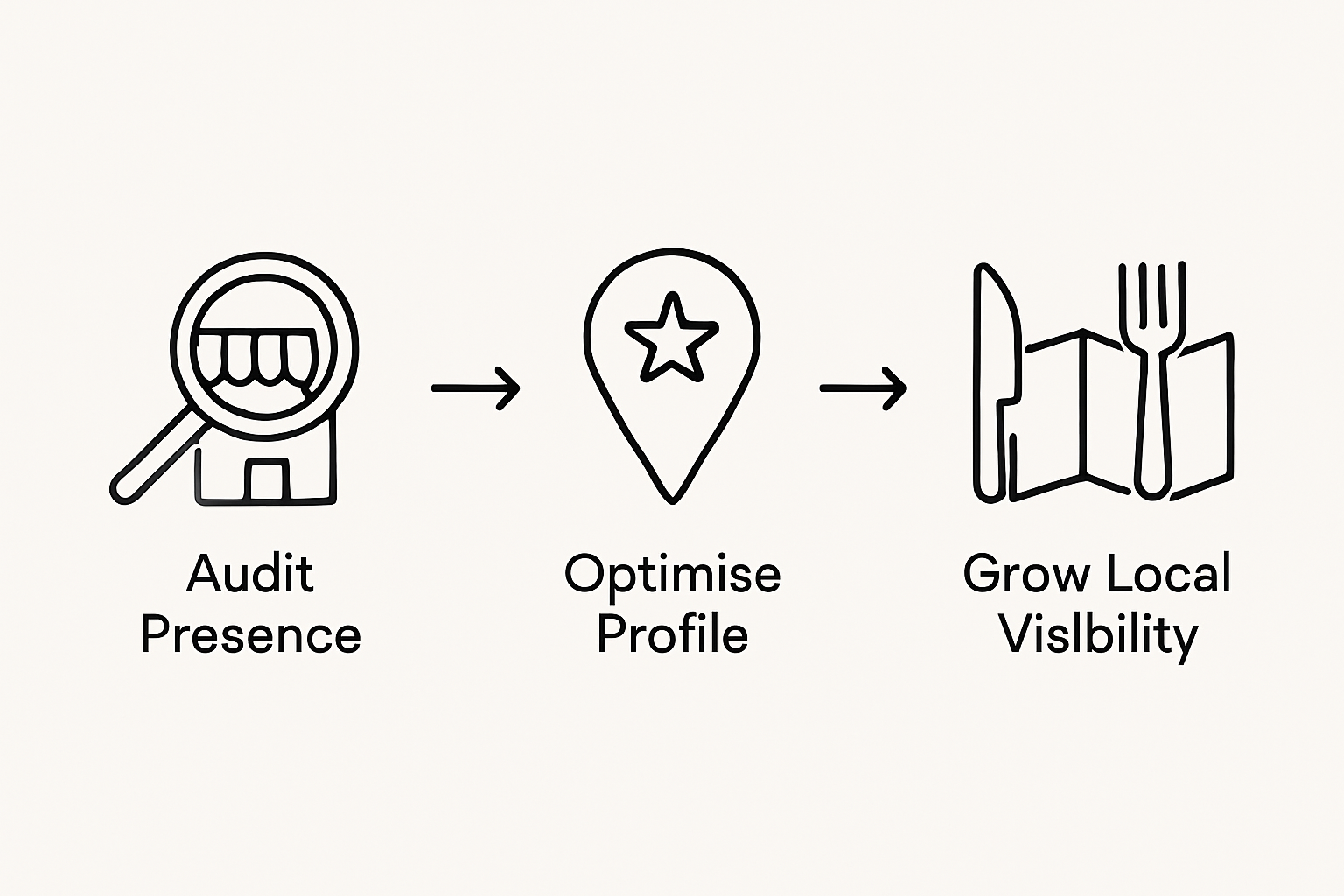
- Step 1: Audit Your Current Online Presence
- Step 2: Optimise Your Google Business Profile
- Step 3: Enhance Local Citations And Directories
- Step 4: Develop Restaurant-Localised Seo Content
- Step 5: Encourage And Manage Customer Reviews
- Step 6: Monitor And Refine Your Seo Results
Quick Summary
| Main Insight | Detailed Explanation |
|---|---|
| 1. Audit Your Online Presence | Review all digital platforms to ensure accurate information and identify discrepancies that might confuse potential customers. |
| 2. Optimise Your Google Business Profile | Ensure your profile contains precise details, high-quality photos, and a compelling business description to enhance visibility. |
| 3. Enhance Local Citations and Directories | Maintain consistent business information across key directories to improve local search visibility and credibility. |
| 4. Develop Localised SEO Content | Create engaging content that reflects local culture and cuisine, integrating location-specific keywords for better search results. |
| 5. Encourage and Manage Customer Reviews | Actively seek and respond to reviews to build an online reputation and influence potential diners’ decisions positively. |
Step 1: Audit your current online presence
Auditing your restaurant’s digital footprint is your first strategic move in local SEO. You want to map out exactly how customers currently see and interact with your brand online.
Start by conducting a comprehensive review of all your existing digital platforms. Check your Google Business Profile listing from the Food Standards Agency to ensure your restaurant’s details are completely accurate. Look at every single profile where your business appears online restaurants menu, hours, contact information, and images.
Here are specific areas to examine:
- Google Business Profile accuracy
- Social media profile consistency
- Website information completeness
- Online review platforms
- Delivery service listings
- Local directory entries
Take screenshots and create a detailed spreadsheet tracking all discrepancies you discover. If businesses without a robust online presence risk losing customer trust, then a thorough audit becomes your foundation for digital success.
Pro tip: Approach this like a mystery. Pretend you’re a potential customer searching for your restaurant online. What would confuse or frustrate you about your current digital representation?
Once you’ve completed your audit, you’ll be ready to strategically update and optimise your online profiles for maximum local visibility.
Step 2: Optimise your Google Business Profile
Optimising your Google Business Profile represents a critical strategy for improving your restaurant’s local search visibility and attracting more hungry customers. This digital storefront can significantly impact your online discoverability.

Start by ensuring every detail in your profile is completely accurate. Local search engine optimisation fundamentals emphasise how precise information directly influences your search rankings. Upload high quality photos of your restaurant interior, exterior, and signature dishes. Write a compelling business description that highlights your unique culinary offerings and atmosphere.
Key optimisation steps include:
- Verify your business location
- Select precise business categories
- Add operating hours
- Include contact information
- Update menu details
- Respond to customer reviews
- Add professional images every month
The Food Standards Agency recommends maintaining accurate online information to ensure consumer trust. Regularly update your profile with current promotions, seasonal menu changes, and special events to keep potential customers engaged.
Pro tip: Treat your Google Business Profile like a living document. Frequent updates signal to Google that your business is active and relevant.
Once you’ve completed these optimisations, you’ll have a powerful digital tool attracting local diners and boosting your restaurant’s online presence.
Step 3: Enhance local citations and directories
Local citations are your restaurant’s digital footprints across various online platforms, serving as crucial signals that boost your local search visibility. Your goal is to create a consistent and comprehensive online presence that helps potential customers find you easily.
Local search engine optimisation strategies emphasise the importance of maintaining accurate business information across multiple directories. Begin by listing your restaurant on key platforms such as Yelp, TripAdvisor, OpenTable, and local restaurant directories specific to London. Ensure every listing contains identical information including your restaurant’s name, address, phone number, website, and operating hours.
Key directories to target:
- Google Business Profile
- Yelp
- TripAdvisor
- Local London restaurant guides
- Food delivery platforms
- Local business associations
- Tourism websites
The Food Standards Agency recommends maintaining precise online information to ensure consumer trust and regulatory compliance. Double check each listing for accuracy, including your business description, cuisine type, and contact details.
Pro tip: Create a master spreadsheet tracking all your online citations. This will help you quickly identify and correct any inconsistencies across platforms.
Once you’ve completed your citation building, you’ll have established a robust online presence that signals credibility to both search engines and potential diners.
Step 4: Develop restaurant-localised SEO content
Creating localised content is your secret weapon for attracting hungry London diners and improving your restaurant’s search engine visibility. Your content needs to speak directly to local customers while incorporating strategic keywords that resonate with your neighbourhood audience.
Local search engine optimisation strategies emphasise the importance of crafting hyper relevant content that connects with your specific geographic market. Start by developing blog posts that showcase your restaurant’s unique London personality. Write about local food trends, neighbourhood culinary scenes, and how your restaurant contributes to the vibrant London dining experience.
Content ideas to consider:
- Neighbourhood restaurant guides
- Local ingredient sourcing stories
- London food culture insights
- Behind the scenes kitchen stories
- Chef’s local inspiration features
- Seasonal menu development narratives
- Community event participation highlights
The Food Standards Agency recommends creating online content that accurately represents your business while engaging local consumers. Focus on authentic storytelling that highlights your restaurant’s distinctive character and commitment to London’s culinary landscape.
Pro tip: Use location specific keywords naturally throughout your content. Think about how local customers might search for restaurants like yours.
By developing compelling localised content, you’ll create a powerful connection with potential diners while simultaneously improving your search engine rankings.
Step 5: Encourage and manage customer reviews
Customer reviews are the lifeblood of your restaurant’s online reputation and local search performance. Actively managing and encouraging positive feedback can dramatically improve your visibility and attract more hungry London diners.
Local search engine optimisation strategies emphasise the critical role customer reviews play in building online credibility. Develop a systematic approach to requesting reviews from satisfied customers. Create simple methods for guests to share their experiences such as table cards, follow up emails, or QR codes that link directly to review platforms.
Strategies for generating reviews:
- Train staff to politely request reviews
- Create easy review submission processes
- Offer small incentives for leaving feedback
- Display review request information prominently
- Follow up with guests after their dining experience
- Respond to all reviews professionally
- Share positive reviews on social media
The Food Standards Agency highlights the importance of transparent customer communication in maintaining consumer trust. Respond to every review whether positive or negative with genuine appreciation and professionalism.
Pro tip: Set aside dedicated time each week to review and respond to customer feedback across all platforms.
By actively managing your online reviews, you’ll not only improve your search rankings but also demonstrate your commitment to exceptional customer experience.
Step 6: Monitor and refine your SEO results
Successful local SEO is an ongoing journey of continuous improvement for your restaurant. Tracking your digital performance allows you to understand what strategies are working and where you need to make strategic adjustments.
Local search engine optimisation strategies recommend using robust analytics tools to measure your online visibility and engagement. Set up Google Analytics and Google Search Console to track key performance indicators such as website traffic, search rankings, click through rates, and user behaviour specific to your local London restaurant audience.
Key metrics to monitor:
- Website visitor numbers
- Search engine ranking positions
- Organic search traffic
- User engagement rates
- Conversion rates
- Local search visibility
- Mobile traffic performance
- Review and citation growth
The Food Standards Agency emphasises the importance of regular online information updates to maintain consumer relevance and trust. Review your analytics monthly and be prepared to adapt your content and SEO strategies based on the data you discover.
Pro tip: Create a monthly reporting dashboard that gives you a quick snapshot of your restaurant’s digital performance.
By consistently monitoring and refining your SEO approach, you’ll stay ahead of competitors and continue attracting more local diners to your restaurant.
Elevate Your London Restaurant’s Local SEO With Expert Support
Struggling to boost your restaurant’s footfall despite following local SEO basics? Common challenges like managing consistent citations, optimising your Google Business Profile, and maintaining engaging localised content can feel overwhelming. If you want to stand out in a competitive London dining scene and convert online visibility into real bookings it is vital to have a trusted partner who understands these nuances and delivers tailored digital marketing solutions.
Discover how our London-based team specialises in helping small businesses overcome these hurdles through expert web design, PPC advertising, and SEO optimisation. Our proven approach focuses on clear strategies such as building a powerful and accurate online presence, crafting authentic local content, and actively managing customer reviews. See how we have transformed other businesses by visiting our Success Stories Archives – Digital Marketing Agency – Market Link Solutions.
Ready to maximise your local SEO efforts and attract more hungry London diners? Take the next step with Market Link Solutions and let us help your restaurant thrive online. Contact us today to start building a strategy that delivers measurable results.
Frequently Asked Questions
How can I audit my restaurant’s online presence for local SEO?
Begin by reviewing all your digital platforms, including your Google Business Profile and social media accounts. Create a spreadsheet to track discrepancies in your restaurant’s information, such as opening hours and menu details, to ensure everything is accurate and consistent.
What are key steps to optimise my Google Business Profile?
Ensure that all details on your profile are accurate, including your restaurant’s name, address, and contact information. Regularly update high-quality images and respond to customer reviews, which will enhance your visibility in local searches.
How can I enhance local citations and directory listings for my restaurant?
Start by listing your restaurant on major platforms like Yelp and TripAdvisor, ensuring that your information is consistent across all citations. Check or create a master spreadsheet to maintain accurate details about your restaurant, verifying your name, address, and website on each directory.
What type of localised content should I develop for my restaurant?
Focus on creating engaging content that reflects your restaurant’s unique offerings and local flavours. Options include blog posts on local food trends, community events, or behind-the-scenes stories that showcase your restaurant’s character and connection to the community.
How can I effectively manage customer reviews for my restaurant’s visibility?
Encourage satisfied customers to leave reviews by creating easy-to-use feedback methods, such as follow-up emails or table cards. Respond professionally to all reviews, whether positive or negative, to build trust and improve your restaurant’s online reputation.
What metrics should I monitor to refine my restaurant’s SEO performance?
Track metrics such as website visitor numbers, search engine rankings, and organic search traffic to assess your SEO efforts. Regularly review this data, ideally monthly, to identify areas for improvement and adjust your strategies accordingly.
Recommended
- Local SEO – Digital Marketing Agency – Market Link Solutions
- Essential Guide to Local SEO London for Small Businesses
- Restaurant PPC Advertising Guide for London Success – Digital Marketing Agency – Market Link Solutions
- Mobile SEO – Digital Marketing Agency – Market Link Solutions
- How to Shop for Foot Health: A Step-by-Step Guide – YDA UK