
Most british businesses quickly discover that digital advertising is far more competitive than they expected. With search engines shaping how customers find services across London, standing out means using every available advantage. Over 60 percent of London start-ups rely on Pay Per Click campaigns to attract targeted buyers right away. Understanding how to use this powerful strategy helps small businesses compete with established brands, gain quick visibility, and direct their marketing spend for real results.
Table of Contents
- Defining Pay Per Click for London Businesses
- Key PPC Platforms and Campaign Types
- How PPC Campaigns Work in Practice
- Setting Budgets and Understanding Costs
- Common Mistakes and How to Avoid Them
Key Takeaways
| Point | Details |
|---|---|
| Understanding PPC | Pay Per Click (PPC) allows businesses to pay only when their advertisement is clicked, providing a cost-effective strategy for attracting targeted visitors. |
| Key Benefits | PPC offers immediate visibility, precise audience targeting, and measurable performance, making it crucial for London businesses, especially start-ups. |
| Campaign Management | Successful PPC campaigns require continual monitoring and optimisation of keywords, ad copy, and bidding strategies to ensure a positive return on investment. |
| Avoiding Mistakes | Common pitfalls include poor keyword selection and inadequate landing page design, which can result in wasted spend; careful research and strategic planning are essential to prevent these issues. |
Defining Pay Per Click for London Businesses
Pay Per Click (PPC) represents a strategic digital advertising model where businesses pay a specific fee each time a potential customer clicks their online advertisement. For London entrepreneurs, this approach provides an immediate and measurable pathway to attracting targeted website visitors.
In practical terms, PPC allows businesses to purchase targeted visibility on search engines and digital platforms. When a user searches for relevant keywords related to your products or services, your advertisement appears prominently, giving you direct access to potential customers. PPC is perceived as a critical strategy for start-ups to generate immediate sales, enabling smaller London enterprises to compete effectively against larger competitors.
The fundamental mechanics of PPC are straightforward yet powerful. Businesses bid on specific keywords relevant to their target audience, creating advertisements that appear when those keywords are searched. Your ad placement depends on multiple factors, including bid amount, ad quality, and relevance. Each click represents a potential customer journey, transforming digital advertising from a passive broadcast model to an interactive, performance-driven approach.
Key Benefits of PPC for London Businesses:
- Immediate visibility in search results
- Precise audience targeting
- Measurable and transparent marketing performance
- Flexible budgeting options
- Quick adaptability to market changes
While PPC offers significant advantages, businesses must approach it strategically. The digital advertising model requires businesses to pay a fee each time their ad is clicked, which means careful keyword selection and ad optimization are crucial to ensuring a positive return on investment.
Key PPC Platforms and Campaign Types
London businesses have multiple powerful digital advertising platforms to choose from when implementing pay-per-click strategies. Google Ads remains the most prominent platform, offering businesses unprecedented reach across search, display, and video networks. PPC advertising plays a critical role in powering London businesses through targeted, measurable marketing campaigns.
The primary PPC campaign types provide diverse opportunities for digital marketing. Search network campaigns appear directly in search results, allowing businesses to target specific keywords potential customers are actively searching for. Display network campaigns enable visual advertising across websites, enabling brands to build awareness through strategic image and text advertisements. Video campaigns through platforms like YouTube offer engaging opportunities to capture audience attention with dynamic visual content.
Key PPC Platforms for London Businesses:
- Google Ads
- Microsoft Advertising
- Facebook Ads
- Instagram Advertising
- LinkedIn Ads
- Twitter Ads
Each platform offers unique targeting capabilities that allow businesses to refine their audience selection. Demographic filters, interest-based targeting, and behavioural tracking enable precise campaign customisation. Small London businesses can leverage these tools to compete effectively against larger competitors by reaching exactly the right potential customers at the most opportune moments.

Successful PPC campaigns require strategic planning and continuous optimization. Businesses must constantly analyse performance metrics, adjust keyword selections, refine ad copy, and test different targeting approaches. The most effective campaigns combine technical precision with creative messaging, transforming digital advertising from a simple transactional model into a sophisticated customer engagement strategy.
How PPC Campaigns Work in Practice
Pay-per-click (PPC) campaigns operate through a sophisticated digital auction system that enables businesses to secure strategic online advertising positions. Paid search marketing involves advertising within sponsored search engine listings by paying for each click, creating a dynamic marketplace where visibility is directly tied to bidding strategy and ad relevance.
The fundamental process begins with keyword selection. Businesses identify specific search terms potential customers might use when seeking their products or services. Advertisers then bid on these keywords, determining how much they’re willing to pay for each click. Advanced platforms like Google Ads use a complex algorithm that considers not just bid amount, but also ad quality, relevance, and historical performance. This means that simply outbidding competitors isn’t enough – your advertisement must also demonstrate genuine value to potential customers.
Key Steps in PPC Campaign Execution:
- Keyword research and selection
- Bid strategy development
- Ad copywriting
- Landing page optimisation
- Performance tracking and analysis
- Continuous campaign refinement
Successful PPC campaigns require ongoing management and strategic adjustment. Businesses must continuously monitor key performance indicators such as click-through rates, conversion rates, and cost per acquisition. This iterative approach allows for real-time optimization, enabling advertisers to redirect budgets towards high-performing keywords and advertisements while reducing spend on underperforming elements. The most effective campaigns treat PPC as a dynamic, data-driven process rather than a static marketing tool.
Setting Budgets and Understanding Costs
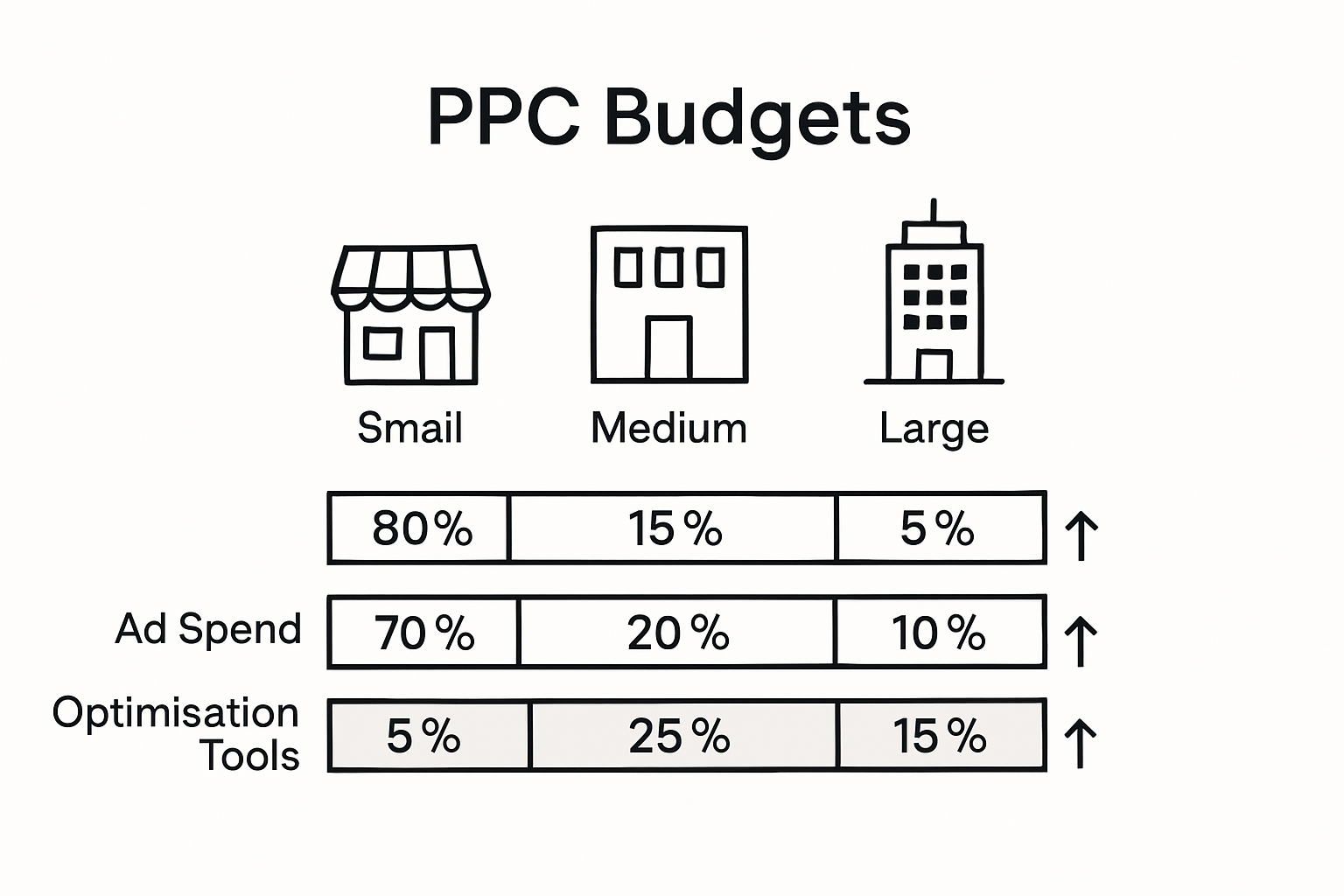
Digital advertising budgets represent a critical strategic investment for London businesses exploring pay-per-click marketing. Businesses recognise that PPC can be expensive, requiring significant investment to achieve desired returns, making careful financial planning essential for successful campaigns.
PPC budget allocation involves multiple sophisticated considerations beyond simple monetary spending. Businesses must determine their maximum cost per click (CPC), daily spending limits, and overall campaign budget. Advanced platforms like Google Ads allow granular control, enabling companies to set precise spending thresholds, adjust bids for specific keywords, and implement sophisticated bidding strategies that automatically optimise expenditure based on performance metrics.
Budget Allocation Strategies:
- Start with a conservative daily budget
- Monitor cost per acquisition
- Adjust bids based on keyword performance
- Implement conversion tracking
- Use automated bidding technologies
- Regularly review and reallocate spending
Small London businesses can effectively manage PPC expenses by adopting a measured, data-driven approach. This involves continuously analysing campaign performance, identifying high-value keywords, and incrementally increasing investment in strategies demonstrating positive returns. Successful advertisers treat their PPC budget as a dynamic resource, constantly refining their approach to maximise marketing efficiency and minimise unnecessary expenditure.
Common Mistakes and How to Avoid Them
PPC advertising requires precision and strategic thinking to avoid costly errors that can drain marketing budgets. Common website mistakes can significantly impact digital marketing performance, and the same principles apply directly to pay-per-click campaign management.
One of the most prevalent mistakes London businesses make is neglecting proper keyword research. Many advertisers choose broad, generic keywords that generate high volumes of irrelevant clicks, burning through budgets without delivering genuine leads. Successful PPC campaigns demand granular, specific keyword selection that precisely matches potential customer search intent. This means understanding long-tail keywords, analysing search volume, and continuously refining keyword strategies based on actual performance data.
Critical PPC Mistake Prevention Strategies:
- Conduct comprehensive keyword research
- Use negative keyword lists
- Create highly targeted ad copy
- Develop conversion-optimised landing pages
- Implement robust conversion tracking
- Regularly analyse and adjust campaign performance
Another significant pitfall involves inadequate landing page design. Even with perfect keyword targeting and compelling advertisements, businesses can waste their entire PPC investment by directing traffic to poorly constructed web pages. Effective landing pages must align precisely with ad messaging, load quickly, provide clear value propositions, and include straightforward calls-to-action. Small London businesses must treat their landing pages as critical conversion tools, not mere afterthoughts in their digital marketing strategy.
Boost Your London Business with Expert PPC Solutions
Struggling to transform clicks into tangible sales while managing your PPC budget effectively Then explore how tailored strategies can change your business trajectory. This article highlights the crucial need for precise keyword research optimisation and continuous campaign refinement to avoid common pitfalls in pay per click advertising. At Market Link Solutions, we understand the unique challenges faced by London small businesses aiming for immediate and measurable growth through digital ads.
Discover proven success stories of local businesses that overcame these challenges by leveraging our bespoke PPC advertising services on Google and Instagram. Benefit from expert web design and SEO optimisation that align perfectly with your advertising campaigns to magnify conversions. Take the first step towards elevating your online presence by visiting our website now and exploring how we can customise your digital marketing strategy for lasting growth. Act today to turn your clicks into loyal customers at Market Link Solutions and explore inspiring results in our Success Stories Archives – Digital Marketing Agency – Market Link Solutions.
Frequently Asked Questions
What is Pay Per Click (PPC)?
Pay Per Click (PPC) is a digital advertising model where businesses pay a fee each time one of their ads is clicked. It allows companies to gain immediate visibility in search results and attract targeted visitors to their websites.
How do I set a budget for my PPC campaign?
To set a budget for your PPC campaign, determine your maximum cost per click (CPC) and daily spending limits. Use advanced platforms to control spending and adjust bids based on keyword performance to maximise your return on investment.
What are some common mistakes to avoid in PPC advertising?
Common mistakes in PPC advertising include neglecting keyword research, using generic keywords, and having poorly designed landing pages. To avoid these, conduct thorough keyword research, create targeted ad copy, and optimise landing pages for conversions.
Which platforms can I use for PPC advertising?
Some of the key platforms for PPC advertising include Google Ads, Microsoft Advertising, Facebook Ads, Instagram Advertising, LinkedIn Ads, and Twitter Ads. Each offers unique targeting capabilities to refine your audience selection.