
More than 77 percent of British clients start their fitness journey by searching online for a personal trainer in their local area. For personal trainers in London, standing out among hundreds of competitors can feel challenging. Learning how to fine-tune your SEO strategy with relevant local keywords and targeted content will help you get noticed and attract new clients searching for reliable, expert guidance right in London.
Table of Contents
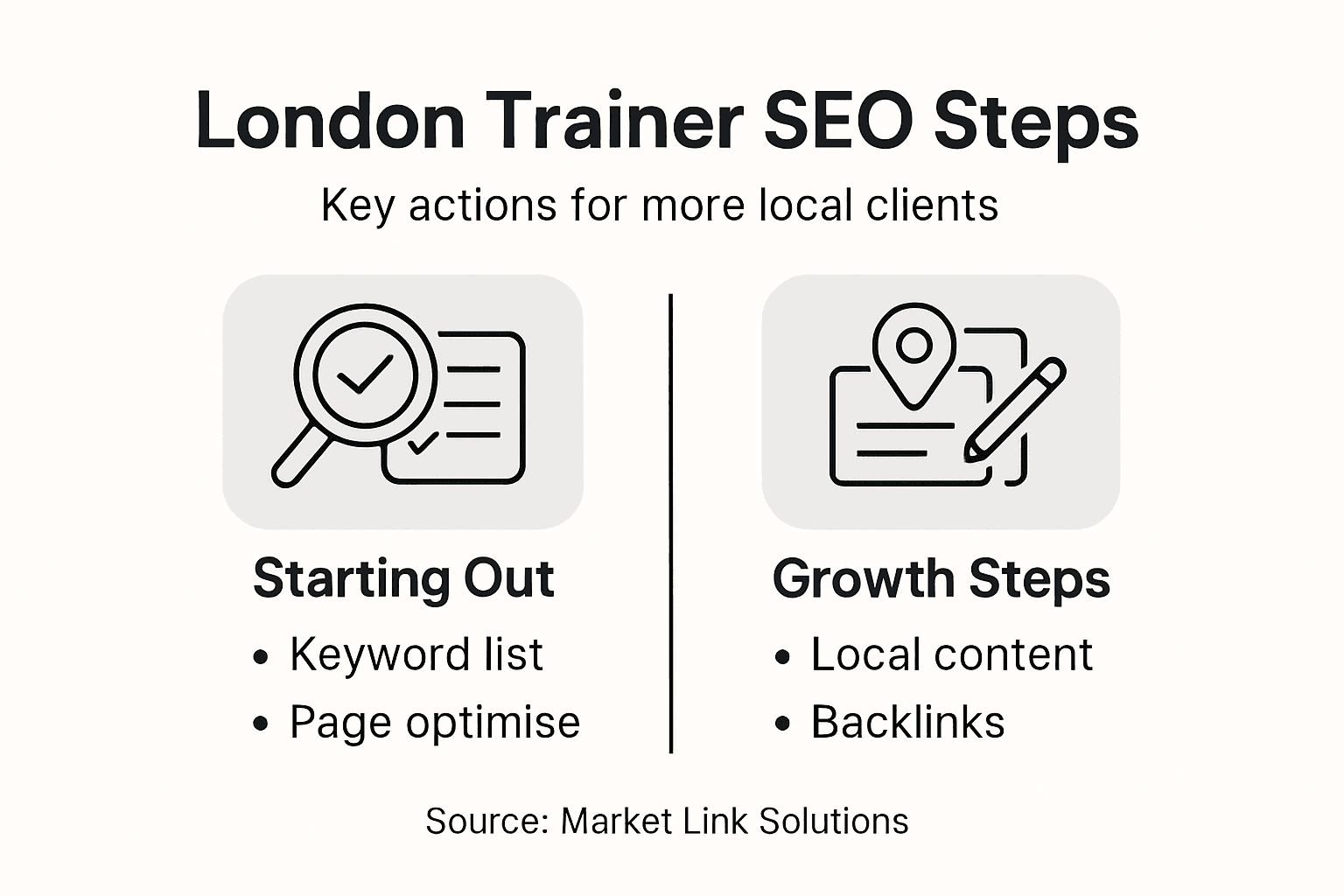
- Step 1: Define Local Target Keywords For London
- Step 2: Optimise Web Pages For Search Engines
- Step 3: Create Relevant, Localised Content
- Step 4: Build Quality Backlinks From Local Sources
- Step 5: Monitor Rankings And Adjust Strategies
Quick Summary
| Key Message | Explanation |
|---|---|
| 1. Target Local Keywords | Use specific London keywords and locations to improve visibility and attract clients. |
| 2. Optimise Website for SEO | Ensure your site has relevant title tags and meta descriptions that include local keywords. |
| 3. Create Localised Content | Develop materials that address the fitness needs and goals of London residents specifically. |
| 4. Build Local Backlinks | Collaborate with local organisations for backlinks to enhance credibility and search visibility. |
| 5. Monitor and Adjust SEO | Regularly assess performance metrics and adapt strategies based on keyword effectiveness and trends. |
Step 1: Define local target keywords for London
Targeting the right keywords is essential for personal trainers looking to attract more clients in London. By understanding how to select strategic local keywords, you can significantly improve your online visibility and connect with potential fitness enthusiasts searching for personalised training services.
Begin by researching local keyword variations that capture London’s unique fitness landscape. Focus on incorporating geographic identifiers like specific London boroughs (Westminster, Camden, Hackney), neighbourhood names, and local landmarks. Your keyword strategy should include terms potential clients might use when seeking a personal trainer such as “personal trainer in Camden”, “fitness coach near Tower Bridge”, or “strength training Shoreditch”.
Consider both broad and specific keyword approaches. Broad terms like “London personal trainer” help capture general search traffic, while specific phrases like “weight loss trainer in Islington” target more precise client needs. Include variations that reflect different fitness goals (weight loss, muscle gain, marathon training) alongside location specific modifiers.
Practical Recommendation: Cross reference your keyword list with actual search volumes and competition levels to ensure you are targeting terms with genuine client interest and realistic ranking potential.
Here is a comparison of broad versus specific local keyword strategies for London personal trainers:
| Keyword Approach | Example | Audience Reach | Potential Competition |
|---|---|---|---|
| Broad Local Keyword | London personal trainer | High, city-wide | Intense amongst trainers |
| Specific Local Keyword | Weight loss trainer in Islington | Focused within borough | Lower, niche targeting |
| Landmark-Based Keyword | Fitness coach near Tower Bridge | Visitors to key locations | Moderate, event-driven |
| Borough-Targeted Keyword | Personal trainer in Camden | Area residents | Medium, localised search |
Step 2: Optimise web pages for search engines
Successfully optimising your personal trainer website involves strategic techniques that improve search engine visibility and attract potential London clients. By implementing targeted optimisation strategies, you can enhance your online presence and rank higher in local search results.
Comprehensive SEO techniques require careful attention to both technical and content-related elements. Start by ensuring your website has clean, semantic HTML structure with descriptive title tags that include location-specific keywords like “Personal Trainer in Camden” or “London Fitness Coach”. Optimise your meta descriptions to include compelling calls to action and local search terms that resonate with potential clients searching for fitness services in specific London areas.
Focus on creating high-quality, locally relevant content that addresses fitness goals specific to London residents. This means developing blog posts, service pages, and client testimonials that incorporate local references, neighbourhood names, and region-specific fitness challenges. Implement schema markup to help search engines understand your local business context, and ensure your website loads quickly, is mobile responsive, and provides an excellent user experience across all devices.

Professional Advice: Regularly monitor your website’s performance using Google Search Console and analyse your keyword rankings to continuously refine and improve your SEO strategy.
Below is a summary of key SEO elements for improving local visibility for a London personal trainer website:
| SEO Element | Why It Matters | Local Focus Example |
|---|---|---|
| Title Tag Optimisation | Signals relevance to searches | ‘Personal Trainer in Camden’ |
| Meta Description | Boosts click-through rates | ‘Transform in Hackney with expert training’ |
| Schema Markup | Enhances business listing | LocalBusiness schema for London PT |
| Mobile Responsiveness | Improves user experience | Fast loading on smartphones |
Step 3: Create relevant, localised content
Developing content that resonates with London fitness enthusiasts requires a strategic approach tailored to your local market. Your goal is to create compelling, location specific material that speaks directly to potential clients in your immediate area.
Content design strategies emphasise writing clear, user focused material that addresses specific client needs. For personal trainers, this means crafting blog posts, service descriptions, and client success stories that reflect the unique fitness challenges and aspirations of London residents. Incorporate local references such as popular running routes through Hyde Park, fitness trends in specific boroughs like Hackney or Islington, and region specific health goals that demonstrate your understanding of the local fitness landscape.
Ensure your content goes beyond generic fitness advice by integrating local data, neighbourhood specific wellness challenges, and targeted fitness solutions. Write about training strategies relevant to London professionals dealing with sedentary office jobs, address fitness goals for residents preparing for urban marathons, or discuss nutrition advice tailored to the multicultural dietary landscape of London. Your content should feel like a conversation with a local fitness expert who understands the specific health and wellness context of your city.
Professional Advice: Create a content calendar that balances evergreen fitness information with timely local events and seasonal health trends specific to London.
Step 4: Build quality backlinks from local sources
Building robust backlinks from local sources is crucial for improving your personal training website’s search engine visibility and establishing credibility within the London fitness community. Your strategy should focus on creating meaningful connections that demonstrate your local expertise and relevance.
Government data sources offer exceptional opportunities for generating authoritative local backlinks. Consider partnering with local health organisations, fitness councils, community wellness programmes, and borough specific sports initiatives. Reach out to local gyms, sports clubs, nutritionists, and physiotherapy practices to explore collaborative content opportunities such as guest blogging, joint fitness challenges, or expert interviews that can naturally generate high quality backlinks to your website.
Focus on creating genuinely valuable content that local organisations would want to link to. This might include comprehensive fitness guides specific to London professionals, research on urban fitness trends, health and wellness studies targeting specific London neighbourhoods, or expert analysis of fitness challenges unique to the city’s lifestyle. By positioning yourself as a local authority and creating shareable, informative content, you increase the likelihood of earning organic backlinks from reputable local sources.
Professional Advice: Maintain a spreadsheet tracking potential local backlink opportunities and regularly follow up with personalised pitches that highlight mutual benefits.
Step 5: Monitor rankings and adjust strategies
Successfully tracking your website’s search performance is critical for maintaining and improving your personal training business’s online visibility in the competitive London fitness market. Understanding how to interpret and respond to your SEO metrics will help you continuously refine your digital marketing approach.
Search engine optimisation monitoring requires consistent analysis using tools like Google Analytics and Search Console. Set up regular reporting schedules to track key performance indicators such as keyword rankings, organic traffic, user engagement metrics, and conversion rates. Pay special attention to how your London specific keywords perform, noting which terms attract the most potential client interactions and which might need strategic adjustments.
Adopt a dynamic approach to SEO by treating your strategy as an ongoing process of refinement. Compare your website’s performance against local competitors, identify emerging fitness trends in London, and be prepared to quickly modify your content and keyword targeting. Watch for seasonal variations in search behaviour, shifts in local fitness interests, and updates to search engine algorithms that might impact your rankings. Remember that successful SEO is not about achieving a static position but maintaining a flexible, responsive approach to digital marketing.
Professional Advice: Create a monthly review calendar to systematically assess your SEO performance and implement incremental improvements based on data driven insights.
Elevate Your London Personal Training Business with Expert Digital Marketing
Struggling to stand out in London’s competitive personal training market can be frustrating. This guide reveals how targeted SEO strategies like keyword optimisation, localised content creation, and quality backlinks can attract the right clients. However, implementing these steps effectively demands expert knowledge and consistent effort to see tangible growth.
That is where we come in. At Market Link Solutions, a London based digital marketing agency, we specialise in helping small businesses like yours build powerful websites and harness PPC advertising alongside SEO optimisation to drive real results. Whether you want a fully optimised website or focused advertising campaigns tailored to your fitness niche, we can turn your ambitions into success.
Ready to transform your online presence and attract more clients in London? Discover how we have supported personal trainers to grow by exploring our Success Stories Archives – Digital Marketing Agency – Market Link Solutions. Start your journey today by visiting Market Link Solutions and see how our expert services in Web Design and Development, PPC advertising, and SEO can give your personal training business the boost it deserves.
Frequently Asked Questions
How can I find the right local keywords as a Personal Trainer in London?
To find the right local keywords, start by researching keyword variations that reflect London’s fitness landscape. Use specific phrases that include geographic identifiers, such as neighbourhood names and landmarks, like “personal trainer in Camden” or “fitness coach near Tower Bridge”.
What are the best ways to optimise my personal trainer website for local SEO?
You can optimise your website by ensuring title tags and meta descriptions include location-specific keywords. Focus on creating high-quality content that addresses local fitness goals, and implement schema markup to enhance your local visibility.
How can I create locally relevant content to attract more clients in London?
Create content that reflects the unique fitness challenges and aspirations of London residents. Write blog posts about popular local running routes or discuss nutrition tailored to the multicultural dietary landscape of London to engage your audience effectively.
What strategies can I use to build quality backlinks for my personal training site?
Focus on creating partnerships with local health organisations, gyms, and fitness initiatives. Develop valuable content, such as fitness guides specific to London, that these organisations will want to link to, enhancing your site’s authority.
How can I monitor my online rankings and adjust my SEO strategies effectively?
Regularly monitor your website’s performance using analytics tools to track keyword rankings and organic traffic. Set a monthly schedule to review this data and make adjustments based on performance trends and local fitness interests to improve your search visibility.
Recommended
- How to Write SEO Content for London Small Businesses
- Digital Marketing for Personal Trainers: Expert Guide – Digital Marketing Agency – Market Link Solutions
- Mobile SEO – Digital Marketing Agency – Market Link Solutions
- Essential Guide to Local SEO London for Small Businesses
- Our Favorite Exercises to Do Before Hitting the Beach