
More than half of british small businesses now use Pay-Per-Click advertising to reach their customers online. As digital competition grows, finding ways to attract the right audience has never been more important. Understanding PPC—from how it works to common pitfalls—can help businesses create campaigns that drive real results and make sure every pound is well spent.
Table of Contents
- Defining PPC Advertising And Core Principles
- Key PPC Types: Google, Instagram, And More
- How PPC Campaigns Work For Small Businesses
- Costs, Budgets, And Measuring PPC ROI
- Risks, Common Mistakes, And How To Avoid Them
Key Takeaways
| Point | Details |
|---|---|
| Effective PPC Strategy | Successful PPC relies on strategic keyword selection, compelling ad copy, and properly targeted landing pages. |
| Platform Diversification | Utilising multiple PPC platforms such as Google Ads and Instagram Ads can broaden customer reach and enhance campaign effectiveness. |
| Monitoring and Optimisation | Continuous tracking of performance metrics, including CPC and CTR, is essential for optimising PPC campaigns and maximising ROI. |
| Mitigating Risks | Avoid common PPC mistakes such as broad keyword targeting and inconsistent ad messaging to enhance campaign effectiveness and brand safety. |
Defining PPC Advertising and Core Principles
Pay-Per-Click (PPC) advertising is a targeted digital marketing strategy where businesses pay a fee each time their online advertisement is clicked. According to eelet, this approach allows companies to purchase website visits rather than attempting to earn them organically through search engine optimisation.
The core mechanism of PPC involves advertisers bidding on specific keywords relevant to their target audience. When potential customers search using those keywords, the advertiser’s text-based advertisement appears prominently in search engine results. As londonsba explains, this method functions similarly to traditional advertising by displaying targeted ads linked directly to company pages.
Key principles of successful PPC advertising include:
- Strategic Keyword Selection: Identifying precise search terms your potential customers use
- Compelling Ad Copy: Creating engaging, relevant advertisement text that encourages clicks
- Targeted Landing Pages: Designing specific web pages that match the advertisement’s promise
- Continuous Performance Tracking: Monitoring campaign metrics to optimise return on investment
Understanding these fundamental principles enables businesses to leverage PPC advertising effectively, turning online searches into valuable customer interactions. For more insights into crafting a robust digital advertising strategy, explore our guide on online advertising strategies.
Key PPC Types: Google, Instagram, and More
Pay-Per-Click (PPC) advertising offers multiple platforms for businesses to reach potential customers, with Google Ads and Instagram Ads emerging as the most prominent channels. According to imagine, understanding the mechanics of different PPC platforms is crucial for effective digital marketing strategies.
Google Ads remains the most comprehensive PPC platform, allowing advertisers to display text, image, and video advertisements across search results and partner websites. These ads appear based on specific keywords, enabling precise targeting of potential customers actively searching for related products or services. Instagram Ads, by contrast, focus on visual storytelling, leveraging the platform’s highly engaged user base to create immersive advertising experiences.
The primary PPC platforms include:
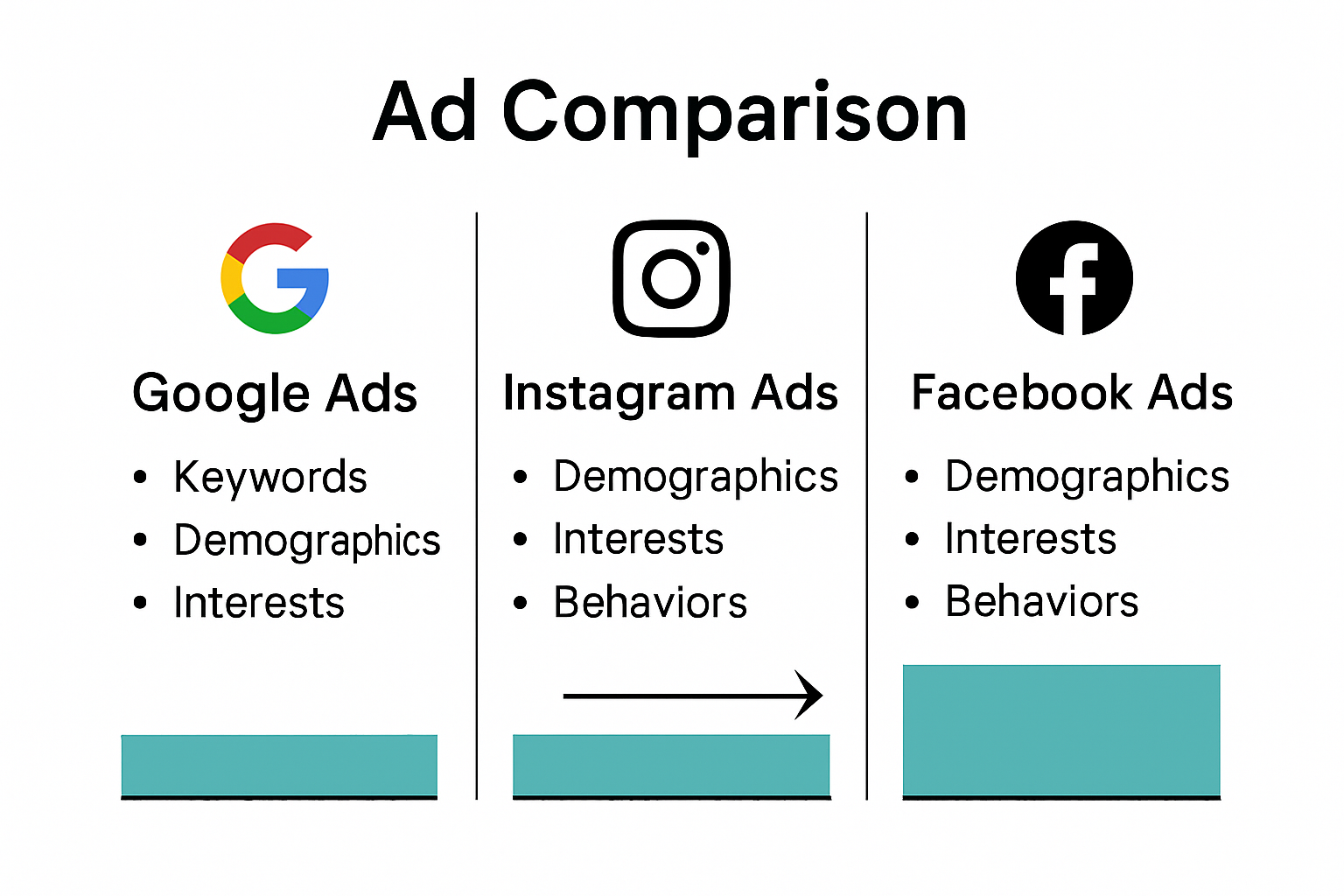
- Google Ads: Search network, display network, shopping ads, video ads
- Instagram Ads: Photo ads, video ads, carousel ads, story ads
- Facebook Ads: Demographic and interest-based targeting
- LinkedIn Ads: Professional and B2B marketing focus
- Twitter Ads: Real-time engagement and brand awareness
For small businesses looking to maximise their digital advertising potential, exploring our guide on Google and Instagram ads management can provide deeper insights into creating high-performing campaigns that deliver tangible results.
How PPC Campaigns Work for Small Businesses
Pay-Per-Click (PPC) advertising offers small businesses a powerful, flexible digital marketing strategy to reach potential customers precisely when they’re searching for relevant products or services. According to sbdc, successful PPC campaigns require defining a clear target customer and crafting a unique selling proposition that distinguishes the business from competitors.
memberwise highlights the cost-effectiveness of PPC, emphasising that businesses only pay when users actively click on their advertisements. This model allows small businesses to control their marketing spend while gaining valuable insights into customer behaviour and campaign performance.
Key components of an effective PPC campaign for small businesses include:
- Keyword Research: Identifying precise search terms potential customers use
- Targeted Ad Copy: Creating compelling messages that speak directly to customer needs
- Landing Page Optimization: Designing responsive web pages that convert clicks into inquiries
- Budget Management: Setting realistic spending limits and monitoring performance
- Performance Tracking: Continuously analysing and refining campaign metrics
Small businesses looking to maximise their digital advertising potential can benefit from our comprehensive guide on optimising Google and Facebook ad budgets, which provides strategic insights for effective campaign management.

Costs, Budgets, and Measuring PPC ROI
PPC advertising provides businesses with a transparent and measurable digital marketing approach, where financial investment can be precisely tracked and optimised. According to bmf, the unique advantage of PPC is that businesses only pay for actual click-throughs, enabling precise budget management and performance tracking.
communications recommends establishing SMART objectives to effectively measure campaign performance. This involves setting specific, measurable, achievable, relevant, and time-bound goals that help businesses understand their digital advertising impact beyond simple click metrics.
Key performance indicators for measuring PPC ROI include:
- Cost Per Click (CPC): Average expense for each user interaction
- Click-Through Rate (CTR): Percentage of users who click on an advertisement
- Conversion Rate: Number of clicks resulting in desired customer actions
- Total Campaign Spend: Overall investment in digital advertising
- Revenue Generated: Direct financial returns from advertisement clicks
For small businesses seeking strategic budget allocation, our ultimate guide to setting Google Ads budgets offers tailored insights for optimising digital advertising investments across various industry sectors.
Risks, Common Mistakes, and How to Avoid Them
PPC advertising presents numerous potential pitfalls that can quickly drain marketing budgets and compromise campaign effectiveness. According to communications, maintaining brand safety is paramount, requiring businesses to carefully assess digital advertising environments and implement robust control mechanisms.
The most significant risks in PPC advertising stem from poorly targeted campaigns, inadequate keyword research, and insufficient performance monitoring. communications emphasises the importance of creating ads that appear in credible, reputable digital spaces, ensuring messaging reaches the intended audience without compromising brand integrity.
Common PPC mistakes to avoid include:
- Broad Keyword Targeting: Selecting overly generic keywords that attract irrelevant clicks
- Neglecting Negative Keywords: Failing to exclude search terms that don’t match customer intent
- Poor Landing Page Design: Creating misaligned or slow-loading destination pages
- Inconsistent Ad Messaging: Developing advertisements that don’t match landing page content
- Ignoring Conversion Tracking: Not implementing comprehensive performance measurement tools
Small businesses seeking to mitigate risks can benefit from our comprehensive guide to setting Google Ads budgets, which provides strategic insights for developing robust and safe digital advertising campaigns.
Unlock the Full Potential of PPC Advertising for Your Small Business
Struggling to transform clicks into real customers or unsure how to manage your Google and Instagram ad budgets effectively The detailed principles and common pitfalls in PPC advertising covered in This Essential Guide to PPC Advertising UK reveal the importance of strategic keyword selection compelling ad copy and targeted landing pages to achieve measurable success. If you want to avoid costly mistakes such as broad keyword targeting or poor landing page design Market Link Solutions is here to help.
Explore inspiring results from businesses just like yours in our Success Stories Archives – Digital Marketing Agency – Market Link Solutions to see how precise PPC campaigns delivered clear returns. Start mastering your digital advertising today with our expert support. Visit Market Link Solutions now and take the first step towards optimising your PPC strategy that truly drives growth and maximises your marketing investment.
Frequently Asked Questions
What is Pay-Per-Click (PPC) advertising?
Pay-Per-Click (PPC) advertising is a digital marketing strategy where businesses pay a fee each time their advertisement is clicked. It allows companies to buy visits to their websites rather than earning them organically.
How do I choose the right keywords for my PPC campaign?
Selecting the right keywords involves researching specific search terms your potential customers are using. Focus on relevance, search volume, and competition levels to identify keywords that can drive targeted traffic to your ads.
What should I consider when creating ad copy for my PPC campaigns?
When crafting compelling ad copy, ensure it is engaging and addresses the needs of your target audience. Highlight unique selling propositions and include a strong call to action that encourages clicks and conversions.
How can I measure the effectiveness of my PPC campaign?
You can measure PPC effectiveness using key performance indicators such as Cost Per Click (CPC), Click-Through Rate (CTR), Conversion Rate, and overall Revenue Generated. These metrics help assess campaign performance and optimise future advertising efforts.
Recommended
- SEO vs PPC Explained: Choosing the Right Strategy
- Restaurant PPC Advertising Guide for London Success – Digital Marketing Agency – Market Link Solutions
- 7 Effective Google Ads Strategies for London Businesses
- Google Ads & Instagram Ads Management – High-ROI Paid Advertising – Digital Marketing Agency – Market Link Solutions