
Over 50 percent of British businesses now use Pay-Per-Click to reach customers online. In a crowded digital marketplace, British companies need effective tools to attract targeted website visitors and convert clicks into sales. Understanding how PPC advertising functions gives British entrepreneurs the power to control budgets while gaining measurable results, putting even small firms in London and beyond on a level playing field with larger competitors.
Table of Contents
- Understanding PPC Advertising In Business Context
- Essential Types Of PPC Campaigns For SMEs
- How PPC Drives Growth For London Businesses
- Key Budgeting And Performance Strategies
- Common PPC Mistakes And How To Avoid Them
Key Takeaways
| Point | Details |
|---|---|
| Effective Keyword Targeting | Businesses should focus on specific, relevant keywords to enhance conversion rates and avoid unnecessary budget expenditure. |
| Quality Landing Pages | Optimising landing pages for user experience and conversion pathways is essential for maximising PPC campaign effectiveness. |
| Budget Management | Implementing flexible, data-driven budgeting strategies enables precise control over advertising spend and supports ongoing optimisation. |
| Performance Monitoring | Regular tracking and analysis of campaign performance metrics allow businesses to refine strategies and improve overall results. |
Understanding PPC Advertising in Business Context
Pay-Per-Click (PPC) advertising represents a strategic digital marketing approach where businesses pay only when potential customers actively click on their online advertisements. Unlike traditional advertising models that charge for visibility, PPC provides a measurable and cost-effective method for driving targeted website traffic.
In the context of London’s competitive small business landscape, PPC serves as a powerful tool for immediate visibility and precise audience targeting. Small enterprises can leverage platforms like Google Ads to position themselves directly in front of potential customers searching for specific products or services. This targeted approach allows businesses to control their advertising spend while generating high-quality leads with remarkable precision.
The mechanics of PPC advertising revolve around strategic keyword selection, compelling ad copywriting, and intelligent bidding strategies. Businesses bid on relevant keywords related to their offerings, and search engines display their ads when users enter matching search queries. The sophisticated targeting options enable London SMEs to narrow their audience by location, demographics, interests, and online behaviour, ensuring that marketing budgets are spent efficiently and effectively.
Key advantages of PPC for small businesses include:
- Immediate online visibility
- Precise audience targeting
- Full budget control
- Measurable performance metrics
- Flexible campaign management
- Quick results compared to organic marketing strategies
By understanding and implementing PPC advertising strategically, London small businesses can transform their digital marketing approach, driving growth and competing effectively in an increasingly digital marketplace.
Essential Types of PPC Campaigns for SMEs
PPC advertising offers London small businesses multiple campaign types to effectively reach their target audience, with each format designed to address specific marketing objectives. Different PPC campaign strategies can significantly impact digital marketing performance, enabling businesses to craft targeted approaches that maximise their advertising investment.
Search advertisements represent the most fundamental PPC campaign type, appearing directly in search engine results when potential customers enter relevant keywords. These text-based ads allow SMEs to position themselves precisely where prospective clients are actively seeking their products or services. For London-based businesses, search ads provide an immediate opportunity to compete against larger competitors by securing prime digital real estate based on strategic keyword selection and compelling ad copy.

Display advertisements offer another powerful campaign format, enabling businesses to showcase visual content across numerous websites and digital platforms. Unlike search ads, display campaigns leverage graphical elements to capture audience attention, making them particularly effective for building brand awareness and retargeting potential customers who have previously interacted with a company’s website. These visually engaging advertisements can be strategically targeted based on demographics, interests, and online behaviour, providing SMEs with nuanced marketing capabilities.
Key PPC campaign types for London small businesses include:
- Search Ads: Text-based advertisements appearing in search results
- Display Ads: Visual advertisements across websites and platforms
- Remarketing Ads: Targeted campaigns focusing on previous website visitors
- Shopping Ads: Product-specific advertisements with images and pricing
- Local Service Ads: Geographically targeted advertisements for service-based businesses
- Video Ads: Engaging video content designed to capture audience attention
By understanding and implementing these diverse PPC campaign types, London SMEs can create sophisticated digital marketing strategies that drive targeted traffic, enhance brand visibility, and generate measurable business growth.
How PPC Drives Growth for London Businesses
PPC advertising serves as a powerful catalyst for business growth, offering London SMEs an immediate and measurable pathway to expanding their market presence. Key benefits of strategic PPC advertising demonstrate how targeted digital marketing can transform small business performance by connecting enterprises directly with potential customers.
One of the most significant growth mechanisms of PPC is its ability to provide rapid market entry and visibility. Unlike organic marketing strategies that require months of consistent effort, PPC campaigns can position London businesses at the top of search results within hours. This immediate visibility allows SMEs to compete effectively against larger competitors, targeting specific customer segments with precision and generating immediate website traffic, leads, and potential sales conversions.
Financial efficiency represents another critical growth driver of PPC advertising. Small businesses can set precise budget limits, control daily spending, and receive transparent performance metrics that enable continuous campaign refinement. This data-driven approach allows London SMEs to optimise their marketing investments, ensuring that every pound spent generates measurable returns and contributes directly to business expansion.
Key growth mechanisms of PPC for London businesses include:
- Instant Market Visibility: Immediate top-of-search positioning
- Precise Audience Targeting: Reach exact customer demographics
- Budget Flexibility: Complete control over marketing expenditure
- Performance Tracking: Real-time campaign performance insights
- Competitive Positioning: Level the playing field against larger enterprises
- Quick Lead Generation: Rapid customer acquisition potential
By strategically implementing PPC campaigns, London small businesses can transform their digital marketing approach, driving sustainable growth, increasing brand awareness, and creating a robust pathway to long-term commercial success.
Key Budgeting and Performance Strategies
Effective PPC campaign management requires a strategic approach to budgeting and performance tracking that goes beyond simple financial allocation. Precise budgeting techniques can dramatically improve digital advertising efficiency, enabling London SMEs to maximise their return on investment through intelligent spending and continuous campaign optimisation.
The cornerstone of successful PPC budgeting involves establishing clear, measurable performance metrics that align directly with business objectives. Small businesses must move beyond generic spending approaches and implement granular tracking mechanisms that reveal the precise value of each advertising pound spent. This means developing comprehensive conversion tracking, understanding cost-per-acquisition, and continuously refining targeting parameters to ensure maximum efficiency.
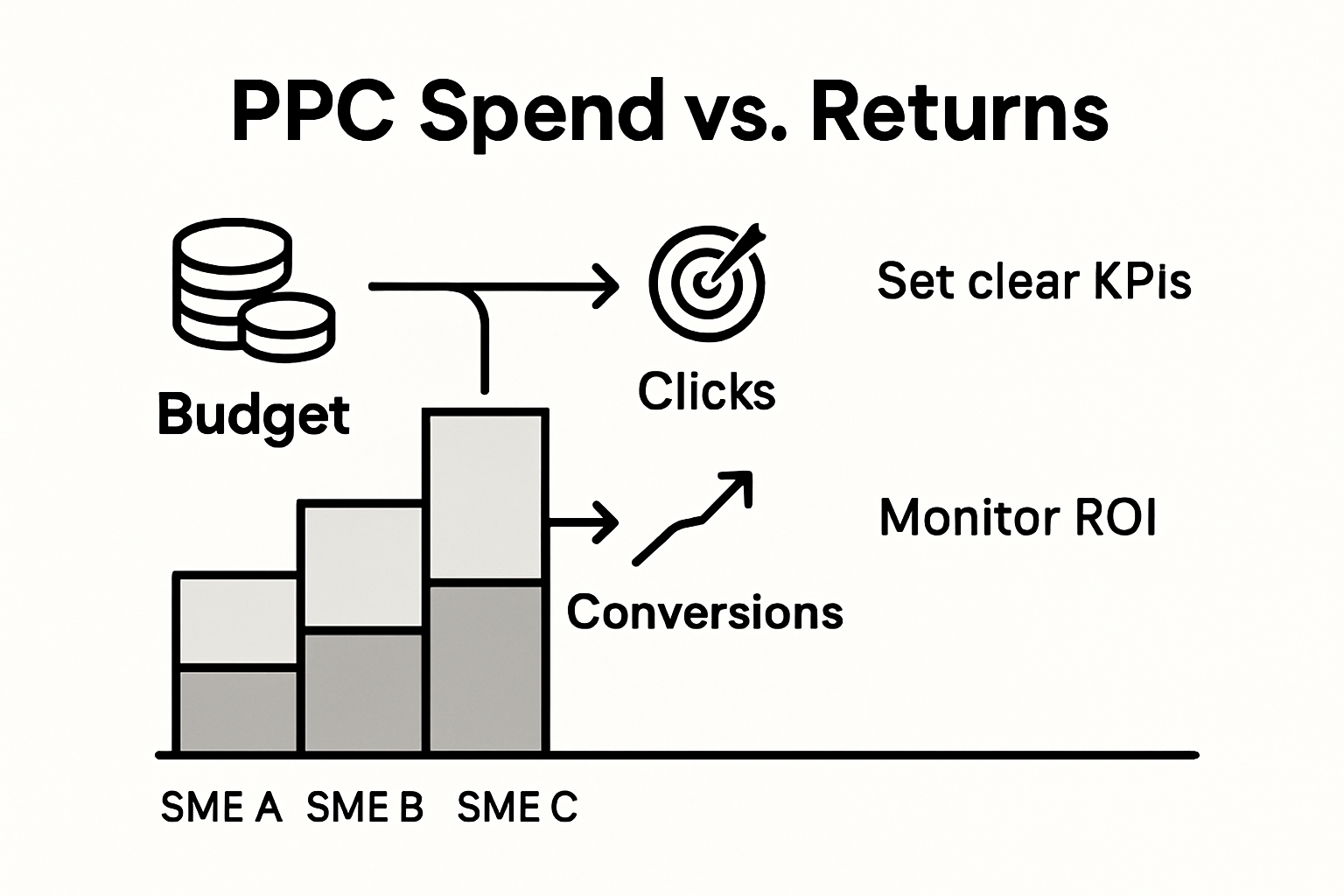
Budget allocation strategies for London SMEs should emphasise flexibility and data-driven decision making. Businesses can adopt a dynamic budgeting model where advertising spend is continuously adjusted based on real-time performance data. This approach allows for rapid reallocation of resources towards high-performing keywords, ad formats, and audience segments, ensuring that marketing investments deliver tangible commercial outcomes.
Key budgeting and performance strategies include:
- Incremental Scaling: Start with conservative budgets and gradually expand
- Conversion Tracking: Implement detailed performance measurement
- Audience Segmentation: Allocate budget across targeted customer groups
- A/B Testing: Continuously compare and optimise ad variations
- Performance Benchmarking: Compare results against industry standards
- Regular Performance Audits: Monthly review and adjustment of campaign parameters
By adopting these sophisticated budgeting approaches, London small businesses can transform their PPC advertising from a simple expenditure into a precision-engineered growth mechanism that delivers measurable, scalable marketing results.
Common PPC Mistakes and How to Avoid Them
PPC advertising represents a nuanced digital marketing strategy where small mistakes can significantly impact campaign performance and financial efficiency. Identifying and addressing common PPC pitfalls is crucial for London SMEs seeking to maximise their digital marketing investments and achieve consistent, measurable results.
One of the most prevalent errors small businesses make involves inadequate keyword research and targeting. Many London entrepreneurs select overly broad or generic keywords that drain budgets without generating meaningful conversions. Successful PPC campaigns demand granular, highly specific keyword selections that align precisely with potential customer search intentions, incorporating long-tail keywords and understanding genuine user search psychology.
Landing page quality represents another critical area where London SMEs frequently stumble in their PPC efforts. Businesses often direct expensive ad traffic to generic website pages that fail to provide a clear, compelling user experience or direct pathway to conversion. Effective landing pages must be meticulously designed with specific ad campaign objectives, featuring clean layouts, persuasive copywriting, prominent call-to-action buttons, and seamless mobile responsiveness.
Common PPC mistakes to avoid include:
- Broad Keyword Selection: Using generic, expensive keywords
- Weak Landing Pages: Poorly designed conversion destinations
- Insufficient Tracking: Lack of comprehensive performance monitoring
- Ignoring Negative Keywords: Failing to exclude irrelevant search terms
- Poor Ad Copy: Generic, uninspiring advertisement messaging
- Budget Mismanagement: Inconsistent or poorly allocated spending
By understanding and proactively addressing these fundamental PPC challenges, London small businesses can transform their digital advertising approach, creating more targeted, efficient, and ultimately profitable marketing campaigns.
Unlock Your London SME’s Growth Potential with Expert PPC Support
Many London small businesses face challenges such as precise audience targeting, budget control, and achieving measurable growth through Pay-Per-Click advertising. If you want to overcome common pitfalls like ineffective keyword selection or weak landing pages PPC advertising offers a powerful solution to drive quick lead generation and better competitive positioning. We understand how critical real-time performance tracking and optimised campaigns are to maximise every penny of your advertising budget.
Explore inspiring results from businesses like yours in our Success Stories Archives – Digital Marketing Agency – Market Link Solutions.
Take the next step towards transforming your digital marketing strategy with our London-based team. Get tailored support in Web Design, PPC Advertising across Google and Instagram, and SEO Optimisation to accelerate growth. Visit Market Link Solutions today and discover how your small business can harness PPC advertising for immediate visibility and sustainable expansion.
Frequently Asked Questions
What are the benefits of using PPC advertising for small businesses?
PPC advertising offers small businesses immediate online visibility, precise audience targeting, full budget control, measurable performance metrics, and the ability to generate quick results compared to organic marketing strategies.
How can PPC advertising drive growth for my business?
PPC advertising can provide rapid market entry, precise targeting of customer demographics, and budget flexibility. This allows small businesses to compete effectively and achieve quick lead generation, driving overall business growth.
What common mistakes should I avoid when running PPC campaigns?
Common PPC mistakes include broad keyword selection, weak landing pages, insufficient tracking of campaign performance, ignoring negative keywords, poor ad copy, and budget mismanagement. Addressing these issues is crucial for maximising the effectiveness of your campaigns.
How do I ensure my PPC budget is spent efficiently?
To ensure efficient PPC spending, establish clear performance metrics, implement conversion tracking, use audience segmentation, conduct A/B testing, and regularly review campaign performance. Adopting a flexible budgeting approach allows you to adjust spending based on real-time performance data.
Recommended
- The Essential Guide to PPC Ads for London Businesses
- 7 Key Benefits of PPC Advertising for London Businesses
- What Is PPC and How It Powers London Businesses
- 7 Key Advantages of PPC Ads for London Small Businesses
- Tech for Small Businesses: Complete Guide for 2025 – Projector Display