
Running a small restaurant in London means every detail matters, both inside your venue and online. With thousands of options across the city, your web design is the first impression many customers get before they ever step inside. Balancing attractive visuals with practical tools like reservation systems and online menus is no longer optional. This guide explains how well-designed restaurant websites inspire trust and drive more bookings, giving you the confidence to stand out in London’s competitive food scene.
Table of Contents
- Defining Web Design for Small Restaurants
- Key Elements of Effective Restaurant Websites
- Impact on Customer Trust and Bookings
- Integrating Branding, SEO, and Online Tools
- Common Pitfalls and Cost Considerations
Key Takeaways
| Point | Details |
|---|---|
| Prioritise Functionality | Effective web design for small restaurants must integrate essential features such as online reservations and menu accessibility to meet customer needs and enhance experience. |
| Invest in Professional Design | A well-designed website signals competence and can substantially influence customer trust, directly impacting booking rates and overall business success. |
| Ensure Mobile Optimisation | With the majority of potential customers searching from smartphones, a mobile-friendly website is crucial for attracting and retaining on-the-go diners. |
| Budget for Ongoing Maintenance | Treat your website as a long-term investment that requires regular updates and optimisation, rather than a one-off expense to maintain accuracy and effectiveness. |
Defining Web Design for Small Restaurants
Web design for restaurants is far more than simply making something look attractive online. It’s about creating a functional, user-friendly digital presence that directly supports how you run your business and how customers find you. For small restaurants in London, web design encompasses everything from your site’s visual appearance to the technical mechanics that let customers book tables, view menus, order takeaway, or discover your location. Think of it as the digital equivalent of your restaurant’s front door, interior layout, and menu board all working together to create a seamless customer experience.
When you’re defining web design for your establishment, you’re really addressing two core needs. First, there’s the aesthetic side: how your restaurant looks online should reflect your brand identity and atmosphere. A fine dining restaurant needs a different visual approach than a casual brunch spot. Second, there’s the practical functionality: creating a website for a small restaurant requires balancing visual appeal and practicality to engage customers effectively. This means your site needs to handle online ordering, table reservations, takeaway requests, and customer inquiries without requiring you to spend hours managing technical complications. For London restaurants competing with thousands of alternatives, having these features easily accessible on your website isn’t optional anymore.
The key distinction here is that web design for restaurants differs significantly from general business websites. Your customers need to see your menu, understand your location, check opening hours, and make bookings or orders all from one place. Specialist restaurant web builders allow businesses to incorporate these features without needing technical expertise, making it easier to maintain your digital presence whilst running your restaurant. Additionally, your website must work flawlessly on mobile devices because most customers searching for restaurants are using their smartphones, often whilst they’re already out.
Pro tip: Start by identifying which three features matter most for your restaurant right now (perhaps online ordering, table booking, and menu visibility), then choose a platform that excels at those specific functions rather than trying to implement every possible feature at launch.
Key Elements of Effective Restaurant Websites
Your restaurant website needs to perform like a well-trained front-of-house team. Every element serves a purpose, and when they work together smoothly, customers have a positive experience that encourages them to book a table or place an order. The most successful restaurant websites share specific characteristics that go beyond simply looking nice. Effective restaurant websites combine storytelling, clear branding, and intuitive navigation to engage visitors and convert them into paying customers. This means your site needs to tell your restaurant’s story, show customers what makes you different, and guide them effortlessly to what they’re looking for.
Start with the technical foundations. Your website must load quickly because hungry customers won’t wait around for pages to load, and fast loading speeds remain critical for conversion rates. Mobile-friendly design is non-negotiable in London where most diners search for restaurants from their phones whilst on the go. Your menu, prices, location, and contact details need to be immediately accessible without requiring visitors to hunt around. Beyond these basics, you should include high-quality photographs of your food and dining space because customers want to see what they’re paying for before they arrive. A professional, mouthwatering image of your signature dish will influence their decision far more than any description alone.
The second layer involves functionality that directly supports your business operations. Online reservation systems, order management, and integration with your hospitality systems reduce errors and build customer trust. Interactive menus and online reservations enhance user experience whilst freeing up your staff from answering repetitive questions about availability. Consistency in brand messaging across your website, social media, and in-person experience creates familiarity that encourages repeat business. Your website should make customers feel like they already know your restaurant before they walk through the door. Finally, ensure your contact information is crystal clear and your booking system works flawlessly because a confusing reservation process sends customers to your competitors.
To better understand the business impact of website features, see the summary below:
| Website Feature | Business Benefit | Example for Small Restaurants |
|---|---|---|
| Online Reservation System | Reduces phone traffic, increases bookings | Customers can book outside opening hours |
| Mobile-Friendly Design | Attracts busy, on-the-go diners | Site accessible on all devices |
| Integrated Menu Display | Increases transparency, reduces enquiries | Clear, up-to-date menus drive orders |
| High-Quality Photography | Enhances appeal, boosts trust | Mouthwatering images increase table bookings |
Pro tip: Test your website on your own smartphone and a friend’s phone to spot loading issues and navigation problems that desktop users might miss, then ask a family member unfamiliar with your restaurant to book a table and give you honest feedback on whether they found it easy.
Impact on Customer Trust and Bookings
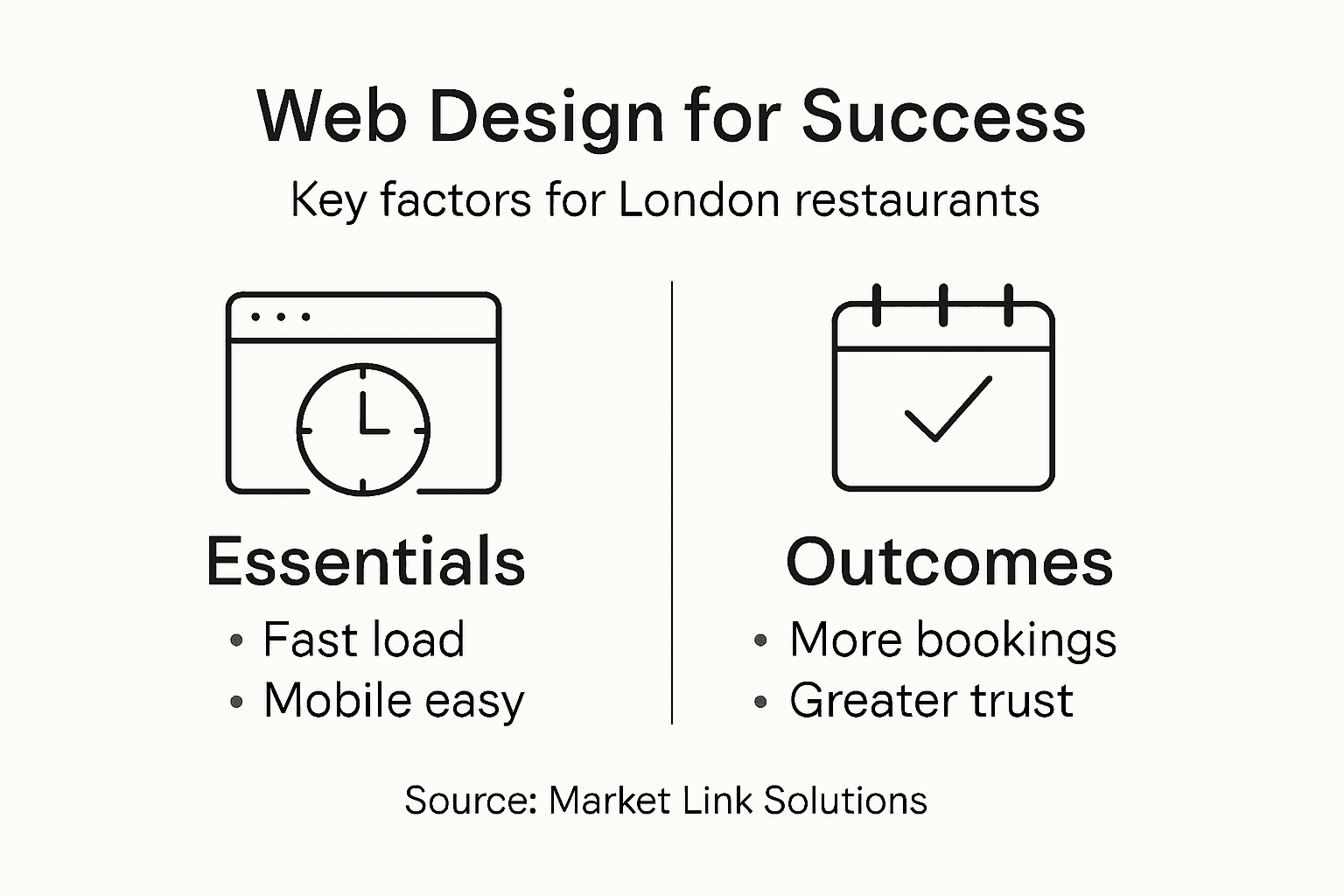
When a potential customer lands on your restaurant website, they’re making a split-second judgment about whether to trust you with their money and time. That first impression matters enormously. Website design significantly influences customer trust and online booking decisions in ways that many restaurant owners underestimate. A professional, clean website that loads quickly and displays beautifully signals competence and care. Conversely, a poorly designed site with broken links, outdated photos, or confusing navigation suggests you don’t care about details, which makes customers question whether that attitude extends to food hygiene or service quality. Trust isn’t just a nice-to-have; it’s the deciding factor between someone booking a table with you or clicking through to a competitor.

The connection between design quality and booking behaviour runs deeper than aesthetics alone. Visual design, usability, and trustworthy content enhance satisfaction whilst reducing the perceived risk customers feel when committing to a reservation. When your website demonstrates professionalism through polished imagery, clear menus with current pricing, genuine customer reviews, and straightforward booking processes, customers feel confident they’re making the right choice. This is especially critical in London’s competitive restaurant market where diners have endless options. A customer browsing restaurants on their phone at lunchtime will choose the one with the most trustworthy website, not necessarily the one with the flashiest design. They want assurance that when they arrive, the restaurant will match what they saw online.
The practical impact on your bottom line is measurable. Restaurants with well-designed websites experience higher booking conversion rates because effective web design universally influences consumer confidence and increases conversion rates. Every small improvement in your site’s trustworthiness translates directly into more reservations and walk-in customers who discovered you through search results. High-quality photos of your dishes, clear information about your location and hours, visible customer testimonials, and a functioning reservation system all work together to build confidence. Additionally, a professional website attracts customers from search engines because Google prioritises sites that are fast, mobile-friendly, and clearly structured. This means your web design investment pays dividends through both direct bookings and organic search visibility.
Pro tip: Ask five friends to visit your website on their phones and tell you honestly if they would book a table; if more than one person hesitates or struggles to navigate, prioritise fixing those issues before worrying about any other website improvements.
Integrating Branding, SEO, and Online Tools
Your restaurant’s online success depends on three elements working together seamlessly: a consistent brand identity, search engine visibility, and practical tools that convert interest into bookings. Many restaurant owners treat these as separate concerns, but they’re actually interconnected. Your brand is what makes your restaurant memorable and different from competitors. Search engine optimisation is what gets potential customers to find you in the first place. And online tools like booking systems, menus, and social media integration are what turn that discovery into actual business. When these three work in harmony, your website becomes a powerful marketing asset rather than just a digital brochure.
SEO strategies tailored to restaurants include keyword research, local SEO, and managing Google My Business profiles because London customers searching for restaurants use very specific search terms like “Italian restaurants near Soho” or “best Sunday roasts in Clapham.” Your website needs to be optimised for these phrases so it appears when potential customers are actively looking for exactly what you offer. Simultaneously, your brand messaging across your website, social media, and Google My Business profile must be consistent. If your website says you’re a casual neighbourhood spot but your social media presents you as fine dining, customers become confused. This inconsistency damages both your credibility and your search rankings because Google rewards sites that demonstrate consistent, trustworthy information.
The practical integration happens through your website’s functionality. Online ordering systems, reservation platforms, and social media integration aren’t just conveniences; they’re essential tools that reinforce your branding whilst collecting customer data that improves your SEO. When customers leave reviews on Google or book tables through your website, these actions signal to search engines that your business is legitimate and active. Combining consistent brand messaging with features like online ordering, social media integration, and content marketing creates a cohesive digital presence that drives both traffic and bookings. Each piece supports the others. Strong branding makes people want to book with you. Good SEO gets them to your website. Reliable booking tools ensure they actually complete a reservation instead of calling a competitor. Your website design brings all three together into one unified system that works for your business.
Pro tip: Audit your branding consistency by checking your website, Google My Business profile, Instagram, and Facebook to ensure your restaurant name, address, phone number, description, and imagery match perfectly, then tackle any discrepancies before investing time in SEO optimisation.
Common Pitfalls and Cost Considerations
Many London restaurant owners make costly mistakes when investing in web design, often because they don’t understand what they’re paying for or what actually drives results. The biggest pitfall is treating your website as a one-off expense rather than an ongoing investment. You might pay a designer £2,000 to £5,000 for a beautiful site, then launch it and forget about it. Six months later, your menu prices have changed, your opening hours have shifted, customer reviews are outdated, and your site no longer reflects your actual business. This neglected website actually damages your reputation because customers see inconsistent information and assume you don’t care about your online presence. A website requires regular updates, maintenance, and strategic optimisation to continue generating bookings.
Another common mistake is choosing a website platform based purely on initial cost without considering long-term expenses and functionality. A cheap template site might cost £300 to set up but charge £50 monthly and offer limited customisation, poor mobile performance, and no integration with your booking or ordering systems. A slightly more expensive platform might cost £1,000 upfront with flexible monthly fees of £20 to £30 but provides professional hosting, mobile optimisation, booking integration, and SEO features that actually drive customers to you. Over two years, the “cheap” option costs you more whilst delivering worse results. You’re essentially choosing between paying less to get less, or investing slightly more to get a site that genuinely helps your business grow.
Cost considerations also extend beyond web design itself. Many restaurants discover too late that they need professional food photography, which costs £400 to £800 for a proper shoot but transforms how your menu appears online. Others invest in a website but fail to invest in SEO optimisation, meaning their beautiful site ranks nowhere in Google searches. Some build advanced booking systems but neglect to train staff on managing reservations, leading to double bookings and frustrated customers. The reality is that web design works best as part of a coordinated strategy that includes content creation, search visibility, and ongoing management. Budget accordingly for these elements rather than viewing web design in isolation.
Here is a comparison of common restaurant website platforms to help you evaluate long-term value:
| Platform Type | Typical Upfront Cost | Ongoing Monthly Fees | Key Benefits | Major Drawbacks |
|---|---|---|---|---|
| Basic Template Site | £300–£600 | £40–£60 | Quick setup, low initial cost | Limited customisation, fewer features |
| Custom-Built Site | £2,000–£5,000 | £10–£30 hosting | Fully tailored, professional branding | Higher upfront outlay, needs ongoing updates |
| Specialist Restaurant Builder | £1,000–£2,500 | £20–£40 | Booking integration, menu tools, mobile friendly | Less design flexibility than full custom |
| DIY Website Platforms | £250–£500 | £10–£25 | Easy editing, wide template selection | Basic functionality may not scale |
Pro tip: Request a detailed breakdown of all costs from any web designer, including hosting fees, maintenance, updates, and any third-party integrations like booking systems, then add 20 percent to your budget for unexpected needs and ensure you understand what’s included in any monthly or annual fees.
Elevate Your London Restaurant’s Success with Expert Web Design and Digital Marketing
The article highlights how crucial a tailored, functional website is for small restaurants in London aiming to boost customer trust and increase bookings. If you struggle with creating a fast, mobile-friendly site that reflects your brand and offers seamless online ordering or reservation tools your customers expect then you are not alone. These are common challenges that require a strategic approach combining great design, search engine optimisation, and effective online advertising to stand out in a fiercely competitive market.
At Market Link Solutions, we specialise in helping small London businesses overcome these exact obstacles. Our expertise in Web Design and Development ensures your website not only looks professional but works flawlessly across devices with integrated booking and menu management features. Complemented by our PPC Advertising on Google and Instagram alongside SEO optimisation your restaurant gains the visibility and credibility to turn visitors into loyal customers. Discover how we have transformed local businesses by exploring our Success Stories Archives – Digital Marketing Agency – Market Link Solutions.
Don’t let an outdated website hold your restaurant back. Take control of your online presence today by partnering with a London-based agency that understands your unique needs. Visit Market Link Solutions now to explore tailored web design and marketing solutions designed to grow your bookings and build trust effortlessly.
Frequently Asked Questions
What are the key elements of an effective restaurant website?
An effective restaurant website should feature a mobile-friendly design, quick loading speeds, easy navigation, high-quality photos of food, and an integrated online reservation system. These elements enhance user experience and encourage bookings.
How does web design impact customer trust?
Web design significantly affects customer trust. A professional and clean website with fast loading times and accessible information signals competence and care, while a poorly designed site may lead customers to question the quality of your food and service.
Why is SEO important for restaurant websites?
SEO is crucial for restaurant websites because it helps potential customers discover your restaurant when searching online. By optimising your website for specific keywords related to your cuisine and location, you improve visibility and increase the chances of bookings.
What common mistakes should I avoid in restaurant web design?
Common mistakes include treating your website as a one-time expense rather than an ongoing investment, neglecting updates and maintenance, and choosing platforms based solely on initial cost without considering long-term functionality and features.