
Standing out as a business in London is no easy feat when so many local competitors are just a search away. Customers rely on the internet to find trusted companies nearby, and missing key steps means your business may never reach the right audience.
This guide gives you practical know-how to improve your online presence, reach more London customers, and show up where it matters most. Discover smart methods that help your business get noticed, connect with your local community, and make the most of digital tools designed for London success.
Table of Contents
- 1. Claim And Optimise Your Google Business Profile
- 2. Target Local London Keywords For More Visibility
- 3. Create Location-Based Landing Pages
- 4. Get Quality Backlinks From London Websites
- 5. Improve Website Speed For Better User Experience
- 6. Optimise For Mobile Devices In London Searches
- 7. Monitor Performance With Google Analytics And Search Console
Quick Summary
| Takeaway | Explanation |
|---|---|
| 1. Optimise your Google Business Profile | A completed profile boosts local search visibility by up to 70%. Regular updates and keyword use enhance performance. |
| 2. Target local London keywords | Using specific local keywords can improve search ranking by up to 50%, attracting more customers from your area. |
| 3. Create location-based landing pages | Tailored landing pages can increase conversion rates by 35%, focusing on neighbourhood-specific needs and characteristics. |
| 4. Acquire quality backlinks | High-quality backlinks from reputable London sites enhance credibility and search visibility. Prioritise relevance and authority. |
| 5. Monitor performance with analytics | Regularly analysing Google Analytics can uncover opportunities for improvement and drive strategic decision-making. |
1. Claim and Optimise Your Google Business Profile
Your Google Business Profile is a powerful digital gateway for London businesses to connect with potential customers searching online. By creating and optimising this free marketing tool, you can significantly enhance your local visibility and attract more customers.
A properly configured Google Business Profile helps your business appear in local search results and Google Maps, providing crucial information like:
- Your business location
- Contact details
- Operating hours
- Customer reviews
- Photos and services
To get started, you’ll need to create a comprehensive business profile that accurately represents your London business. This means selecting the most precise business category, uploading high-quality images, and ensuring all information is current and detailed.
A fully completed Google Business Profile can increase your local search visibility by up to 70%.
Keyword optimization is crucial for your profile. Strategic keyword placement helps Google understand and match your business with relevant local searches. Incorporate location-specific terms and service descriptions that potential customers might use when searching.
Regular updates are key to maintaining an effective profile. This includes:
- Responding to customer reviews
- Posting weekly updates or offers
- Adding new photos periodically
- Checking and updating business information
Pro tip: Encourage satisfied customers to leave genuine reviews and respond professionally to all feedback to boost your local search ranking.
2. Target Local London Keywords for More Visibility
Understanding and implementing local London keywords is crucial for businesses looking to dominate their digital marketplace. By strategically selecting location-specific search terms, you can dramatically improve your online visibility and attract potential customers right in your neighbourhood.
Keywords are more than just words – they are the digital signposts that guide customers to your business. Local search visibility depends on how precisely you can match your content with what potential customers are searching for.
To effectively target local London keywords, consider these strategic approaches:
- Research neighbourhood-specific terms (e.g., “Shoreditch graphic design”)
- Include local landmarks or area names
- Use conversational language locals actually use
- Incorporate London postcodes or districts
- Blend generic services with location modifiers
Local keyword optimization can increase your search ranking by up to 50% in your specific geographic area.
Utilising data-driven keyword research is essential. Resources like London Datastore provide valuable insights into local trends and search behaviours that can inform your keyword strategy.
Your keyword strategy should balance:
- Broad service-related keywords
- Hyper-local location terms
- Specific neighbourhood identifiers
- Long-tail keyword variations
Pro tip: Use Google’s Keyword Planner and analyse competitor websites to uncover hidden local keyword opportunities that your London business can leverage.
3. Create Location-Based Landing Pages
Location-based landing pages are strategic digital assets that can dramatically transform how London businesses attract and convert local customers. These targeted web pages serve as precision instruments for connecting with potential clients in specific neighbourhoods and districts.
Structured page navigation plays a critical role in creating effective local landing pages that search engines and customers will love. Each page should be a tailored experience that speaks directly to the unique characteristics and needs of a specific London area.
Key elements of a high-performing location-based landing page include:
- Hyperlocal content specific to the neighbourhood
- Locally relevant keywords and phrases
- Area-specific testimonials and case studies
- Precise contact information for that location
- Embedded Google Maps showing exact business location
A well-crafted local landing page can increase conversion rates by up to 35% compared to generic website pages.
Customisation is paramount when designing location-based landing pages. Your content should reflect:
- Local community characteristics
- Neighbourhood-specific customer pain points
- Unique selling propositions for that area
- Local landmarks or cultural references
Pro tip: Create a unique URL structure for each location page using geographic identifiers to maximise local SEO potential and make tracking performance easier.
4. Get Quality Backlinks from London Websites
Backlinks represent the digital reputation of your London business, acting as powerful endorsements from other reputable websites. Building strategic local link connections can significantly boost your online visibility and search engine credibility.
Editorial backlink strategies are essential for London businesses seeking to enhance their digital presence. The key is not just accumulating links but securing high-quality, relevant connections.
Effective backlink acquisition methods include:
- Partnering with local London business associations
- Contributing guest articles to industry-specific publications
- Participating in local community events and earning mentions
- Creating shareable content about London business trends
- Networking with complementary local businesses
A single high-quality backlink from a respected London website can be worth more than dozens of low-quality links.
When seeking backlinks, prioritise:
- Relevance to your specific business niche
- Domain authority of linking websites
- Geographic proximity within London
- Organic and editorial link placements
Quality trumps quantity in the world of backlink building. Focus on developing genuine relationships and creating valuable content that naturally attracts links.
Pro tip: Develop a quarterly outreach strategy targeting three to five high-authority London websites in your industry for potential collaboration and link opportunities.
5. Improve Website Speed for Better User Experience
Website speed is the silent ambassador of your online business performance. For London businesses, milliseconds can make or break customer engagement and search engine rankings.
Google PageSpeed Tools provide critical insights into website performance, helping businesses optimise their digital presence. Faster websites not only improve user experience but also significantly boost search engine visibility.
Key strategies to enhance website speed include:
- Compress and optimise image file sizes
- Minimise unnecessary backend scripts
- Leverage browser caching mechanisms
- Use content delivery networks (CDNs)
- Reduce server response times
A one-second delay in page load time can reduce conversions by up to 7%.
Practical steps for improving website performance:
- Run regular speed diagnostics
- Remove redundant plugins
- Select lightweight website themes
- Prioritise mobile optimization
- Clean up backend databases
Technical performance matters more than ever in today’s competitive digital landscape. London businesses must treat website speed as a critical component of their online strategy.
Pro tip: Invest in professional website performance audits quarterly and continuously monitor your site’s speed metrics to stay ahead of potential user experience issues.
6. Optimise for Mobile Devices in London Searches
Mobile optimisation isn’t just a technical checkbox – it’s the gateway to capturing London’s increasingly mobile-first audience. Mobile search dominance means businesses must prioritise smartphone-friendly digital experiences.
Responsive web design techniques ensure your website adapts seamlessly across different devices. For London businesses, this means creating a fluid digital presence that works perfectly whether customers are searching on the Tube or in a coffee shop.
Critical mobile optimisation strategies include:
- Implementing flexible grid layouts
- Ensuring text is readable without zooming
- Designing touch-friendly navigation menus
- Compressing images for faster mobile loading
- Using mobile-responsive typography
Over 60% of London searches now occur on mobile devices.
Practical mobile optimization steps:
- Test your website on multiple device sizes
- Use Google’s mobile-friendly test tool
- Simplify navigation for smaller screens
- Prioritise critical content
- Eliminate pop-ups that disrupt mobile experience
Technical responsiveness drives engagement. London consumers expect instant, smooth digital interactions that respect their time and device preferences.
Pro tip: Conduct monthly mobile usability audits and continually refine your website’s mobile experience to stay ahead of evolving user expectations.
7. Monitor Performance with Google Analytics and Search Console
Digital success for London businesses hinges on understanding your online performance. Web analytics are your roadmap to strategic digital growth, providing insights that transform raw data into actionable marketing intelligence.
Performance reports reveal critical website metrics that help London businesses refine their digital strategies. Google Analytics and Search Console are powerful tools that decode your website’s online behaviour.
Key performance metrics to track include:
- Website traffic volume
- User engagement rates
- Keyword ranking positions
- Conversion percentages
- Geographical user distribution
- Page loading speeds
- Bounce rates
A 1% improvement in website metrics can translate to significant business growth.
Practical steps for effective performance monitoring:
- Set up Google Analytics and Search Console accounts
- Configure goal tracking
- Link both platforms for comprehensive insights
- Create custom dashboards
- Schedule regular performance reviews
Data-driven decisions drive success. By consistently monitoring these tools, London businesses can adapt quickly and stay ahead of digital competition.
Pro tip: Dedicate at least one hour monthly to deep-diving into your analytics to uncover hidden opportunities and potential performance improvements.
Below is a comprehensive table summarising the main strategies and recommendations discussed in the article for optimising digital presence for London businesses.
Take Your London Business SEO to the Next Level with Expert Support
Struggling to implement the essential steps like optimising your Google Business Profile or creating effective location-based landing pages The challenges of targeting local London keywords and building quality backlinks can feel overwhelming. You want your website to perform quickly and flawlessly on mobile devices while monitoring your progress with data-driven insights. These are critical goals for growing your online presence and attracting the right customers in a competitive London market
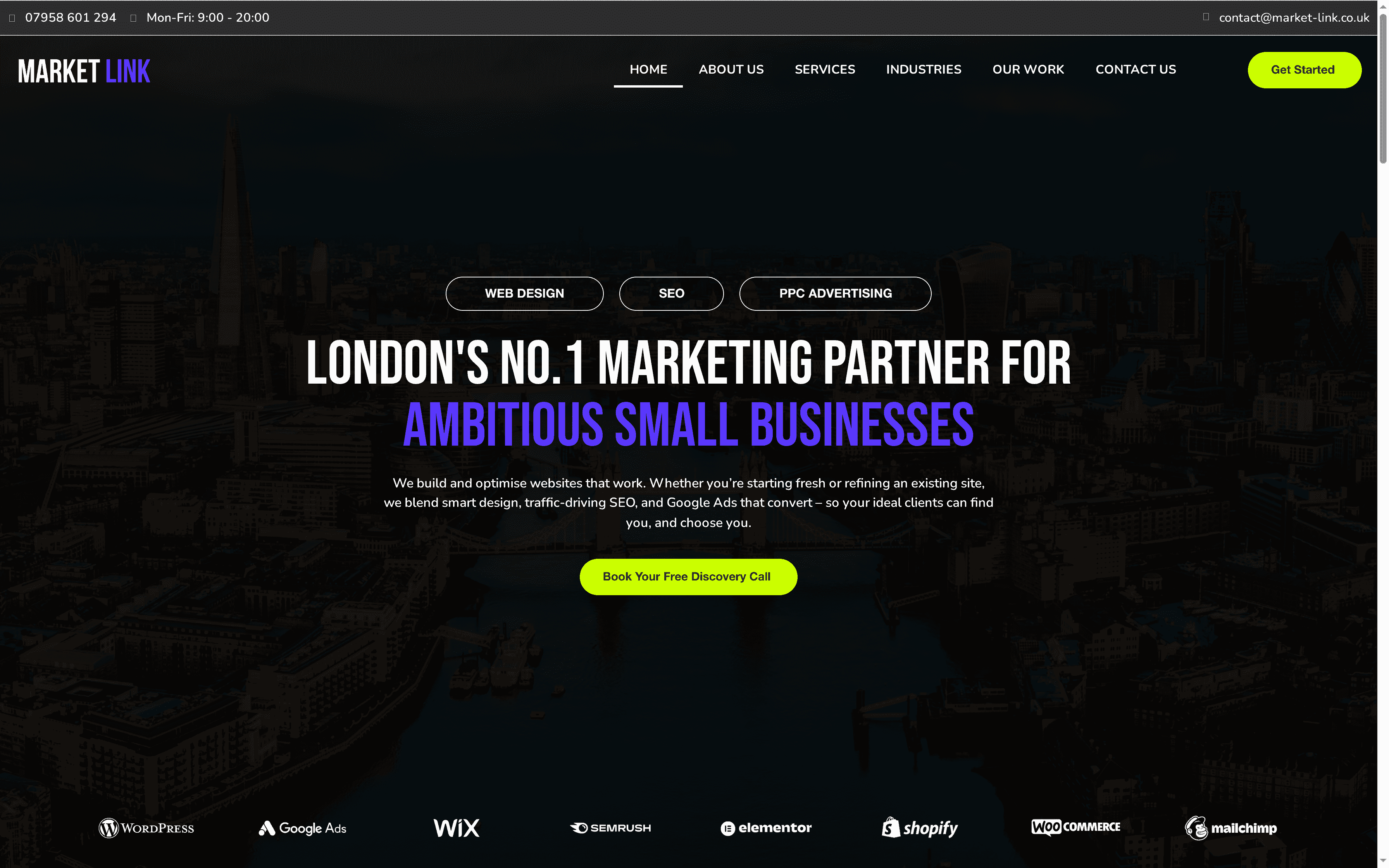
Ready to transform your digital strategy Our London-based digital marketing agency specialises in helping small businesses exactly like yours build powerful websites and grow through effective SEO and targeted advertising Discover how we have already helped clients achieve remarkable results in our Success Stories Archives – Digital Marketing Agency – Market Link Solutions. Every optimisation tactic from website speed improvements to local keyword integration is within your reach. Connect with us today at Market Link Solutions and start turning your online potential into real world growth.
Frequently Asked Questions
How can I claim my Google Business Profile?
Claim your Google Business Profile by visiting the official site and following the verification prompts to prove your business ownership. Ensure that you fill out all your business information accurately and include high-quality images to attract more customers.
What local keywords should I target in my SEO strategy?
Focus on specific terms like neighbourhood names and local landmarks when selecting keywords. Research terms relevant to your business and location, and aim to incorporate at least 5 to 10 local keywords across your content for better visibility.
How do I create effective location-based landing pages?
Develop location-based landing pages by crafting content that speaks directly to local customers and includes relevant keywords. Ensure each page features unique information, such as community characteristics and testimonials, to enhance engagement.
What are the best ways to gain quality backlinks in London?
To gain quality backlinks, focus on partnerships with local organisations and contribute guest articles to relevant blogs. Hosting or participating in local events can also help you earn mentions on reputable sites, which will improve your search engine credibility.
How can I improve my website’s speed for better SEO?
Enhance your website’s speed by compressing images and minimising unnecessary scripts. Run speed diagnostics regularly and aim to reduce loading times by at least 20% to improve user experience and search rankings.
What metrics should I monitor with Google Analytics and Search Console?
Monitor key metrics such as website traffic, bounce rates, and conversion rates to assess your digital performance. Set up goal tracking within 30 days to gain insights that can guide your SEO strategy effectively.