
Every small business owner in London knows how quickly digital trends can shift, often leaving restaurants and clinics questioning which strategies truly drive growth. The reality is that modern SEO relies on genuine user experience and quality content, not outdated tricks or shortcuts. Staying ahead in 2025 means understanding why search engines reward real expertise and aligning your digital efforts with what your local customers actually need. This guide clears up lingering myths and reveals what really counts for local business success.
Table of Contents
- SEO in 2025: Essential Concepts and Myths
- Modern SEO Methods and Their Differences
- How Local SEO Fuels Small Business Growth
- Ranking Factors Shaping Organic Search Results
- Common SEO Pitfalls for Restaurants and Clinics
Key Takeaways
| Point | Details |
|---|---|
| Evolution of SEO | Modern SEO prioritises user intent and genuine expertise over outdated tactics like keyword stuffing and low-quality backlinks. |
| Modern Strategies | Integrating AI and machine learning, contemporary approaches emphasise high-quality, comprehensive content that aligns with user needs. |
| Local SEO Importance | Small businesses must leverage local SEO to connect with high-intent customers, using hyperlocal targeting and mobile optimisation for maximum impact. |
| Common Pitfalls | Restaurants and clinics should focus on maintaining accurate online profiles and creating authoritative content to improve local search visibility. |
SEO in 2025: Essential Concepts and Myths
SEO continues to evolve rapidly, with sophisticated strategies replacing outdated tactics. In 2025, successful digital marketing demands a nuanced understanding of how search engines evaluate content. Debunking common SEO myths requires recognising that modern optimisation is about genuine user value, not gaming algorithmic systems.
The landscape of search engine optimisation has transformed dramatically. Gone are the days when keyword stuffing or purchasing low-quality backlinks could manipulate rankings. Today, Google prioritises authentic expertise and user experience. This means creating content that genuinely answers user queries, provides comprehensive information, and demonstrates real-world knowledge. Mobile usability, page speed, and content relevance have become critical ranking signals.
Several persistent myths continue to mislead small business owners. Contrary to popular belief, meta keywords no longer impact search rankings, and publishing excessive content does not automatically improve visibility. Instead, modern SEO focuses on quality signals like engagement metrics, user intent alignment, and post-click user behaviour. Businesses must shift from quantity-driven approaches to strategies that deliver meaningful, targeted content.
Pro tip: Invest in understanding your audience’s genuine search intent rather than trying to outsmart search algorithms by implementing quick tactical tricks.
Modern SEO Methods and Their Differences
The digital marketing landscape has undergone a profound transformation, with modern SEO strategies integrating advanced technologies that go far beyond traditional keyword optimization. Contemporary approaches now leverage artificial intelligence, machine learning, and sophisticated user experience metrics to determine search rankings.
Unlike previous SEO methods that focused primarily on technical manipulation, 2025’s approach emphasises authentic content creation and user intent alignment. Search engines now utilise complex algorithmic systems that evaluate content through multiple lenses: semantic understanding, real-world expertise, and genuine user engagement. This means businesses must create comprehensive, authoritative content that genuinely addresses user queries, demonstrating deep subject knowledge and providing tangible value.
Key differentiators in modern SEO include enhanced technical capabilities such as entity recognition, mobile-first indexing, and real-time algorithmic learning. Semantic content structuring has become crucial, requiring businesses to develop content that understands and responds to nuanced user search intentions. Machine learning algorithms can now distinguish between superficial content and genuinely helpful resources, rewarding websites that provide comprehensive, well-researched information with higher search rankings.
Pro tip: Invest in creating content that showcases your genuine expertise and directly addresses specific user needs, rather than attempting to manipulate search algorithms through generic, keyword-stuffed material.
How Local SEO Fuels Small Business Growth
Local SEO strategies have become fundamental for small businesses seeking growth in an increasingly competitive digital marketplace. With 98% of consumers relying on online searches for local services, small businesses in London can no longer afford to ignore their digital presence. The landscape has shifted dramatically, transforming local search from a mere marketing tactic to a critical business survival strategy.

The power of local SEO lies in its ability to connect businesses directly with high-intent customers in their immediate geographical area. Hyperlocal targeting and mobile optimisation have become essential elements for capturing consumer attention. Businesses that successfully implement local SEO can expect remarkable outcomes: approximately 76% of consumers who conduct local searches visit a physical store within 24 hours, creating an extraordinary opportunity for immediate conversions and foot traffic.
Modern local SEO goes beyond traditional keyword optimisation, integrating advanced technologies like AI-powered listing management and real-time customer engagement tools. Local business profiles now serve as dynamic platforms that provide potential customers with instant information about inventory, services, and real-time availability. By leveraging these sophisticated digital ecosystems, small businesses can compete effectively against larger competitors, transforming their online presence into a powerful growth engine.
The following table outlines key local SEO features and their impact on small business growth:
| Local SEO Feature | Description | Business Growth Impact |
|---|---|---|
| Hyperlocal Targeting | Reaching users in specific areas | Increases foot traffic and leads |
| Mobile Optimisation | Ensuring site works well on smartphones | Captures high-intent mobile users |
| Real-time Listings | Updating services and availability instantly | Encourages spontaneous purchases |
| Reviews Management | Responding to and managing customer feedback | Enhances trust and local reputation |
Pro tip: Regularly update your Google Business Profile with current photos, accurate contact information, and detailed service descriptions to maximise your local search visibility and attract more potential customers.
Ranking Factors Shaping Organic Search Results
Organic search ranking dynamics have transformed dramatically in recent years, moving far beyond simple keyword matching. Modern search algorithms now employ sophisticated artificial intelligence to understand content context, user intent, and overall website quality. This fundamental shift means businesses must develop a more nuanced approach to digital visibility, focusing on comprehensive, high-quality content that genuinely serves user needs.
Search engines now prioritise semantic relevance and user experience as critical ranking determinants. Websites are evaluated through multiple sophisticated signals, including content depth, site architecture, user engagement metrics, and technical performance. Comprehensive topical coverage that demonstrates genuine expertise has become paramount. This means creating content that goes beyond surface-level information, providing in-depth insights, addressing complex user queries, and establishing clear topical authority.
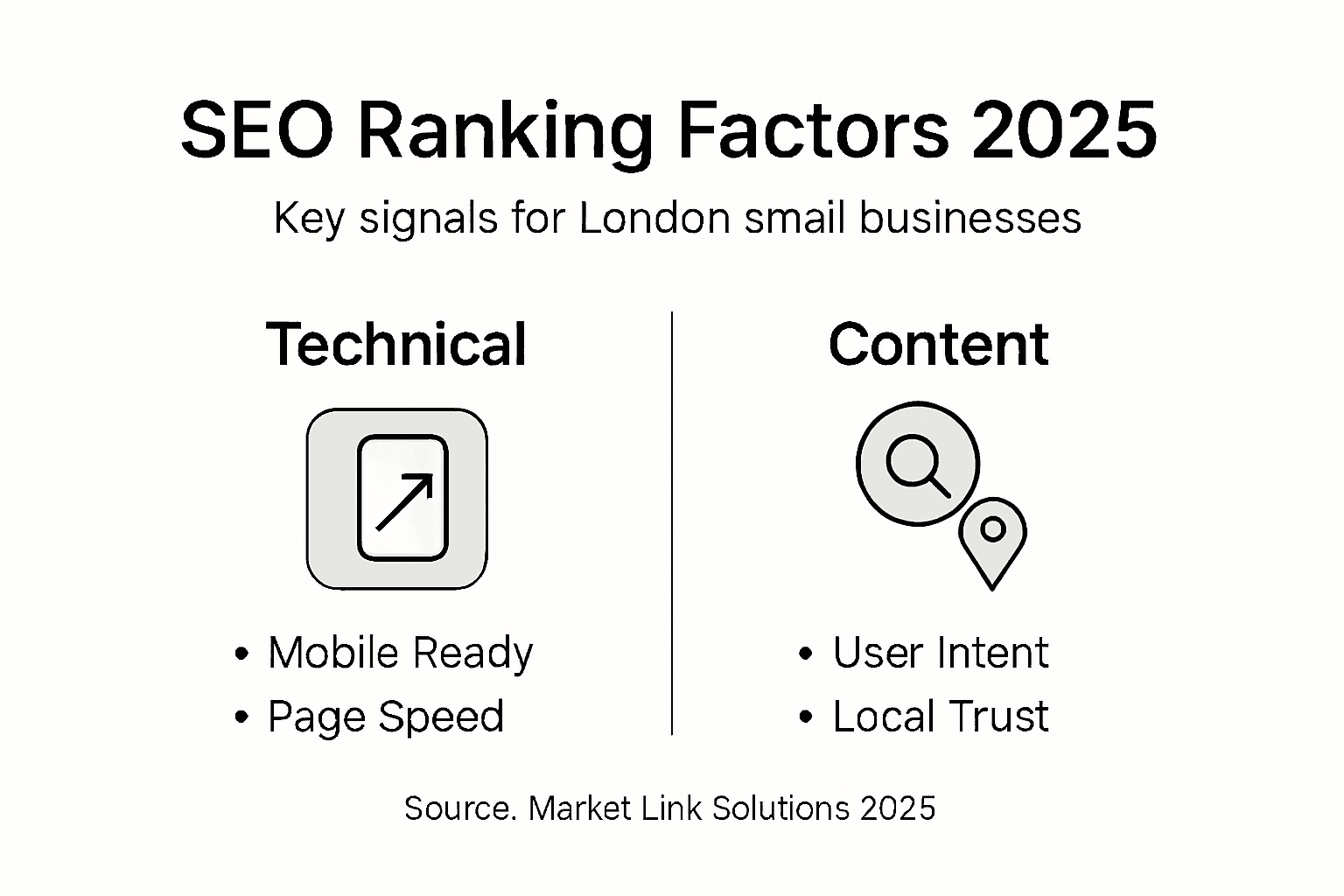
Technical infrastructure plays an increasingly significant role in organic search rankings. Factors such as mobile responsiveness, page loading speed, secure connections, and logical site structure now directly impact search visibility. Businesses must invest in robust technical SEO, ensuring their digital platforms are not just informative but also seamlessly functional across different devices and user scenarios. The most successful websites will be those that combine high-quality content with exceptional user experience and technical excellence.
Here’s a summary of how modern SEO ranking factors compare with outdated approaches:
| Factor | Outdated SEO Approach | Modern SEO Approach (2025) |
|---|---|---|
| Primary Focus | Keyword density, backlinks | User experience, expertise |
| Content Style | Short, keyword-stuffed | In-depth, comprehensive |
| Technical Emphasis | Basic site structure | Mobile, speed, security |
| User Engagement | Low priority | High priority, behaviour analysed |
| Role of AI & Algorithms | Minimal to none | Advanced machine learning |
| Success Measurement | SERP rankings | Long-term relevance, interactions |
Pro tip: Conduct a comprehensive content audit every six months to identify gaps in your topical coverage and ensure your website provides authoritative, in-depth information that truly serves user needs.
Common SEO Pitfalls for Restaurants and Clinics
Technical SEO challenges plague local businesses across restaurants and aesthetic clinics, often hindering their digital visibility. Many small businesses unknowingly undermine their online potential by repeating critical mistakes that prevent them from ranking effectively in local search results. Understanding these common pitfalls is the first step towards developing a robust digital marketing strategy that attracts and converts potential customers.
Restaurants and clinics frequently struggle with mobile optimization and local listing accuracy. Neglecting Google Business Profile details, failing to maintain up-to-date contact information, and ignoring user-generated content can significantly diminish online discoverability. Search engines prioritise businesses that demonstrate consistent, accurate information across digital platforms. This means regularly updating service descriptions, operating hours, location details, and responding to customer reviews to signal active engagement and reliability.
Another significant SEO challenge involves content strategy and expertise demonstration. Both industries must focus on creating authoritative, experience-backed content that genuinely addresses user queries. For restaurants, this might involve sharing unique culinary insights, dietary information, or behind-the-scenes glimpses. Aesthetic clinics should produce content that showcases professional expertise, explains treatments comprehensively, and builds patient trust through transparent, informative material that highlights their specialised knowledge.
Pro tip: Invest at least one hour monthly in auditing and updating your online business profiles, ensuring all information remains current and accurately reflects your services.
Drive Your London Small Business Growth with Expert SEO and Digital Marketing
Understanding why SEO is essential for small businesses in London in 2025 reveals key challenges such as adapting to modern SEO methods, local optimisation, and avoiding common pitfalls like poor mobile usability or outdated content strategies. Your goal is clear: to build authentic user engagement and dominate local search results with a tailored approach that reflects real expertise and meets your audience’s intent.
At Market Link Solutions, we specialise in empowering London small businesses to conquer these challenges through bespoke Web Design and Development, PPC Advertising on Google and Instagram, and advanced SEO optimisation. Discover how businesses like yours have transformed their digital presence in our Success Stories Archives – Digital Marketing Agency – Market Link Solutions.

Take action today and secure your business’s future by partnering with us. Visit Market Link Solutions to start building a website and marketing approach that truly connects with your local customers and elevates your online authority. Don’t wait for your competitors to outpace you—unlock your small business’s potential now.
Frequently Asked Questions
What is the importance of SEO for small businesses in 2025?
SEO is crucial for small businesses as it enhances online visibility, connects them with local customers, and helps them compete effectively in a saturated market. By optimising their digital presence, small businesses can attract high-intent customers and increase foot traffic to their physical locations.
How does local SEO differ from traditional SEO?
Local SEO focuses on optimising a business’s online presence to attract customers within a specific geographical area. Unlike traditional SEO, which aims for broader visibility, local SEO uses location-specific keywords and targets high-intent local searches, making it essential for brick-and-mortar businesses.
What are some key local SEO strategies that small businesses should implement?
Small businesses should engage in hyperlocal targeting, optimise their websites for mobile users, manage their Google Business Profiles actively, and encourage customer reviews to improve their local search visibility and attract more customers.
How can small businesses improve their content strategy for SEO?
Businesses can enhance their content strategy by creating genuine, comprehensive content that addresses specific user queries and aligns with search intent. Sharing insights, demonstrating expertise, and providing valuable information will help establish authority and improve search rankings.