
Finding the right SEO strategy can be the key difference between success and obscurity for any British small business, especially in a crowded city like London. With over 90 percent of online experiences starting on search engines, being visible in search results is crucial. Understanding how SEO optimisation works gives British entrepreneurs a real shot at attracting local customers and building a stronger digital presence through practical techniques that drive lasting results.
Table of Contents
- Defining SEO Optimisation For Small Businesses
- On-Page Vs Off-Page SEO Explained
- The Importance Of Local SEO In London
- Key Factors That Influence Search Rankings
- Common SEO Mistakes To Avoid
Key Takeaways
| Point | Details |
|---|---|
| Importance of SEO for Small Businesses | SEO enhances visibility for small businesses, attracting targeted traffic without costly advertising. |
| On-Page vs Off-Page SEO | Balancing on-page and off-page strategies is crucial for improving search engine rankings and establishing credibility. |
| Role of Local SEO in London | Local SEO is vital for businesses in London, enabling them to connect with customers in specific areas, increasing local visibility. |
| Common SEO Mistakes | Avoiding keyword mismanagement and neglecting mobile optimisation are essential to prevent lower visibility and penalties in search rankings. |
Defining SEO Optimisation for Small Businesses
Search Engine Optimisation (SEO) represents a critical digital marketing strategy designed to enhance a website’s visibility and attract more potential customers through organic search results. For small businesses in London, SEO optimisation helps websites appear more prominently when potential customers search for relevant products or services.
At its core, SEO involves a sophisticated blend of technical and creative techniques aimed at improving a website’s ranking on search engines like Google. These strategies include comprehensive keyword research, content optimisation, technical website improvements, and strategic link building. The goal is straightforward: position your business website where potential customers are most likely to find it when searching for services you provide.
Small businesses benefit from SEO in multiple ways. By improving search engine rankings, companies can attract high-quality, targeted traffic without paying for expensive advertising. Organic search results tend to generate more credible and cost-effective leads compared to paid marketing channels. Businesses that invest in robust SEO strategies can expect increased website visibility, higher customer engagement, and ultimately, more conversions.
Pro Tip – SEO Strategy for Small Businesses: Start by conducting thorough keyword research specific to your local London market, focusing on terms your ideal customers are actively searching for online. Regularly update your website content to maintain relevance and improve your search engine rankings.
On-Page vs Off-Page SEO Explained
Search engine optimisation encompasses two fundamental strategies: on-page and off-page SEO, each playing a critical role in improving a website’s search engine performance. On-page SEO focuses on optimising elements directly within your website to enhance search rankings, while off-page SEO involves external factors that influence your site’s authority and credibility.
On-page SEO involves meticulous control over website elements that directly impact search visibility. This includes crafting compelling title tags, writing descriptive meta descriptions, creating clean and keyword-rich URLs, developing high-quality content, and implementing strategic internal linking. Website owners have complete autonomy in these areas, enabling immediate implementation of optimisation techniques. Technical aspects like page loading speed, mobile responsiveness, and structured data markup also fall under on-page SEO, providing multiple opportunities to improve search engine rankings.
Conversely, off-page SEO revolves around building external signals of website credibility and authority. This strategy primarily involves earning high-quality backlinks from reputable websites, generating social media engagement, and establishing online brand mentions. Unlike on-page techniques, off-page SEO requires consistent effort and cannot be directly manipulated. The process of building domain authority is gradual, often taking months or years to yield significant results. Businesses must focus on creating valuable content, engaging with online communities, and developing relationships with industry influencers to naturally improve their off-page SEO performance.

Pro Tip – SEO Balance Strategy: Develop a holistic SEO approach that gives equal attention to both on-page and off-page optimisation, recognising that a comprehensive strategy yields the most sustainable and impressive search engine results.
Here is a clear comparison of on-page and off-page SEO factors and their specific business impact:
| SEO Aspect | What It Involves | Business Impact |
|---|---|---|
| On-Page SEO | Content quality, meta tags, internal links | Immediate ranking improvements |
| Off-Page SEO | Backlinks, social signals, brand mentions | Builds trust and long-term growth |
The Importance of Local SEO in London
Local SEO represents a critical digital marketing strategy for businesses operating in competitive urban environments like London. Local search optimisation helps small businesses target potential customers within specific geographic areas, enabling them to stand out in a densely populated marketplace where digital visibility can make or break commercial success.
For London-based businesses, local SEO goes beyond simple online visibility. It involves strategic techniques such as optimising Google Business Profile listings, creating location-specific content, managing online reviews, and targeting neighbourhood-specific keywords. These approaches ensure that when potential customers search for services in specific London boroughs or neighbourhoods, your business appears prominently in search results. Precise geographic targeting allows restaurants in Shoreditch, personal trainers in Camden, or aesthetic clinics in Kensington to attract clients actively searching for their specific services in their immediate area.
The competitive nature of London’s business landscape makes local SEO particularly crucial. With thousands of businesses competing for attention in each sector, strategic local search optimisation can provide a significant competitive advantage. By focusing on hyperlocal content, collecting positive customer reviews, and maintaining accurate online directory information, businesses can improve their chances of being discovered by local customers. This approach not only increases online visibility but also builds trust and credibility within specific London communities.
Pro Tip – Local SEO Mastery: Consistently update your Google Business Profile with accurate information, high-quality images, and recent customer reviews to improve your local search rankings and attract more neighbourhood-based customers.
Key Factors That Influence Search Rankings
Search engine rankings are determined by a complex interplay of on-page and off-page factors that collectively signal a website’s relevance, authority, and user experience. Key ranking elements encompass technical performance, content quality, and external validation through authoritative signals, creating a multifaceted approach to digital visibility.
On-page factors represent the foundational elements directly controlled by website owners. These include creating high-quality, keyword-optimised content, designing clear and descriptive title tags, developing compelling meta descriptions, and ensuring clean, structured URLs. Technical aspects such as site loading speed, mobile responsiveness, secure connections (HTTPS), and intuitive website navigation also play crucial roles. Search engines prioritise websites that provide seamless user experiences, rewarding sites with faster load times, easy navigation, and content that precisely matches user search intent.
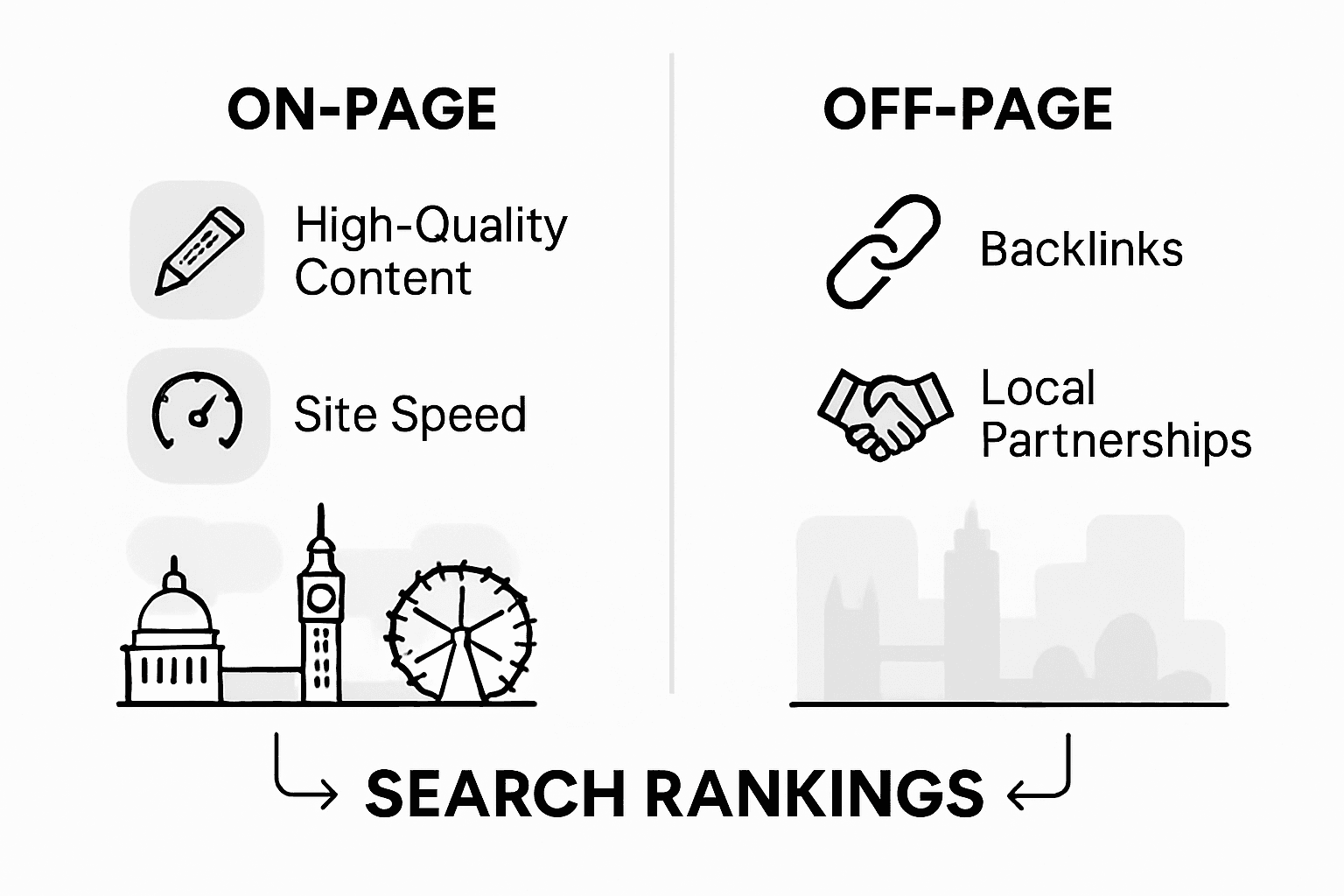
Off-page factors extend beyond website mechanics, focusing on external signals of credibility and relevance. Backlinks from reputable, authoritative websites serve as critical trust indicators, with search engines interpreting these as endorsements of content quality. Social media engagement, online reviews, brand mentions, and overall domain authority contribute to a website’s perceived reputation. For London-based businesses, building a strong local digital presence through consistent, high-quality external references can significantly enhance search ranking potential, particularly when these signals are geographically relevant and industry-specific.
Pro Tip – Holistic SEO Strategy: Develop a balanced approach that simultaneously optimises on-page elements and cultivates high-quality off-page signals, recognising that modern search algorithms reward comprehensive, user-focused digital strategies.
Common SEO Mistakes to Avoid
Small businesses frequently encounter critical SEO errors that can significantly undermine their digital marketing efforts. Understanding and avoiding common SEO pitfalls helps businesses prevent potentially costly mistakes in their online visibility strategy, ensuring more effective digital performance.
One of the most prevalent mistakes is keyword mismanagement. Many businesses either stuff their content with excessive keywords, creating unnatural and difficult-to-read text, or use irrelevant keywords that do not genuinely reflect their services. Search engines have sophisticated algorithms that penalise such practices, potentially reducing website rankings. Additionally, neglecting mobile optimization represents another critical error. With over 60% of internet browsing occurring on mobile devices, websites that are not responsive and mobile-friendly will be deprioritised in search results, effectively rendering their SEO efforts futile.
Another significant mistake is failing to produce high-quality, original content and ignoring the importance of technical SEO elements. Duplicate content, poorly structured web pages, slow loading speeds, and inadequate meta descriptions can dramatically reduce search engine rankings. For London-based businesses, this means potential customers might never discover their services. Consistent content updates, proper internal linking, ensuring fast website performance, and creating geographically relevant content are essential strategies for maintaining strong search engine visibility. Regular analysis of website performance through tools like Google Analytics can help businesses identify and rectify potential SEO weaknesses.
This summary highlights common SEO mistakes and their consequences for small businesses:
| Mistake Type | Typical Example | Negative Result |
|---|---|---|
| Keyword Mismanagement | Irrelevant or stuffed keywords | Penalisation, lower visibility |
| Poor Mobile Experience | Non-responsive website | Lost mobile user traffic |
| Duplicate Content | Reusing or copying text | Drops in ranking, credibility loss |
| Neglected Site Speed | Slow-loading web pages | Higher bounce rates, fewer leads |
Pro Tip – SEO Health Check: Conduct a monthly comprehensive audit of your website’s SEO performance, examining mobile responsiveness, content quality, loading speeds, and keyword relevance to proactively address potential ranking limitations.
Unlock Your London Business Potential with Expert SEO Support
Many small businesses in London face challenges mastering both the technical and creative sides of SEO optimisation as outlined in the article. You may struggle with keyword research specific to your local area, balancing on-page and off-page SEO, or maintaining an engaging Google Business Profile to boost local visibility. These pain points can leave your business hidden from potential customers despite offering great products or services. At Market Link Solutions, we understand how vital it is to build a comprehensive SEO strategy that fits London’s competitive landscape and drives real, measurable growth.

Discover how our tailored digital marketing services can help you overcome these hurdles. From building a responsive website and implementing local SEO best practices to running targeted PPC advertising on Google and Instagram, we cover all elements crucial for your success. Explore inspiring Success Stories Archives – Digital Marketing Agency – Market Link Solutions to see how we have transformed other London small businesses and then take the first step by visiting https://market-link.co.uk. Act now to seize the local market and elevate your business before your competitors do.
Frequently Asked Questions
What is SEO optimisation and why is it important for small businesses?
SEO optimisation is a digital marketing strategy designed to improve a website’s visibility in search engine results. For small businesses, it helps attract targeted traffic, generate credible leads, and ultimately increase conversions without relying heavily on paid advertising.
How does local SEO differ from general SEO?
Local SEO focuses on optimising a business’s online presence for geographic relevance, ensuring that it appears in search results for customers searching for services in specific areas. General SEO aims to improve a site’s overall visibility and ranking without a specific location focus.
What are the key factors that influence search rankings for a business website?
Key factors include on-page elements such as content quality, keyword optimisation, meta descriptions, and site speed, as well as off-page signals like backlinks and social media engagement. A balanced optimisation of both aspects is crucial for improving search rankings.
What common mistakes should small businesses avoid in their SEO strategy?
Common mistakes include keyword mismanagement, neglecting mobile optimisation, duplicate content, and having slow-loading websites. Avoiding these pitfalls can enhance a business’s online visibility and improve search engine rankings.