
Most British hospitality small businesses in London miss out on attracting local customers because their PPC campaigns lack a laser-sharp local focus. With competition heating up among London cafes, restaurants, and hotels, choosing the right keywords can dramatically improve online visibility and customer engagement. Discover how refining your keyword choices and campaign strategy can give your British hospitality brand the edge in an overcrowded digital marketplace.
Table of Contents
- Step 1: Define Local Keywords For Your Audience
- Step 2: Create Targeted Campaigns On Google And Instagram
- Step 3: Set Budgets And Bid Strategies Effectively
- Step 4: Write Compelling Ad Copy For Increased Engagement
- Step 5: Monitor Results And Optimise Your Ads
Quick Summary
| Key Point | Explanation |
|---|---|
| 1. Define Local Keywords | Research specific search terms used by London hospitality businesses to enhance your keyword strategy. |
| 2. Craft Targeted Campaigns | Design digital advertising campaigns tailored to London’s hospitality market using Google Ads and Instagram. |
| 3. Effectively Manage Budgets | Allocate 5% to 12% of revenue for advertising, focusing on optimising Google Ads and Instagram spending. |
| 4. Create Compelling Ad Copy | Write persuasive ad copy that addresses the specific challenges faced by local hospitality businesses. |
| 5. Monitor and Optimise Performance | Regularly track key metrics to adjust your PPC strategies for better engagement and conversion rates. |
Step 1: Define local keywords for your audience
Successfully targeting London hospitality businesses requires strategic local keyword research that speaks directly to potential customers. Your goal is crafting a precise keyword strategy that connects with local restaurant, hotel, and cafe owners seeking digital marketing support.
Begin by understanding the specific language your audience uses when searching for marketing services. This means diving deep into local search terminology for London businesses to identify the most relevant search phrases. Consider terms like “London restaurant marketing”, “hospitality digital advertising”, “PPC for cafes in London”, and other location specific descriptors that capture the nuanced needs of your target market.
Refine your keyword list by analysing search volume, competition, and relevance. Tools like Google Keyword Planner can help you discover precise search terms that potential clients actually use. Pay attention to spelling variations, local slang, and industry specific language that resonates with London hospitality professionals. Remember that your keywords should reflect not just what services you offer, but how local businesses perceive and describe their marketing challenges.
Top tip: Regularly update your keyword list by speaking directly with hospitality business owners and monitoring their actual search behaviours to stay ahead of emerging marketing trends.
Step 2: Create targeted campaigns on Google and Instagram
Crafting precision digital advertising campaigns for London hospitality businesses demands a strategic approach that leverages the unique strengths of Google Ads and Instagram. Your objective is designing targeted campaigns that effectively reach potential clients and drive meaningful engagement.
On Google Ads, focus on creating location specific campaigns that target London hospitality professionals. Develop campaign strategies using customer data analysis to refine your targeting parameters. This means selecting precise geographical boundaries, choosing relevant keywords from your previous research, and setting up ad groups that speak directly to different segments within the London hospitality market such as restaurants, cafes, hotels, and event venues.
For Instagram, concentrate on creating visually compelling content that showcases the authentic narrative of marketing support for local businesses. Design ads that highlight successful case studies, demonstrate tangible results, and use imagery that resonates with London hospitality entrepreneurs. Utilise Instagram’s detailed targeting options to reach business owners based on their interests, professional demographics, and location specific attributes.
Top tip: Continuously monitor and adjust your campaign performance metrics, focusing on conversion rates and engagement levels to optimise your advertising spend and targeting precision.
Here’s a concise comparison of Google Ads and Instagram for London hospitality campaigns:
| Platform | Targeting Strengths | Content Focus | Typical Objective |
|---|---|---|---|
| Google Ads | Location and keyword precision | Text and search results | Direct conversions |
| Demographic and interest targeting | Visual storytelling | Brand awareness, engagement |
Step 3: Set budgets and bid strategies effectively
Successfully managing advertising budgets for London hospitality businesses requires a nuanced approach that balances financial constraints with marketing ambitions. Your goal is to develop a strategic budget allocation that maximises return on investment while maintaining fiscal responsibility.
Understanding financial pressures in the hospitality sector is crucial when setting your PPC budget. Begin by analysing your total marketing budget and allocating a realistic percentage to digital advertising. For London hospitality businesses, this typically ranges between 5% to 12% of total revenue. Divide your budget across Google Ads and Instagram, with a recommended split of 60% to 70% on Google Ads due to its more direct conversion potential and 30% to 40% on Instagram for brand awareness and engagement.

When establishing bid strategies, leverage automated bidding options that align with your specific campaign objectives. Choose strategies like maximise conversions or target cost per acquisition that allow the platform’s algorithm to optimise your spend. Set clear daily and monthly budget caps to prevent overspending, and regularly review performance metrics to ensure your advertising investment delivers tangible results for London hospitality businesses.
Top tip: Implement a weekly budget review process to quickly adjust your bid strategies and reallocate funds from underperforming campaigns to more successful targeting approaches.
Step 4: Write compelling ad copy for increased engagement
Crafting powerful ad copy for London hospitality businesses requires a strategic approach that captures attention and drives potential customers to take action. Your objective is to create concise, persuasive messaging that resonates with local business owners and highlights the unique value of your marketing services.
Develop marketing communication strategies that influence consumer behaviour by focusing on clear, benefit driven language. Structure your ad copy with a compelling headline that addresses specific pain points for London hospitality businesses such as low online visibility, limited customer acquisition, or ineffective digital marketing. Use active language that speaks directly to their challenges and demonstrates how your services can transform their business performance.
Ensure your ad copy complies with UK advertising standards by creating transparent, honest messaging that avoids exaggerated claims. Incorporate specific value propositions like percentage increases in website traffic, concrete case study results, or targeted marketing improvements. Include a strong call to action that encourages immediate engagement such as free consultation offers or limited time strategy sessions specifically designed for London hospitality entrepreneurs.
Top tip: Test multiple ad variations to identify which messaging resonates most effectively with your target audience by tracking engagement rates and conversion metrics.
Step 5: Monitor results and optimise your ads
Tracking and refining your PPC campaigns is crucial for sustainable growth in London’s competitive hospitality marketing landscape. Your mission is to transform raw data into actionable insights that continuously improve advertising performance.
Implement data-driven strategies for monitoring campaign performance by establishing a consistent review cycle. Set up comprehensive tracking in Google Ads and Instagram Analytics that measures key performance indicators such as click through rates, conversion rates, cost per acquisition, and return on ad spend. Focus on metrics specific to London hospitality businesses like lead generation, website enquiries, and booking conversions.
Utilise advanced analytics tools to segment your data and identify precise areas for improvement. Look for patterns in audience behaviour such as peak engagement times, most responsive demographic groups, and highest performing ad variations. Make incremental adjustments to your targeting, ad copy, and bidding strategies based on these insights. Regularly reallocate your budget towards top performing campaigns and pause or modify underperforming ads to maximise your marketing investment.
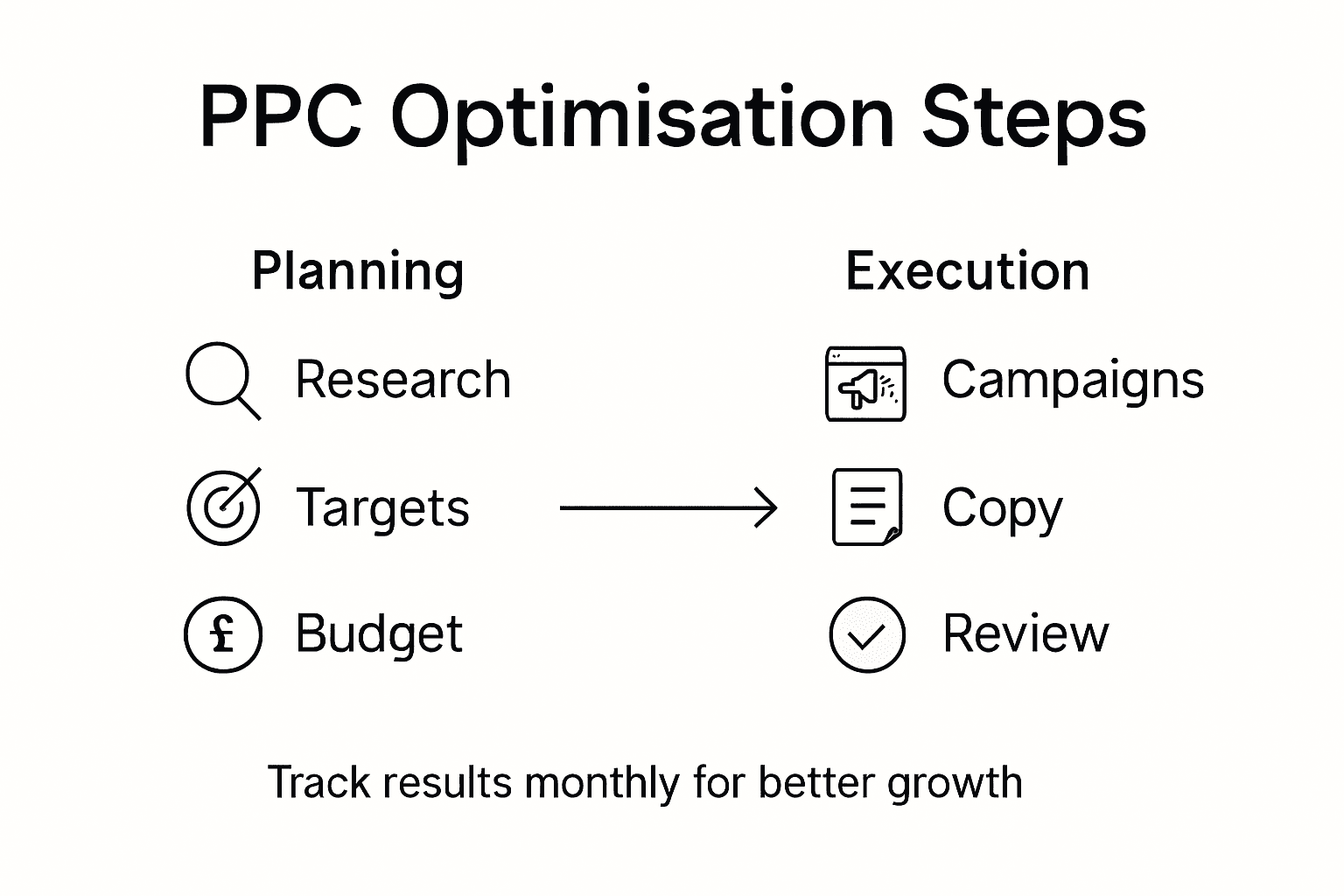
Top tip: Create a monthly performance dashboard that visually tracks your key metrics, enabling quick decision making and transparent reporting of your advertising progress.
This table summarises key performance metrics to track for London hospitality PPC campaigns:
| Metric | What It Measures | Business Impact |
|---|---|---|
| Click Through Rate | Ad engagement level | Indicates effectiveness of ads |
| Conversion Rate | Leads or bookings gained | Shows return on ad investment |
| Cost per Acquisition | Expense per new customer | Assesses financial efficiency |
| Return on Ad Spend | Revenue from ads | Helps optimise budget allocation |
Accelerate Your London Hospitality Growth with Expert PPC and Web Solutions
Navigating the challenges of precise local keyword targeting and optimised PPC campaigns for London hospitality businesses can feel overwhelming. From defining location specific search terms to balancing budgets while maximising ROI, your marketing strategy needs to be sharp and effective. Key pain points like increasing online visibility and transforming clicks into bookings demand focused expertise and tailored digital solutions.
Our London based digital marketing agency specialises in serving small businesses ready to overcome these hurdles. With our PPC Advertising on Google and Instagram services, combined with expert Web Design and Development and SEO optimisation, we help hospitality businesses craft compelling ad copy, set smart budgets, and track campaign results to deliver real growth. Take the next step towards transforming your online presence and booking rates by partnering with a team that understands your unique London hospitality needs.
Ready to supercharge your digital marketing strategy today and see tangible results? Visit Market Link to get started.
Frequently Asked Questions
What local keywords should I use for my London hospitality PPC campaigns?
Start by identifying keywords that reflect the language and specific needs of London hospitality businesses. Use terms like “London restaurant marketing” or “PPC for cafes in London” and refine your list based on search volume and relevance.
How do I create targeted campaigns on Google and Instagram for my hospitality business?
Focus on defining your target audience and geographical parameters. For Google Ads, create campaigns that use your chosen local keywords, while for Instagram, develop visually engaging content that resonates with local business owners.
What is the recommended budget allocation for PPC campaigns in the London hospitality sector?
Allocate about 5% to 12% of your total revenue to digital advertising, with 60% to 70% of that budget for Google Ads and 30% to 40% for Instagram. Regularly review your budget to ensure it’s optimally supporting your marketing objectives.
How do I write compelling ad copy for London hospitality PPC ads?
Craft ad copy that speaks directly to the pain points of your audience, using clear and benefit-driven language. Highlight specific results, such as increased website traffic, and include strong calls to action to encourage immediate engagement.
How can I monitor the results of my PPC campaigns effectively?
Implement a systematic process to review key performance metrics like click-through rates and conversion rates. Set up tracking for your campaigns and use monthly performance dashboards to quickly identify areas for improvement and make necessary adjustments.
What metrics should I focus on for optimising my London hospitality PPC advertising?
Concentrate on metrics such as click-through rate, conversion rate, cost per acquisition, and return on ad spend. By tracking these indicators, you can assess the effectiveness of your campaigns and decide where to allocate your budget more efficiently.
Recommended
- Restaurant PPC Advertising Guide for London Success – Digital Marketing Agency – Market Link Solutions
- How to Set Up PPC Ads for London Small Businesses
- 7 Essential PPC Strategies for Small Businesses in London
- 7 Key Benefits of PPC Advertising for London Businesses
- JF Consult | Digital Innovation Consulting