
Most small British businesses miss out on nearly 40 percent of local search traffic due to technical SEO gaps. For London restaurant and aesthetics owners, a solid technical SEO strategy is not just helpful—it is vital for connecting with local customers who rely on search engines to find trusted services. Understanding the foundations of technical SEO empowers British entrepreneurs to create websites that search engines favour, turning digital visibility into real, sustained footfall.
Table of Contents
- Defining Technical SEO For Small Businesses
- Core Elements Of Technical SEO Optimisation
- How Technical SEO Affects Local Rankings
- Common Technical SEO Mistakes To Avoid
- Essential Technical SEO Tools For London Firms
Key Takeaways
| Point | Details |
|---|---|
| Technical SEO is essential for visibility | Implementing strong technical SEO practices enhances local businesses’ discoverability and search engine rankings. |
| Focus on core elements | Elements like website speed, mobile responsiveness, and secure connections should be prioritised for optimal user experience. |
| Avoid common mistakes | Neglecting page load speed and metadata accuracy can significantly hinder online visibility. |
| Utilise SEO tools effectively | Regularly review insights from tools like Google Search Console and Google Analytics to enhance technical performance. |
Defining technical SEO for small businesses
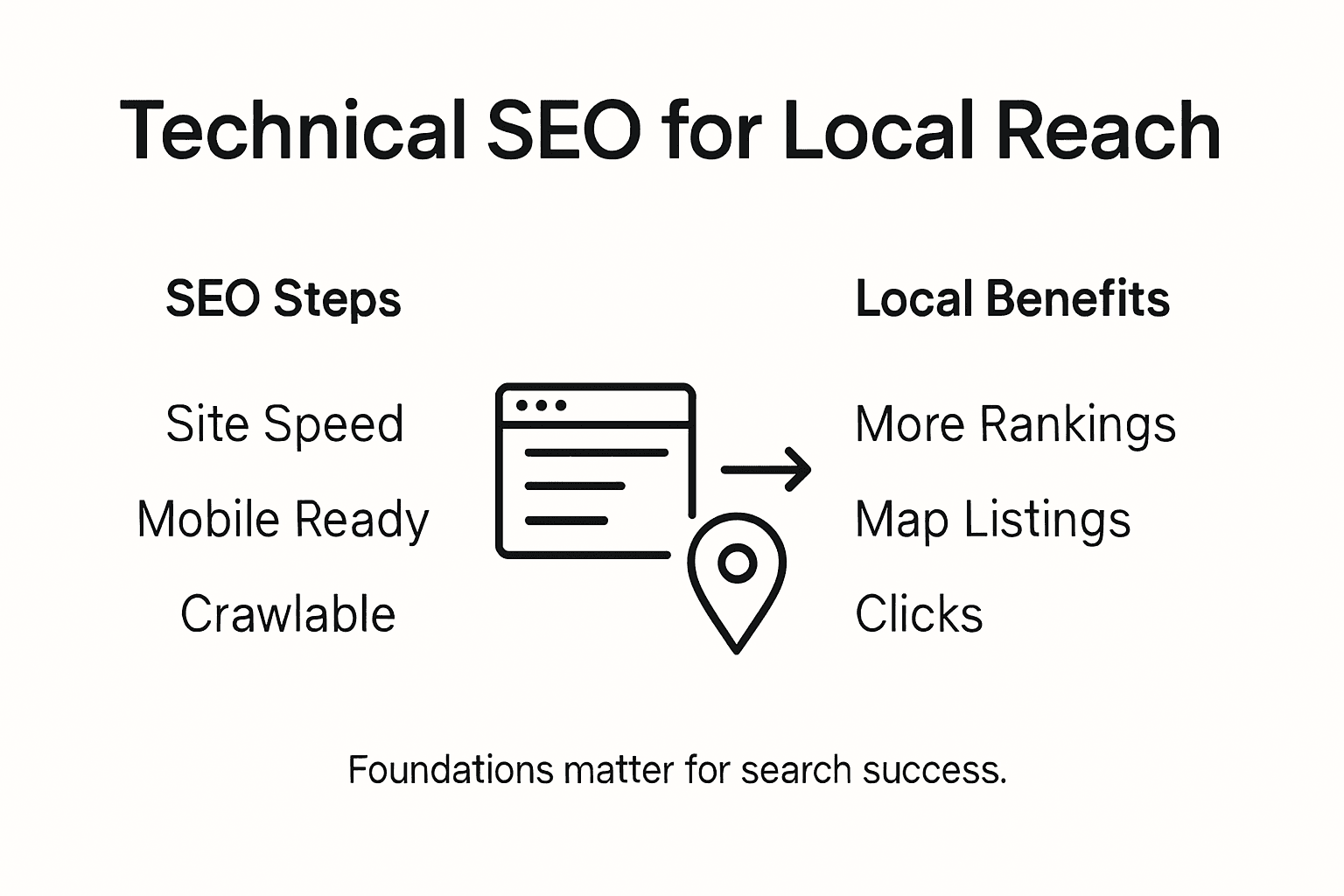
Technical SEO represents the strategic foundation that enables websites to communicate effectively with search engines, ensuring optimal visibility for local businesses in London and beyond. At its core, technical SEO focuses on improving website infrastructure, performance, and accessibility to enhance search engine rankings and attract potential customers.
For small businesses, technical SEO involves several critical elements that directly impact online discoverability. Key components include website speed optimisation, mobile responsiveness, secure connections, structured data implementation, and clean site architecture. These technical aspects work together to signal to search engines like Google that a website is trustworthy, relevant, and user-friendly. According to the Enterprise Research Centre’s report on small business growth, effective technical SEO helps small businesses improve their online presence and reach local customers more efficiently.
Specifically for London-based restaurants, aesthetics clinics, and service-based businesses, technical SEO means creating websites that load quickly, provide clear navigation, and include location-specific metadata. This involves implementing schema markup for local businesses, ensuring Google My Business listings are accurate, and developing a site structure that helps search engines understand your business’s geographic relevance. Proper technical optimisation can significantly improve local search rankings, making your business more visible to potential customers searching for services in specific London neighbourhoods.
Here’s a summary of how different technical SEO elements impact small businesses in London:
| Technical Element | Business Benefit | Local Impact |
|---|---|---|
| Website speed | Better user experience | Higher ranking for local searches |
| Mobile responsiveness | Attracts mobile users | Essential for searches on the go |
| Secure connections (HTTPS) | Builds customer trust | Trusted by search engines |
| Schema markup | Helps search engines interpret site | Increases local visibility |
| Local metadata | Targets London-specific queries | Improves neighbourhood relevance |
Pro Tip: Invest in a professional website audit to identify and resolve technical SEO issues that might be preventing your business from ranking effectively in local search results.
Core elements of technical SEO optimisation
Technical SEO optimisation encompasses a comprehensive set of strategies designed to improve a website’s foundational performance and search engine compatibility. These core elements are critical for small businesses seeking to enhance their digital presence and attract local customers through improved online visibility.
According to the UK Government’s search engine optimisation best practice guide, the fundamental technical SEO elements include precise metadata completion, strategic page title optimisation, and enhancing site crawlability. For London-based businesses, this translates into several key technical components: website architecture, page speed, mobile responsiveness, secure hosting, and structured data implementation.
Specifically, technical SEO requires meticulous attention to detail across multiple domains. Businesses must ensure their websites feature clean, logical URL structures, implement schema markup for local businesses, maintain fast loading times across devices, and create a robust internal linking strategy. This approach helps search engines efficiently understand and index website content, ultimately improving search rankings for local service providers such as restaurants, aesthetics clinics, and professional services in London.
Pro Tip: Conduct a comprehensive technical SEO audit quarterly to identify and resolve potential performance issues that might be hindering your website’s search engine rankings.
How technical SEO affects local rankings
Technical SEO serves as a critical mechanism for improving a business’s local search visibility, acting as the behind-the-scenes architecture that determines how effectively search engines understand and rank local content. By optimising website infrastructure and communication signals, small businesses can dramatically enhance their chances of appearing in localised search results.

Enterprise Research Centre’s innovation survey highlights that local signals such as geotargeting, schema markup, site speed, and mobile optimization are fundamental in determining local search rankings. For London-based businesses, this means creating websites that not only look appealing but also communicate clearly with search engine algorithms, ensuring precise representation of location, services, and business attributes.
The technical aspects of local SEO go beyond simple keyword placement. Businesses must implement structured data that explicitly defines their local context, including precise business categories, geographical coordinates, operating hours, and contact information. This granular approach helps search engines like Google accurately match local search queries with the most relevant business offerings, increasing the likelihood of appearing in coveted local search results and Google Maps listings.
Pro Tip: Regularly update your website’s structured data and ensure all location-specific information remains current to maintain optimal local search performance.
Common technical SEO mistakes to avoid
Technical SEO mistakes can significantly undermine a small business’s online visibility, creating invisible barriers that prevent potential customers from discovering their services. For London-based businesses competing in a crowded digital marketplace, understanding and avoiding these pitfalls is crucial to maintaining a robust online presence.
University of Sussex’s technical reporting guidelines highlight several critical technical SEO errors that can dramatically reduce search engine performance. The most prevalent mistakes include neglecting page load speed, failing to implement mobile responsiveness, and creating poor site architecture. These issues not only frustrate potential customers but also signal to search engines that a website may not provide an optimal user experience.
Beyond technical infrastructure, businesses must pay careful attention to metadata and structured data accuracy. Inaccurate or missing location information, poorly implemented schema markup, and inconsistent business details across different online platforms can severely limit local search visibility. Search engines rely on precise, consistent information to understand and rank local businesses, making every technical detail a potential make-or-break factor for online discoverability.
Pro Tip: Conduct a comprehensive technical SEO audit quarterly, using professional tools to identify and immediately address any performance or structural issues that could be hindering your website’s search rankings.
Essential technical SEO tools for London firms
Navigating the complex landscape of technical SEO requires a strategic approach, with specialised tools serving as critical navigational instruments for small businesses seeking to enhance their digital presence. Understanding and leveraging the right technical SEO tools can transform a business’s online visibility, particularly for London-based enterprises competing in a saturated digital marketplace.
UK Government’s search engine optimisation best practice guide recommends several essential technical SEO tools that can dramatically improve a website’s performance. These include comprehensive website audit platforms, keyword research tools, and performance measurement utilities. Google Search Console stands out as a primary tool, offering critical insights into website indexing, search performance, and potential technical issues that might hinder local search visibility.
For London firms, the most effective technical SEO toolkit typically comprises a combination of free and paid resources. Essential tools include performance analytics platforms like Google Analytics, mobile responsiveness checkers, site speed analysers, and structured data testing tools. These resources enable businesses to diagnose technical issues, understand user behaviour, and make data driven optimisations that can significantly improve local search rankings and online discoverability.
For quick reference, here are key technical SEO tools and what they help London firms achieve:
| Tool Name | Primary Purpose | Typical Business Use |
|---|---|---|
| Google Search Console | Index monitoring & errors | Identify crawl issues |
| Site speed analyser | Checks loading time | Pinpoint performance delays |
| Structured data tester | Validates schema implementation | Ensure accurate local signals |
| Mobile checker | Assesses mobile responsiveness | Optimise for mobile traffic |
| Google Analytics | Tracks user behaviour | Inform ongoing improvements |
Pro Tip: Allocate time monthly to review your technical SEO tool insights and implement recommended improvements, treating these diagnostics as a crucial part of your digital strategy.
Strengthen Your Local Visibility with Expert Technical SEO Support
Navigating the complexities of technical SEO can feel overwhelming, especially when your small business in London depends so heavily on local search success. Issues like slow website speed, poor mobile responsiveness and inaccurate local metadata hold back your potential to attract the customers you deserve. Understanding and fixing these technical challenges is key to ensuring search engines find you and people choose you.

At Market Link Solutions, we specialise in helping London businesses conquer these obstacles through tailored web design, SEO optimisation and PPC advertising. Discover proven strategies and inspiring results in our Success Stories archives that demonstrate how businesses like yours improved local visibility and customer engagement. Don’t let technical SEO issues silently erode your digital presence. Visit our homepage https://market-link.co.uk now to unlock your website’s full potential and begin growing your business where it matters most.
Frequently Asked Questions
What is technical SEO?
Technical SEO refers to the process of optimising a website’s infrastructure to improve its visibility and performance in search engines. It focuses on enhancing factors such as site speed, mobile responsiveness, secure connections, and structured data implementation.
How does technical SEO improve local visibility?
Technical SEO improves local visibility by ensuring that search engines can easily crawl and index a website’s content. Proper optimisation helps to define a business’s local relevance, ultimately increasing its chances of appearing in local search results.
What are common technical SEO mistakes to avoid?
Common technical SEO mistakes include neglecting page load speed, failing to ensure mobile responsiveness, and having poor site architecture. Additionally, inaccuracies in metadata and structured data can reduce local search visibility.
Which tools are essential for technical SEO optimisation?
Essential tools for technical SEO optimisation include Google Search Console for monitoring indexing and errors, site speed analysers for performance checks, structured data testers to validate schema implementation, and Google Analytics to track user behaviour.