
Every London restaurant or health clinic that wants to stand out online faces a simple truth: your website is often your first impression. With so many choices available, visitors now expect easy navigation, clear information, and a site that works perfectly on any device. By focusing on responsive design and user-friendly features, small businesses can turn casual browsers into loyal customers and build trust in a crowded marketplace.
Table of Contents
- Defining Web Design And Core Principles
- Types Of Web Design Approaches Today
- Essential Features For Small Business Websites
- Costs, Risks And What To Avoid
- Web Design’s Role In Online Visibility
Key Takeaways
| Point | Details |
|---|---|
| User-Centred Design | Prioritise accessibility and intuitive navigation to enhance user experiences on your website. |
| Responsive Design is Essential | Implement responsive frameworks to ensure websites perform well on any device, improving user engagement. |
| Invest in Core Features | Include intuitive navigation, fast loading speeds, and trust-building elements to attract and retain customers. |
| Continuous Optimisation | Regularly assess and update your website to maintain security, performance, and alignment with user expectations. |
Defining Web Design and Core Principles
Web design represents the strategic process of crafting digital experiences that effectively communicate a brand’s message while delivering seamless user interaction. At its core, web design combines visual aesthetics with functional architecture to create compelling online platforms that attract, engage, and convert potential customers. For London small and medium enterprises (SMEs), understanding these fundamental principles becomes crucial in developing a competitive digital presence.
The fundamental principles of modern web design centre on creating user-centred digital experiences that prioritise accessibility, responsiveness, and intuitive navigation. These principles encompass several key elements: visual hierarchy, consistent branding, clear typography, strategic colour schemes, and adaptable layouts that function perfectly across multiple devices. Professional web designers meticulously balance these components to ensure websites not only look appealing but also provide smooth, efficient user journeys.
Modern web design techniques incorporate advanced technologies like responsive frameworks, HTML5, CSS3, and JavaScript to create dynamic, interactive websites. These technologies enable SMEs to build websites that automatically adjust to different screen sizes, load quickly, and offer engaging user experiences. By implementing responsive web design techniques, businesses can ensure their digital platforms remain accessible and functional whether viewed on desktop computers, tablets, or smartphones.
Pro tip: When planning your website design, always prioritise user experience over purely aesthetic considerations, focusing on how easily potential customers can navigate and interact with your digital platform.
Types of Web Design Approaches Today
Web design has evolved dramatically, offering multiple approaches that cater to diverse business needs and technological capabilities. Modern web design is no longer a one-size-fits-all solution, but a nuanced landscape of strategies tailored to specific organisational requirements and user expectations. Small and medium enterprises in London must understand these varied approaches to make informed digital strategy decisions.
Traditionally, web designers have employed several core design methodologies. Static design approaches represent the most basic model, where web pages maintain a fixed layout regardless of device or screen size. In contrast, adaptive designs create multiple fixed layouts for different screen dimensions, allowing websites to detect and display appropriate versions. Responsive design has become the gold standard, dynamically adjusting page elements using flexible grids, images, and CSS media queries to provide seamless experiences across smartphones, tablets, and desktop computers.
Moreover, contemporary web design incorporates sophisticated techniques like single-page applications (SPAs) and dynamic content rendering. These advanced approaches enable more interactive and engaging user experiences, with JavaScript-powered interfaces that load content dynamically without requiring full page refreshes. For London SMEs, understanding these design paradigms means recognising that website functionality goes far beyond simple visual presentation, encompassing user interaction, performance, and strategic communication of brand identity.
Here is a comparison of popular web design approaches and how they impact business objectives:
| Design Approach | Adaptability | Typical Use Case | Impact on SMEs |
|---|---|---|---|
| Static | Fixed layout only | Simple websites with minimum updates | Limited flexibility, not mobile-friendly |
| Adaptive | Multiple fixed layouts | Targeted device-specific interfaces | Improved experience, higher cost |
| Responsive | Fluid grids, flexible images | Universal, mobile-first design | Optimal user journey, better SEO |
| Single-page Application (SPA) | Dynamic, interactive content | Advanced, app-like experiences | High engagement, complex setup |
Pro tip: When selecting a web design approach, prioritise user experience and mobile responsiveness over complex aesthetics, ensuring your digital platform remains accessible and intuitive across all devices.
Essential Features for Small Business Websites
A professional website serves as the digital storefront for London small businesses, acting as a critical platform for attracting and converting potential customers. In today’s competitive digital marketplace, websites must do far more than simply exist — they must strategically communicate brand value, provide seamless user experiences, and effectively drive business growth.
Small businesses require websites with core functional features that prioritise user engagement and business objectives. These essential features include intuitive navigation, mobile-responsive design, fast loading speeds, and clear calls-to-action. Navigation structures should be simple and logical, allowing visitors to find information quickly and easily. Equally crucial are mobile-responsive layouts that adapt smoothly across different devices, ensuring a consistent experience whether customers access the site from smartphones, tablets, or desktop computers.
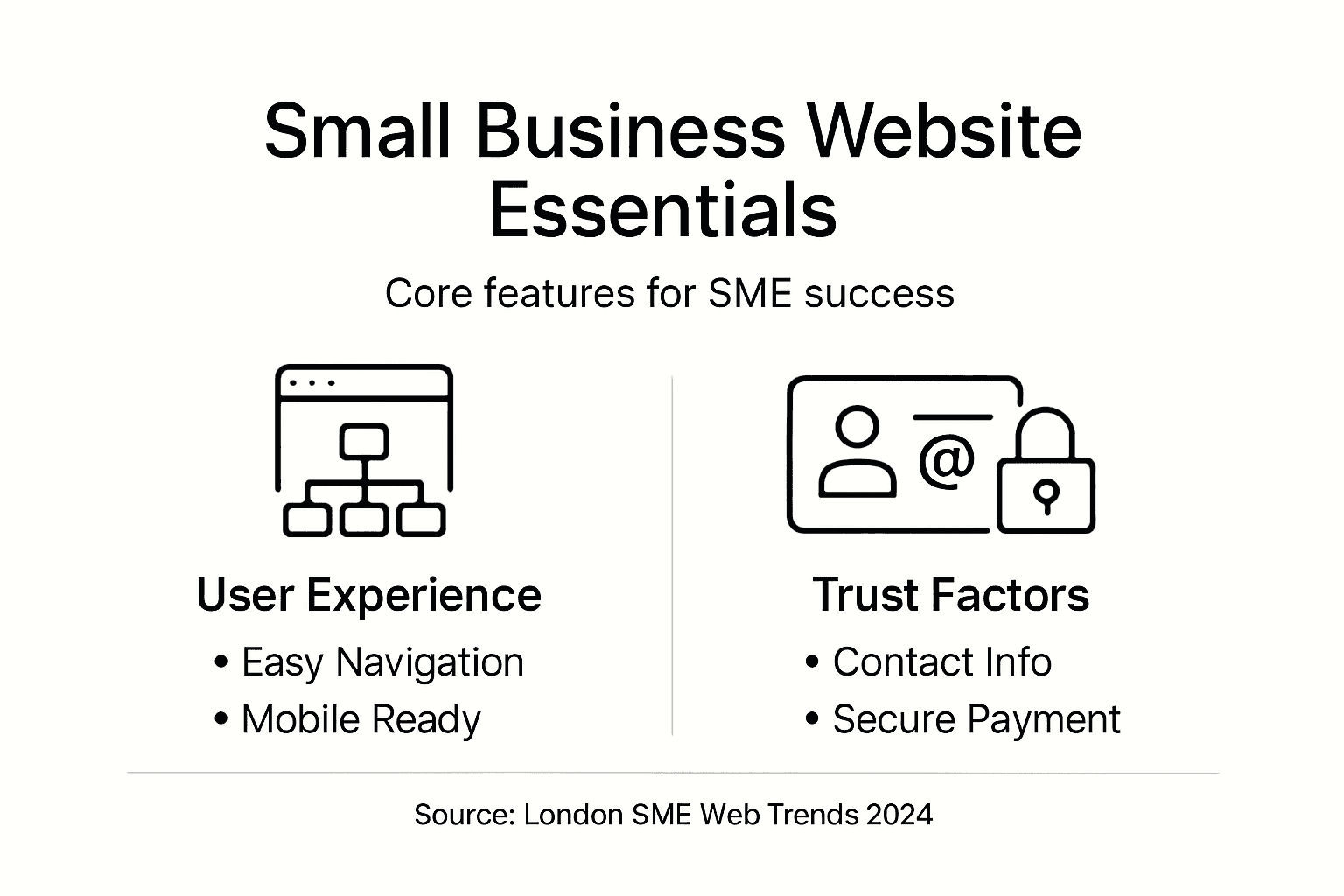
Beyond technical functionality, successful small business websites integrate trust-building elements that transform casual browsers into potential customers. These components include prominent contact information, customer testimonials, professional imagery, and security indicators like SSL certificates. Implementing strong search engine optimisation (SEO) principles helps improve online visibility, while strategic content that addresses customer pain points demonstrates expertise and builds credibility. For London SMEs, the website represents more than a digital brochure — it’s a powerful marketing tool that can significantly impact business growth and customer acquisition.
Below is a summary of essential website features and their benefits for London SMEs:
| Feature | Description | Business Benefit |
|---|---|---|
| Intuitive Navigation | Clear, logical site structure | Faster customer journeys |
| Mobile Responsiveness | Adaptive display across devices | Wider audience reach |
| Fast Loading Speeds | Optimised page performance | Lower user abandonment |
| Trust Elements | Testimonials, SSL, contact details | Increased credibility |
| Strategic Content | Targeted, informative text | Better customer engagement |
Pro tip: Conduct regular website audits every six months to ensure your digital platform remains current, secure, and aligned with evolving user expectations and technological standards.
Costs, Risks and What to Avoid
For London small and medium enterprises, developing a website involves carefully navigating financial investments, potential technical pitfalls, and strategic decision-making. Understanding the potential costs and risks associated with web design is crucial for making informed choices that protect both financial resources and digital reputation.

The financial landscape of web design can be complex, with costs varying dramatically based on complexity, functionality, and professional expertise required. Website development costs typically range from £500 to £5,000 for small businesses, depending on design sophistication, custom features, and ongoing maintenance requirements. Key financial risks include unexpected technical complications, potential security vulnerabilities, and the ongoing expense of keeping digital platforms updated and secure. Small businesses must budget not just for initial development, but for continuous maintenance, hosting fees, potential platform upgrades, and potential professional support.
Common pitfalls for SMEs include choosing inappropriate design platforms, neglecting mobile responsiveness, overlooking search engine optimisation, and failing to integrate proper security measures. Website development mistakes can result in poor user experiences, reduced customer trust, and diminished online visibility. Critical risks include using outdated design technologies, implementing weak security protocols, and creating websites that do not effectively communicate brand identity or provide clear user pathways. London businesses must prioritise professional, adaptable web design that balances aesthetic appeal with functional performance and strategic business objectives.
Pro tip: Allocate at least 20% of your initial web design budget for ongoing maintenance and potential future upgrades to ensure long-term digital effectiveness.
Web Design’s Role in Online Visibility
Online visibility represents the digital lifeline for London small businesses, determining their ability to attract, engage, and convert potential customers in an increasingly competitive digital landscape. A strategically designed website serves as more than just an online brochure — it functions as a powerful marketing tool that directly influences a company’s digital discoverability and brand perception.
Search engines prioritise websites with exceptional user experiences, making web design a critical factor in improving organic search rankings. Search engine optimisation fundamentally relies on website structure, loading speed, mobile responsiveness, and content accessibility. Professional web design integrates technical elements like clean code, semantic HTML, fast page load times, and intuitive navigation, which search algorithms use to evaluate and rank websites. These technical foundations signal to search engines that a website provides genuine value to users, thereby improving its chances of appearing prominently in search results.
Beyond technical optimisation, effective web design communicates brand identity, builds customer trust, and creates smooth user journeys that encourage engagement and conversion. London SMEs must recognise that their website represents a digital storefront, capable of making powerful first impressions and converting casual browsers into loyal customers. This requires a holistic approach that balances aesthetic appeal with functional performance, ensuring that every design element serves a strategic business objective and contributes to enhanced online visibility.
Pro tip: Regularly analyse your website’s performance using free tools like Google Analytics and Google Search Console to identify and address potential visibility barriers.
Transform Your London SME’s Digital Presence with Expert Web Design Solutions
The article highlights the critical challenge London small and medium enterprises face in developing websites that not only look appealing but prioritise user experience, mobile responsiveness, and online visibility. If your current website struggles with slow loading speeds, confusing navigation, or lacks trust-building elements it can leave potential customers frustrated and harm your brand reputation. At Market Link Solutions, we understand these pain points and specialise in delivering tailored web design and development services that balance visual appeal with smooth functionality to help your business thrive online.
Explore how we have empowered other London SMEs by visiting our Success Stories Archives – Digital Marketing Agency – Market Link Solutions. Take control of your digital future now by partnering with a local agency that knows how to deliver responsive, SEO-optimised websites that attract, engage, and convert. Visit Market Link Solutions today and start building a website that truly works for your business.
Frequently Asked Questions
What is web design and why is it important for SMEs?
Web design is the process of creating digital experiences that communicate a brand’s message and enhance user interaction. It is crucial for SMEs as it helps establish an online presence that attracts and retains customers, thereby influencing sales and brand credibility.
What are the core principles of effective web design?
Effective web design revolves around user-centred experiences prioritising accessibility, responsiveness, and intuitive navigation. Key elements include visual hierarchy, consistent branding, clear typography, strategic colour schemes, and adaptable layouts for various devices.
What web design approaches should SMEs consider?
SMEs should consider responsive design, which adjusts layouts for different devices, adaptive design with multiple fixed layouts, and single-page applications for interactive experiences. Choosing the right approach helps meet user expectations and enhances engagement.
How do essential website features benefit small businesses?
Essential features like intuitive navigation, mobile responsiveness, and fast loading speeds greatly enhance user experiences. Trust elements, such as testimonials and clear contact information, also build credibility, ultimately leading to higher customer engagement and conversion rates.