
Over 45 percent of British small businesses say online advertising is their top tool for growth. Yet many owners in London are unsure where to start with new digital strategies. Pay-per-click promises targeted results, but confusing jargon and complex options can hold people back. This guide cuts through the noise, showing British entrepreneurs how PPC works and why it gives smart businesses a real edge in a crowded market.
Table of Contents
- Defining PPC Advertising For UK Small Businesses
- Types Of PPC Campaigns And Key Platforms
- How PPC Advertising Works On Google And Instagram
- Typical Costs And Budgeting For PPC In London
- Common PPC Pitfalls And How To Avoid Them
Key Takeaways
| Point | Details |
|---|---|
| Understanding PPC Advertising | PPC advertising allows UK small businesses to gain targeted website visits by paying for clicks on their ads, providing cost-effective traffic driving opportunities. |
| Types of PPC Campaigns | Various campaign types are available on platforms like Google and social media, helping businesses engage specific audiences through tailored strategies. |
| Budgeting for PPC | Monthly PPC budgets in London typically range from £500 to £5,000, with effective management strategies needed to ensure a good return on investment. |
| Common Pitfalls | Businesses should avoid vague keyword targeting and ensure mobile optimisation, while also tracking campaign performance for continuous improvement. |
Defining PPC Advertising for UK Small Businesses
Pay-per-click (PPC) advertising represents a powerful digital marketing strategy that allows businesses to purchase targeted website visits through strategic online advertising. In this model, advertisers pay a small fee each time a potential customer clicks their digital advertisement, making it a cost-effective approach for driving targeted traffic to their websites.
At its core, PPC advertising operates on search engines like Google and social media platforms, enabling businesses to display ads precisely when potential customers search for specific keywords related to their products or services. This targeted approach means London small businesses can reach their ideal audience with remarkable precision. Advertisers select relevant keywords and create compelling ads that appear prominently in search results or social media feeds, ensuring maximum visibility for their brand.
The mechanics of PPC are straightforward yet sophisticated. Businesses bid on keywords relevant to their target market, and when users search those terms, the ads are displayed based on factors like bid amount, ad quality, and relevance. For UK small businesses, this means an opportunity to compete effectively against larger competitors by creating smart, strategic advertising campaigns. PPC ads for London small businesses can be particularly powerful, allowing precise demographic and geographic targeting that traditional advertising methods cannot match.
Understanding PPC requires recognising its key advantages. Unlike traditional advertising, PPC provides immediate visibility, measurable results, and complete budget control. Small businesses can start with modest budgets, track performance in real-time, and adjust strategies quickly. This flexibility makes PPC an attractive marketing solution for entrepreneurs who want data-driven, accountable advertising approaches that deliver tangible results.
Types of PPC Campaigns and Key Platforms
PPC advertising offers multiple campaign types that enable London businesses to reach their target audiences through diverse digital platforms. Google Ads strategies represent the most prominent PPC channel, allowing businesses to create search, display, shopping, and video advertising campaigns tailored to specific marketing objectives.
Search advertising remains the most direct PPC approach, where businesses bid on keywords related to their products or services. When potential customers search for specific terms, these ads appear prominently in search results, providing immediate visibility. Display advertising takes a different approach, showcasing visual banner ads across websites within Google’s extensive display network, enabling businesses to build brand awareness and retarget interested customers.

Beyond traditional search and display campaigns, modern PPC platforms offer sophisticated targeting options. Restaurant PPC advertising can leverage long-tail keywords and geographic targeting to reach precise audience segments. Social media platforms like Facebook, Instagram, and LinkedIn provide additional PPC opportunities, allowing businesses to create highly granular campaigns based on demographics, interests, and behavioural data.
The key platforms for PPC campaigns in the UK include Google Ads, Microsoft Advertising, Facebook Ads, Instagram Ads, and LinkedIn Ads. Each platform offers unique strengths: Google dominates search advertising, Facebook excels in detailed demographic targeting, and LinkedIn provides exceptional B2B marketing capabilities. Small businesses can mix and match these platforms to create comprehensive digital marketing strategies that maximise reach and return on investment.
How PPC Advertising Works on Google and Instagram
PPC advertising on Google and Instagram operates through sophisticated targeting mechanisms that enable businesses to reach potential customers with precision. Google Ads & Instagram Ads management provides businesses with powerful tools to create highly targeted advertising campaigns across these platforms.
On Google, PPC ads appear prominently in search results, often positioned above organic listings. Advertisers bid on specific keywords related to their business, and their ads are displayed based on a combination of bid amount, ad relevance, and quality score. When users search for terms matching these keywords, the most relevant and competitive ads are displayed, allowing businesses to gain immediate visibility and attract potential customers directly through search results.
Instagram’s PPC approach differs by focusing on visually engaging content that captures users’ attention through compelling images and videos. The platform enables businesses to create ads that seamlessly blend into users’ feeds, targeting specific demographics, interests, and behaviours. These ads can be precisely tailored to reach niche audience segments, from local London businesses to global markets, ensuring maximum engagement and potential conversion.
The key difference between Google and Instagram PPC lies in their targeting approaches. Google prioritises intent-based advertising, reaching users actively searching for specific products or services, while Instagram excels in interest and demographic-based targeting. Both platforms offer robust analytics, allowing businesses to track performance, adjust strategies in real-time, and optimise their advertising spend for maximum return on investment.
Typical Costs and Budgeting for PPC in London
PPC advertising costs in London can vary significantly depending on industry, competition, and marketing objectives. Budget optimisation strategies play a crucial role in managing expenses effectively while maximising return on investment for small businesses.
Typical monthly PPC budgets for London businesses range from £500 to £5,000, with most small to medium enterprises investing around £1,000 to £2,500 per month. The cost per click (CPC) varies by industry, with competitive sectors like legal services and insurance potentially seeing clicks priced between £5 to £50. Factors such as keyword competitiveness, ad quality, and targeting precision directly impact the overall advertising expenditure.
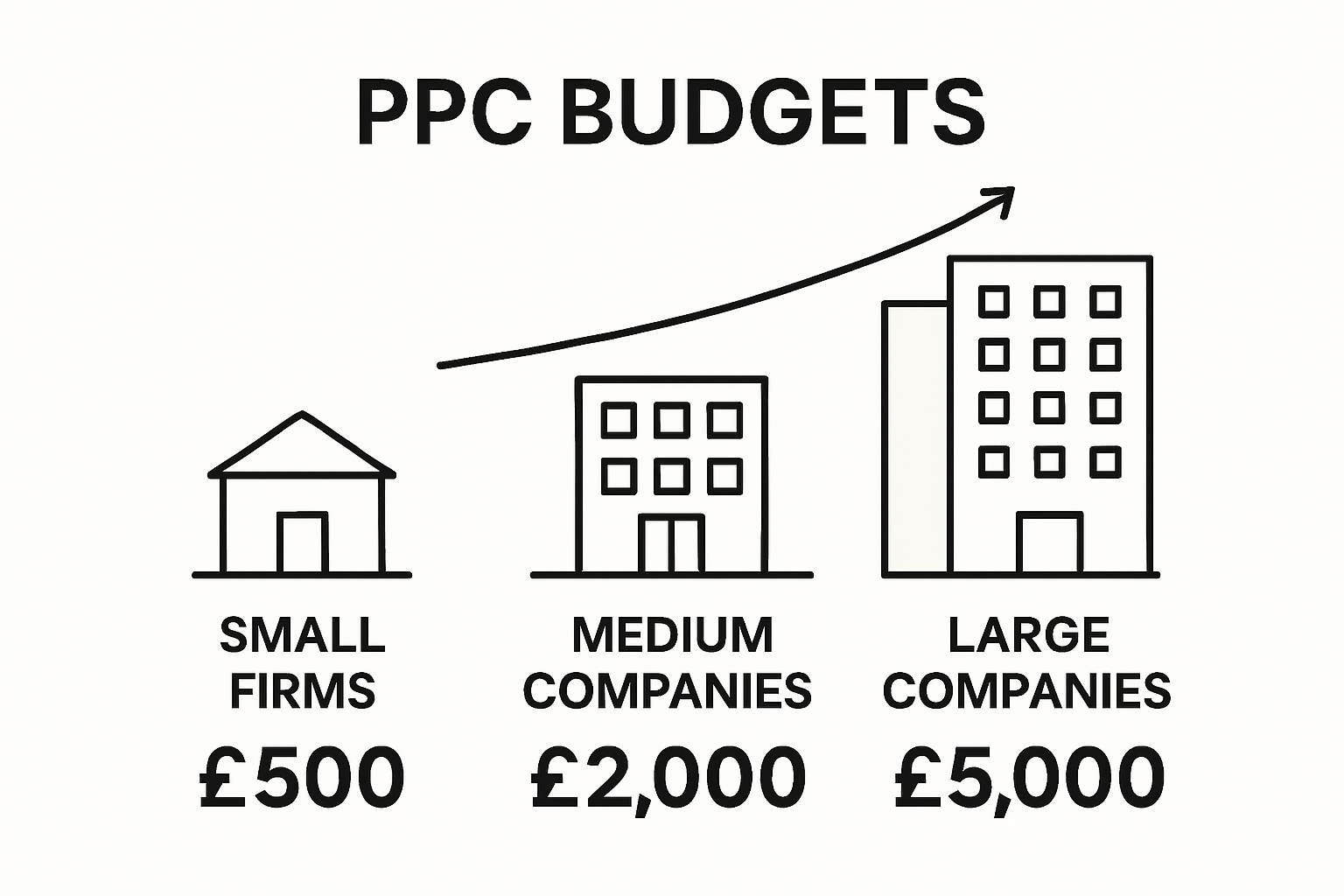
Businesses have multiple budgeting approaches for PPC advertising. Some opt for comprehensive PPC management services starting at £600 per month, which typically include strategy development, keyword research, campaign management, and detailed performance reporting. Others prefer a more hands-on approach, setting daily budgets and gradually adjusting spend based on campaign performance. Small businesses can start with modest daily budgets as low as £10 to £20, allowing for careful experimentation and incremental scaling.
Understanding the financial investment is critical for London businesses. While PPC can seem expensive, the targeted nature of these ads means businesses only pay when potential customers actively engage with their content. Sophisticated tracking tools enable precise measurement of return on ad spend, helping businesses refine their strategies and ensure every pound invested generates meaningful results.
Common PPC Pitfalls and How to Avoid Them
PPC advertising can be a minefield for inexperienced businesses, with numerous potential mistakes that can quickly drain marketing budgets. Understanding the strategic differences between marketing approaches helps businesses navigate the complexities of digital advertising more effectively.
One of the most critical pitfalls is targeting overly broad keywords that attract irrelevant traffic. London businesses must focus on specific long-tail keywords that precisely match their target audience’s search intent. This approach ensures higher quality clicks, better conversion rates, and more efficient spending. Neglecting mobile optimization represents another significant error, as an increasing number of users browse and purchase via smartphones. Ads must be designed with mobile experiences in mind, featuring responsive designs and clear, concise messaging that works seamlessly across different device sizes.
Continuous campaign analysis and refinement are essential for successful PPC strategies. Businesses should implement robust tracking mechanisms to monitor key performance indicators such as click-through rates, conversion rates, and cost per acquisition. Regular data review allows for rapid adjustments, eliminating underperforming keywords, refining ad copy, and reallocating budget towards the most effective channels. Small businesses can leverage advanced analytics tools to gain granular insights into their campaign performance, enabling more precise targeting and improved return on investment.
The final crucial consideration involves creating distinct ads for different stages of the customer journey. Generic, one-size-fits-all advertisements rarely generate significant engagement. Instead, businesses should develop targeted messaging that speaks directly to potential customers’ specific needs and pain points, whether they are in the awareness, consideration, or decision-making phase of their purchasing process.
Unlock the Full Potential of PPC Advertising for Your London Business
Navigating the complex world of PPC advertising can feel overwhelming, especially when trying to avoid costly mistakes like broad keyword targeting or inefficient budget use. If you are looking to harness precise demographic and geographic targeting alongside real-time performance tracking, specialised help is essential. Our London-based digital marketing agency understands your challenges and can tailor strategies that deliver measurable results through expert PPC Advertising on Google and Instagram.
Don’t let ineffective ads drain your budget or hold your business back. Partner with us to develop focused campaigns, optimise your spend, and create mobile-friendly ads that truly engage. Visit our website to learn how our complete solutions in Web Design and Development and SEO optimisation can help your small business grow with confidence and precision today.
Frequently Asked Questions
What is PPC advertising?
PPC advertising, or pay-per-click advertising, is a digital marketing strategy where businesses pay a fee each time their ad is clicked. This model is used to drive targeted traffic to websites effectively.
How does PPC work?
PPC works by allowing businesses to bid on specific keywords relevant to their products or services. Ads are displayed based on factors such as bid amount and ad quality when users search for those keywords.
What are the main types of PPC campaigns?
The main types of PPC campaigns include search ads, display ads, shopping ads, and video ads, primarily run on platforms like Google Ads and social media sites like Facebook and Instagram.
What are the benefits of using PPC for my business?
The benefits of PPC include immediate visibility, measurable results, precise targeting, and budget control, making it a cost-effective advertising solution for businesses of all sizes.