
Most british small businesses in London struggle to stand out online, even though over 80% of local consumers begin their search for restaurants or fitness services on the web. For owners of restaurants in Soho or personal trainers in Camden, mastering targeted advertising is the difference between lost leads and full bookings. This guide explains how strategic advertising works, why it is essential under United Kingdom regulations, and which practical options deliver real customer growth.
Table of Contents
- Advertising Defined for London Small Businesses
- Digital Advertising Types and Local Impact
- How Advertising Drives Customer Growth
- Legal Regulations for Ads in the UK
- Typical Costs and Return on Investment
- Common Advertising Mistakes to Avoid
Key Takeaways
| Point | Details |
|---|---|
| Understanding Advertising | Advertising is a strategic communication method for small businesses in London, requiring compliance with strict legal standards to effectively reach targeted audiences. |
| Digital Advertising Importance | Investing in digital advertising allows for precise targeting and tracking, offering cost-effective solutions to bolster customer engagement and retention. |
| Legal Compliance | Adhering to UK advertising laws is essential to avoid penalties; businesses should ensure honesty and transparency in their marketing practices. |
| Common Mistakes to Avoid | Small businesses should avoid misleading claims and inconsistent messaging, employing a checklist for compliance and consistent branding to optimize advertising effectiveness. |
Advertising Defined for London Small Businesses
Advertising represents a strategic communication approach where businesses promote their products or services to potential customers through various channels. For London small businesses, understanding advertising means recognising it as a targeted method of reaching specific audiences while complying with strict advertising regulatory standards.
In the United Kingdom, advertising operates under comprehensive legal frameworks designed to protect consumers and ensure business transparency. The Advertising Standards Authority (ASA) enforces critical guidelines mandating that all advertisements must be legal, honest, decent, and truthful. These regulations apply universally across London’s diverse business landscape, from restaurants in Soho to personal training studios in Camden.
Effective advertising for London small businesses involves understanding multiple communication channels – digital platforms like Google Ads and Instagram, traditional media such as local newspapers, outdoor advertising, and targeted online marketing. Each channel offers unique advantages depending on the specific business goals and target demographic. Digital advertising, in particular, provides granular targeting options allowing businesses to reach precise audience segments based on location, interests, and behaviours.
Pro tip: Allocate approximately 10-15% of your annual revenue towards advertising efforts, and consistently track your return on investment to refine your marketing strategy.
Digital Advertising Types and Local Impact
Digital advertising has revolutionised how London small businesses connect with potential customers, offering unprecedented targeting capabilities and cost-effective marketing solutions. Online advertising represents the fastest-growing advertising sector in the United Kingdom, providing small enterprises with powerful tools to reach precise audience segments.
The primary digital advertising types relevant to London small businesses include search engine marketing, social media advertising, display advertising, and email marketing. Each channel offers unique advantages: Google Ads enables businesses to appear precisely when potential customers search for specific services, while platforms like Instagram and Facebook allow hyper-targeted demographic and interest-based advertising. Local businesses can strategically place ads targeting specific London neighbourhoods, ensuring maximum relevance and engagement.
Digital advertising’s significant impact extends beyond mere visibility. Research indicates that digital adoption substantially boosts innovation and productivity for small and medium enterprises. By leveraging data-driven targeting, London businesses can optimise their marketing budgets, track performance metrics in real-time, and adjust strategies dynamically to improve customer acquisition and retention rates.
Here is a comparison of key digital advertising types for London small businesses:
| Advertising Type | Best Use Case | Typical Cost Range | Strengths |
|---|---|---|---|
| Search Engine Marketing | Attracting intent-driven buyers | £250–£1,500/month | High conversion potential |
| Social Media Advertising | Building brand and community | £5–£50/day | Precise demographic targeting |
| Display Advertising | Increasing visual brand exposure | £100–£1,000/month | Broad reach, instant visibility |
| Email Marketing | Customer retention & loyalty | £30–£100/month (tools) | Personalised nurturing |
Pro tip: Start with a modest monthly budget of £200-£500 for digital advertising, experiment with multiple platforms, and closely monitor your conversion rates to identify the most effective channels for your specific business.
How Advertising Drives Customer Growth
Advertising serves as a critical mechanism for transforming potential customer awareness into tangible business growth. Advertising investment plays a pivotal role in supporting business expansion across the United Kingdom, enabling small businesses to reach broader audiences and establish meaningful connections with potential customers.

The customer growth process through advertising involves multiple strategic dimensions. By crafting targeted messaging, businesses can attract new customers, reinforce brand recognition, and build long-term loyalty. Search engine advertisements allow businesses to appear precisely when potential customers are actively seeking specific services, while social media platforms enable hyper-targeted demographic engagement. Each advertising channel provides unique opportunities to showcase a business’s value proposition, demonstrating how their offerings solve specific customer problems or meet particular needs.
Government support plans highlight advertising’s critical role in helping small and medium enterprises scale their operations. Effective advertising strategies go beyond simple visibility, creating narratives that resonate with target audiences, building trust, and establishing credibility. For London-based businesses, this means developing nuanced marketing approaches that reflect the city’s diverse and competitive marketplace, where differentiation and precise targeting can make a substantial difference in customer acquisition and retention.
Pro tip: Develop a comprehensive customer persona before launching any advertising campaign, focusing on detailed demographic, psychographic, and behavioural characteristics to ensure your messaging resonates precisely with your ideal customer.
Legal Regulations for Ads in the UK
UK advertising laws create a comprehensive framework designed to protect consumers and ensure ethical marketing practices across all business sectors. These regulations mandate that advertisements must be transparent, honest, and fundamentally fair, establishing clear guidelines for how businesses communicate their products and services to potential customers.
The legal landscape for advertising in the United Kingdom involves multiple layers of regulatory oversight. Key legislation includes the Consumer Protection from Unfair Trading Regulations and the Business Protection from Misleading Marketing Regulations, which prohibit deceptive marketing practices. The Advertising Standards Authority (ASA) serves as the primary enforcement body, monitoring advertisements across various media platforms and ensuring compliance with established codes of practice. Specific industries such as finance, healthcare, and alcohol face additional scrutiny and more stringent advertising restrictions.
Government regulations emphasise advertising’s social responsibility, requiring businesses to maintain high ethical standards in their marketing communications. This means avoiding false claims, ensuring data protection compliance, and presenting information in a manner that is both truthful and transparent. For London-based businesses, understanding these legal nuances is crucial, as non-compliance can result in significant penalties, reputational damage, and potential legal challenges.
Pro tip: Always have a legal professional review your advertising materials before publication, ensuring complete compliance with current UK marketing regulations and minimising potential risk.
Typical Costs and Return on Investment
Advertising spending in the UK demonstrates significant economic impact, with businesses investing strategically across multiple channels to drive growth. For London small businesses, understanding advertising costs and potential returns is crucial to making informed marketing decisions. Digital advertising offers particularly attractive options, allowing precise budget control and measurable outcomes.
Advertising costs vary dramatically depending on the chosen platform and targeting strategy. Google Ads might require a monthly budget between £250-£1,500 for small businesses, with cost-per-click ranging from £1-£5 depending on industry competitiveness. Social media platforms like Facebook and Instagram offer more flexible pricing, with potential daily ad spends starting as low as £5. The key consideration is not just the absolute cost, but the potential return on investment, which can range from 200% to 500% for well-executed campaigns.
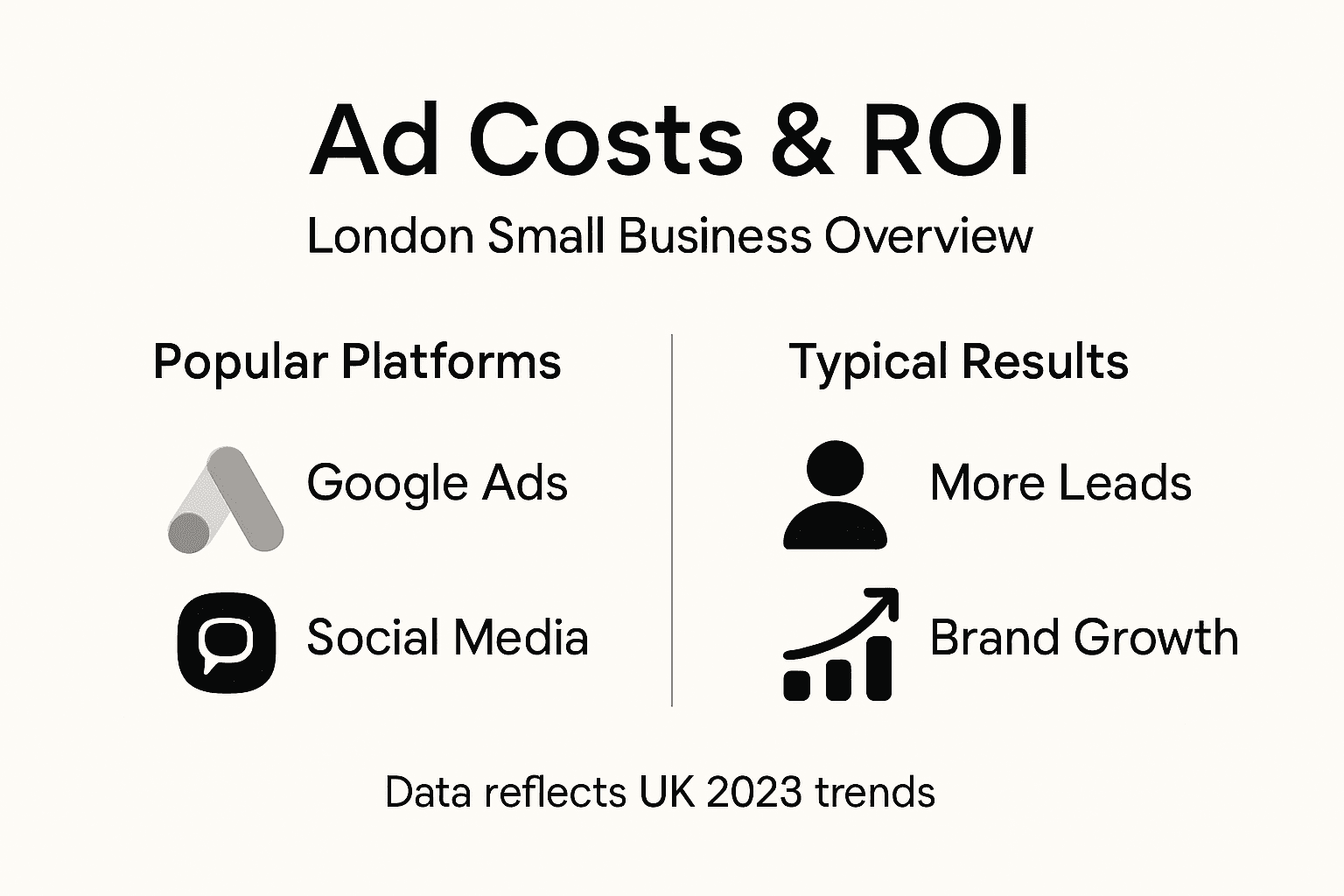
Advertising investment supports broader economic growth beyond immediate sales generation. Small businesses in London can expect not just direct revenue increases, but enhanced brand recognition, customer loyalty, and market positioning. Sophisticated tracking tools now enable businesses to measure precise campaign performance, calculating exact customer acquisition costs and lifetime value, transforming advertising from an expense to a strategic investment mechanism.
Pro tip: Start with a modest monthly advertising budget of £300-£500, allocate funds across 2-3 platforms, and dedicate at least 20% of that budget to continuous performance tracking and campaign refinement.
Common Advertising Mistakes to Avoid
Small businesses frequently encounter advertising pitfalls that can significantly undermine their marketing efforts. The most critical errors stem from a lack of strategic planning, insufficient audience understanding, and non-compliance with regulatory standards. London-based businesses must approach advertising with meticulous attention to detail and a comprehensive understanding of marketing best practices.
Key mistakes include making misleading claims, failing to clearly communicate pricing and promotional details, and neglecting proper data protection protocols. Many small businesses inadvertently create advertisements that breach Advertising Standards Authority guidelines by using ambiguous language, exaggerating product capabilities, or presenting incomplete information. Digital platforms like Google Ads and social media require specific formatting and transparency that inexperienced marketers often overlook.
Small business advertising strategies demand careful consideration of target audience research, messaging consistency, and performance tracking. Common errors such as inconsistent brand messaging, poor budget allocation, and inadequate campaign monitoring can drain financial resources and damage business reputation. Successful advertising requires a systematic approach: developing clear target audience personas, crafting precise and truthful messaging, allocating realistic budgets, and implementing robust performance measurement mechanisms.
Below is a summary of common advertising mistakes and their business consequences:
| Mistake Type | Consequence for Business | How to Prevent |
|---|---|---|
| Misleading claims | Regulatory fines, lost trust | Fact-check all statements |
| Inconsistent messaging | Brand confusion, low recall | Develop style guidelines |
| Poor budget allocation | Wasted spend, inefficiency | Regular performance review |
| Ignoring legal compliance | Penalties, campaign removal | Always consult legal advisor |
Pro tip: Develop a comprehensive advertising compliance checklist that includes legal requirements, brand messaging consistency, and performance metrics before launching any marketing campaign.
Unlock Your London Business Growth with Expert Advertising Support
Navigating the complexities of advertising while ensuring compliance and maximising return on investment can be overwhelming for London small businesses. This article highlights key challenges such as targeted digital advertising, legal regulations, and budget optimisation — critical pain points that often hold businesses back from realising their full growth potential. At Market Link Solutions we specialise in helping you overcome these obstacles by crafting tailored PPC advertising campaigns on Google and Instagram, creating compelling web designs, and enhancing your search engine presence through strategic SEO optimisation.
Our proven approach not only drives customer acquisition but also builds long-term brand trust within London’s competitive market. Discover how small businesses just like yours have transformed their advertising efforts with measurable success and compliance by exploring our Success Stories Archives – Digital Marketing Agency – Market Link Solutions.
Ready to stop wasting precious budgets and start attracting the right customers today? Visit Market Link Solutions and take the critical first step towards elevating your business through smart advertising strategies designed specifically for London’s unique marketplace. Let us help you turn advertising challenges into opportunities for lasting growth.
Frequently Asked Questions
Why is advertising important for small businesses?
Advertising is crucial for small businesses as it helps increase brand awareness, reach targeted audiences, and drive customer growth. Through effective advertising strategies, businesses can connect with potential customers, enhance their visibility, and ultimately support business expansion.
What types of digital advertising are most effective for London small businesses?
The most effective types of digital advertising for small businesses include search engine marketing, social media advertising, display advertising, and email marketing. Each has unique benefits, like precise targeting and high conversion potential, depending on the specific goals of the business.
How can small businesses measure the return on investment from advertising?
Small businesses can measure the return on investment (ROI) from advertising by tracking performance metrics such as conversion rates, customer acquisition costs, and lifetime value of customers. Using analytics tools allows for a detailed analysis of how effectively advertisements contribute to sales and growth.
What are common mistakes small businesses should avoid in advertising?
Common mistakes include making misleading claims, inconsistent messaging, poor budget allocation, and ignoring legal compliance. To prevent these pitfalls, businesses should develop a clear advertising strategy, ensure transparency, and consult legal professionals when necessary.