
Over 80 percent of british consumers now search online before making a purchase, signalling a dramatic shift in how businesses need to engage their audiences. In this digital-first world, understanding digital marketing is not just an advantage but a necessity for those hoping to stand out or grow. This guide breaks down what digital marketing truly means and uncovers how british businesses can use these strategies to connect, compete, and succeed in an ever-changing online landscape.
Table of Contents
- What Is Digital Marketing And Its Purpose
- Types Of Digital Marketing Channels
- Benefits For Small Businesses In London
- Digital Marketing Vs Traditional Marketing
- Common Mistakes To Avoid When Starting
Key Takeaways
| Point | Details |
|---|---|
| Digital Marketing Overview | Digital marketing connects businesses with customers online, providing methods for targeted communication, real-time analytics, and measurable outcomes. |
| Types of Channels | Channels include SEO, SEM, social media, email marketing, and content marketing, each offering unique opportunities for audience engagement. |
| Benefits for Small Businesses | Digital marketing offers cost-effective strategies and targeted local reach, empowering small businesses in London to compete effectively with larger competitors. |
| Common Mistakes to Avoid | Avoid pitfalls such as inconsistent branding, ignoring analytics, and poor targeting to enhance the effectiveness of digital marketing strategies. |
What Is Digital Marketing And Its Purpose
Digital marketing represents a strategic approach to connecting businesses with potential customers through online channels, transforming how organisations communicate and engage in the digital age. Emerging in the late 1990s, this innovative marketing method utilises technology to deliver personalised content across multiple digital platforms.
At its core, digital marketing encompasses a wide range of online strategies designed to reach, attract, and convert digital audiences. These strategies include search engine optimisation (SEO), pay-per-click advertising, social media marketing, email campaigns, and content marketing. Unlike traditional marketing methods, digital marketing provides real-time tracking, precise audience targeting, and measurable results that help businesses understand and improve their engagement.
The primary purpose of digital marketing is to create meaningful connections between businesses and their target audiences. By leveraging digital channels, companies can communicate their brand message, showcase their products or services, and build lasting relationships with customers. Digital marketing strategies enable businesses to reach potential customers where they spend significant time – online platforms like social media, search engines, and websites.
Key advantages of digital marketing include:
- Precise audience targeting
- Cost-effective compared to traditional advertising
- Measurable and data-driven insights
- Global reach with localised targeting
- Immediate interaction and feedback mechanisms
For small businesses in London, digital marketing offers an unprecedented opportunity to compete with larger organisations by creating strategic, intelligent online presence that attracts and retains customers through smart, targeted approaches.
Types Of Digital Marketing Channels
Digital marketing channels represent diverse online platforms and strategies businesses can leverage to reach and engage their target audiences. According to comprehensive research, these channels encompass a wide range of digital approaches designed to connect organisations with potential customers across multiple online environments.
The primary digital marketing channels can be categorised using the PESO Model, which divides media into four strategic types: Paid Media, Earned Media, Shared Media, and Owned Media. Paid media includes targeted advertising on platforms like Google Ads and social media, while earned media involves third-party publications and public relations efforts. Shared media focuses on social media engagement, and owned media encompasses company websites, blogs, and original content platforms.
Key digital marketing channels include:
- Search Engine Optimization (SEO): Improving website visibility in organic search results
- Search Engine Marketing (SEM): Paid advertising within search engine results
- Social Media Marketing: Engaging audiences through platforms like Facebook, Instagram, and LinkedIn
- Content Marketing: Creating valuable, relevant content to attract and retain customers
- Email Marketing: Direct communication through targeted email campaigns
- Influencer Marketing: Partnering with online personalities to reach specific audience segments
For small businesses in London, understanding these digital marketing channels enables strategic online presence development. Each channel offers unique opportunities to connect with potential customers, track performance, and optimise marketing investments through data-driven insights.
Benefits For Small Businesses In London
Digital marketing provides small businesses in London with transformative opportunities to compete effectively in a challenging marketplace. Research demonstrates that digital strategies offer critical pathways for attracting and winning customers through technology-driven relationships and innovative engagement techniques.

For London-based small businesses, local SEO strategies can dramatically enhance visibility and customer acquisition. These digital marketing approaches enable businesses to target specific local audiences, track marketing performance in real-time, and optimise advertising spend with unprecedented precision. Small enterprises can now compete with larger organisations by leveraging cost-effective digital channels that provide measurable results and direct customer interaction.
Key benefits of digital marketing for small London businesses include:
- Targeted Local Reach: Precision targeting of London-based customers
- Cost-Effective Marketing: Lower advertising expenses compared to traditional methods
- Measurable Results: Real-time tracking of campaign performance
- Enhanced Customer Engagement: Direct communication and relationship building
- 24/7 Online Presence: Continuous visibility beyond physical business hours
By embracing digital marketing strategies, small businesses can transform their growth potential, creating scalable marketing approaches that adapt quickly to changing market dynamics and customer preferences. The ability to reach potential customers precisely when they’re searching for services makes digital marketing an indispensable tool for London’s vibrant small business ecosystem.
Digital Marketing Vs Traditional Marketing
Digital marketing represents a revolutionary approach to connecting with audiences, fundamentally transforming how businesses communicate their message. Unlike traditional marketing, digital channels offer a wider range of tools and more personalised interactions, enabling businesses to engage customers with unprecedented precision and flexibility.
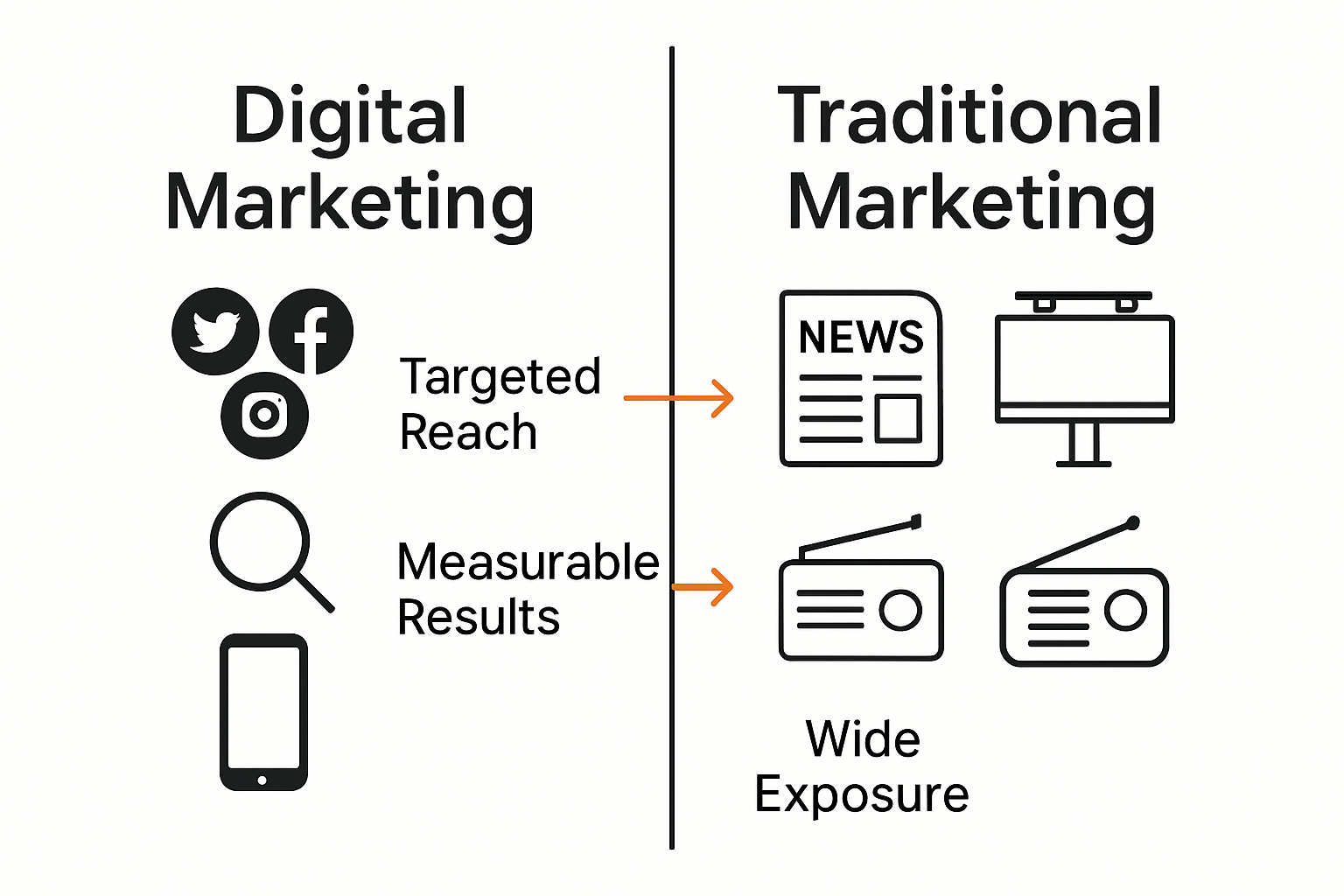
The key distinctions between digital and traditional marketing become evident when examining their core communication strategies. Traditional marketing relies on one-way communication through mediums like print advertisements, television commercials, and billboards, which provide limited audience interaction and tracking capabilities. Digital marketing, by contrast, extends beyond internet channels to include diverse digital media such as mobile phones and interactive platforms, creating multi-dimensional engagement opportunities.
Key comparative aspects include:
- Targeting: Digital marketing enables hyper-precise audience segmentation
- Cost-Effectiveness: Lower investment requirements compared to traditional advertising
- Measurability: Real-time performance tracking and analytics
- Interaction: Two-way communication and immediate customer feedback
- Reach: Global potential versus localised traditional marketing approaches
For small businesses in London, understanding the strategic differences between digital and traditional marketing can unlock transformative growth opportunities. The ability to precisely target, measure, and adapt marketing strategies makes digital approaches an essential tool for modern business success.
Common Mistakes To Avoid When Starting
Digital marketing presents numerous opportunities for small businesses, but navigating the complex landscape of online strategies can be challenging. Many businesses stumble by approaching digital marketing without a structured strategy, leading to wasted resources and missed opportunities.
Key mistakes small businesses frequently encounter include inconsistent messaging, neglecting audience research, and failing to track marketing performance. Understanding local digital marketing nuances becomes crucial for London-based enterprises seeking to establish a robust online presence. Businesses often underestimate the importance of targeted content and precise audience segmentation, which can significantly impact marketing effectiveness.
Most common digital marketing pitfalls to avoid:
- Scattered Strategy: Implementing tactics without clear objectives
- Ignoring Analytics: Failing to measure and analyse campaign performance
- Poor Targeting: Using generic messaging instead of specific audience approaches
- Inconsistent Branding: Presenting different brand voices across platforms
- Neglecting Mobile Optimisation: Not adapting content for mobile users
Successful digital marketing requires continuous learning, strategic planning, and a willingness to adapt. Small businesses must invest time in understanding digital channels, consumer behaviour, and emerging technologies to create meaningful online connections that drive genuine business growth.
Unlock Your Small Business Potential with Expert Digital Marketing
Many small businesses in London struggle to navigate the complexities of digital marketing while aiming to achieve precise audience targeting, measurable results, and cost-effective growth. If you find yourself overwhelmed by inconsistent strategies or uncertain about which channels to prioritise, you are not alone. Leveraging the right mix of web design, SEO optimisation, and PPC advertising can transform your online presence and customer engagement.
Discover how we have helped other businesses overcome these exact challenges by visiting our Success Stories Archives – Digital Marketing Agency – Market Link Solutions.
Ready to move beyond theory and see real results? At Market Link Solutions, we specialise in tailored digital marketing solutions that empower small businesses in London to compete with confidence. Whether you need a website that converts, Google and Instagram ads that deliver, or SEO strategies that attract local customers, our expert team is here to help. Visit us now and start growing your business with a trusted London-based partner.
Frequently Asked Questions
What is digital marketing?
Digital marketing refers to a strategic approach that connects businesses with potential customers through various online channels. It includes methods like SEO, social media marketing, email campaigns, and content marketing, enabling businesses to engage with audiences effectively.
What are the benefits of digital marketing for small businesses?
Digital marketing offers numerous advantages for small businesses, such as cost-effective advertising, precise audience targeting, measurable results, enhanced customer engagement, and 24/7 online presence, allowing them to compete with larger organisations.
How does digital marketing differ from traditional marketing?
Digital marketing provides two-way communication and hyper-targeted audience segmentation, while traditional marketing typically relies on one-way communication through media such as print or television. Additionally, digital marketing allows for real-time performance tracking and adaptability to changing consumer behaviours.
What common mistakes should businesses avoid in digital marketing?
Businesses often stumble by implementing scattered strategies, ignoring analytics, using poor targeting approaches, presenting inconsistent branding, and neglecting mobile optimisation. Avoiding these pitfalls can enhance the effectiveness of digital marketing efforts.
Recommended
- What Is Digital Marketing? Complete Guide for London SMEs – Digital Marketing Agency – Market Link Solutions
- Why Invest in Digital Marketing: Complete Guide
- Why Your Business Needs a Digital Marketing Agency: A Comprehensive Guide – Digital Marketing Agency – Market Link Solutions
- Complete Guide to the Role of Digital Agencies
- Comprendre le rôle de la vidéo dans le marketing digital