
Over 80 percent of British consumers now discover local services online within seconds. For small business owners in London, especially those running restaurants or aesthetics clinics, this means paid advertising is no longer a luxury but a necessity. Standing out in a crowded market requires strategies that deliver real customer growth and measurable results. This guide reveals actionable insights that help British businesses maximise every pound spent and reach their ideal audience efficiently.
Table of Contents
- Paid Advertising Explained For Small Businesses
- Main Types Of Paid Ads In The UK
- How Paid Ads Target Local Audiences
- Real-World Benefits For Restaurants And Clinics
- Comparing Paid Versus Organic Growth
- Common Mistakes And How To Avoid Them
Key Takeaways
| Point | Details |
|---|---|
| Paid Advertising Offers Quick Results | Unlike organic methods, paid advertising enables small businesses to gain immediate visibility and effectively target their desired audience. |
| Multiple Platforms Available | Small businesses can utilise various platforms such as Google Ads and social media to maximise reach and engagement. |
| Data-Driven Strategy is Essential | Monitoring performance metrics and adjusting campaigns based on data will enhance return on investment and minimise waste. |
| Avoid Common Pitfalls | Ensuring clear messaging and proper audience targeting can significantly improve the effectiveness of advertising efforts. |
Paid Advertising Explained for Small Businesses
Paid advertising represents a strategic digital marketing approach that enables small businesses to rapidly increase their online visibility and attract potential customers. Unlike organic marketing methods that can take months to generate results, paid advertising offers precise targeting capabilities that help businesses reach their ideal audience quickly and efficiently.
Small businesses can leverage paid advertisements across multiple digital platforms, including Google Ads, Instagram, Facebook, and LinkedIn. These platforms provide robust targeting options that allow business owners to specify demographics, interests, geographical locations, and even browsing behaviours. By investing in paid ads, local restaurants and aesthetic clinics in London can showcase their services directly to potential customers who are most likely to convert.
The key advantages of paid advertising include immediate visibility, measurable results, and flexible budgeting. Businesses can start with modest daily spending and progressively scale their investment as they observe positive outcomes. Advertising standards in the UK ensure that online advertisements remain transparent and trustworthy, providing additional confidence for small business owners who might be hesitant about digital marketing.
Pro tip: Begin with small, targeted campaigns and closely monitor your return on investment, adjusting your strategy based on real performance data rather than assumptions.
Main Types of Paid Ads in the UK
Paid advertising in the United Kingdom encompasses several strategic digital marketing approaches designed to help businesses reach their target audience effectively. UK businesses have multiple paid advertising formats at their disposal, each offering unique advantages for local entrepreneurs looking to boost their online presence.
The primary types of paid advertisements include:
-
Pay-Per-Click (PPC) Ads: These search engine advertisements appear when users query specific keywords, charging businesses only when someone clicks on their advert. Platforms like Google Ads and Bing Ads are particularly popular among London-based small businesses seeking immediate visibility.
-
Social Media Advertisements: Platforms such as Facebook, Instagram, and LinkedIn offer highly granular targeting options, allowing businesses to reach potential customers based on demographics, interests, and precise geographical locations. These ads are especially effective for local restaurants and aesthetic clinics wanting to connect with their immediate community.
-
Display and Banner Advertisements: Visual ads that appear across websites and mobile applications, providing brand exposure and retargeting opportunities for businesses looking to maintain consistent market presence.
-
Video Advertisements: Engaging video content distributed across platforms like YouTube and social media channels, offering dynamic storytelling opportunities for businesses to showcase their services.
Advertising expenditure data demonstrates that digital paid advertising continues to dominate the UK marketing landscape, with businesses increasingly allocating budgets towards these targeted, measurable marketing strategies. The flexibility and precise targeting capabilities make paid advertisements an attractive option for small businesses seeking cost-effective marketing solutions.
Here is a concise comparison of the main paid advertising platforms for small UK businesses:
| Platform | Ideal Use Case | Targeting Strengths | Budget Flexibility |
|---|---|---|---|
| Google Ads | Search-driven purchases | Keyword, location, device | Highly customisable |
| Facebook/Instagram | Brand awareness, engagement | Demographics, interests, behaviours | Low starting threshold |
| B2B and professional services | Industry, job title, company size | Scalable by objective | |
| Display Networks | Broad brand visibility | Contextual, retargeting | Wide budget range |
Pro tip: Start with a modest budget across one or two advertising platforms, carefully tracking performance metrics to understand which channels deliver the most meaningful results for your specific business.
How Paid Ads Target Local Audiences
Location-based digital advertising offers sophisticated targeting mechanisms that revolutionise how small businesses connect with potential customers in their immediate geographic area. These advanced targeting strategies enable local enterprises like restaurants and aesthetic clinics to reach precisely the right audience at the right moment.
The targeting capabilities of paid advertisements encompass multiple sophisticated dimensions:
-
Geographical Precision: Advertisers can target users within specific postcodes, neighbourhoods, or radius ranges around a business location.
-
Demographic Segmentation: Platforms allow filtering audiences by age, income level, occupation, and other relevant characteristics specific to local market needs.
-
Behavioural Targeting: Digital platforms track user interests, previous interactions, and online behaviours to deliver ads to individuals most likely to engage with a local business.
-
Purchase Intent Signals: Advanced algorithms analyse user search history and interaction patterns to identify potential customers actively seeking specific local services.
Local audience targeting strategies support economic development by addressing accessibility challenges and helping small businesses effectively communicate their unique value proposition. By understanding and leveraging these granular targeting options, London-based entrepreneurs can create highly efficient marketing campaigns that minimise wasted advertising spend and maximise potential customer engagement.

Pro tip: Regularly update your audience targeting parameters based on performance data, experimenting with different demographic and behavioural combinations to discover your most responsive customer segments.
Real-World Benefits for Restaurants and Clinics
Local businesses in the United Kingdom can transform their marketing strategies through targeted paid advertising, creating powerful opportunities for growth and community engagement. Restaurants and aesthetic clinics in London can leverage these digital marketing tools to reach potential customers more effectively than traditional marketing methods.
The specific benefits for local businesses include:
-
Increased Visibility: Paid advertisements instantly boost online presence, helping restaurants and clinics stand out in competitive local markets.
-
Precise Customer Targeting: Advanced targeting options allow businesses to reach ideal customers based on location, demographics, and specific interests.
-
Measurable Marketing Results: Digital platforms provide detailed analytics, enabling businesses to track the performance of their advertising spend in real-time.
-
Cost-Effective Marketing: Businesses can start with small budgets and scale their advertising efforts as they see positive returns.
Multi-channel advertising campaigns have demonstrated significant potential for driving business growth, particularly for local service providers like restaurants and aesthetic clinics. By integrating social media, search, and targeted video advertisements, these businesses can create compelling marketing strategies that directly translate into increased foot traffic and customer engagement.
Pro tip: Develop a consistent brand message across all advertising platforms, ensuring your visual identity and core value proposition remain clear and recognisable to potential local customers.
Comparing Paid versus Organic Growth
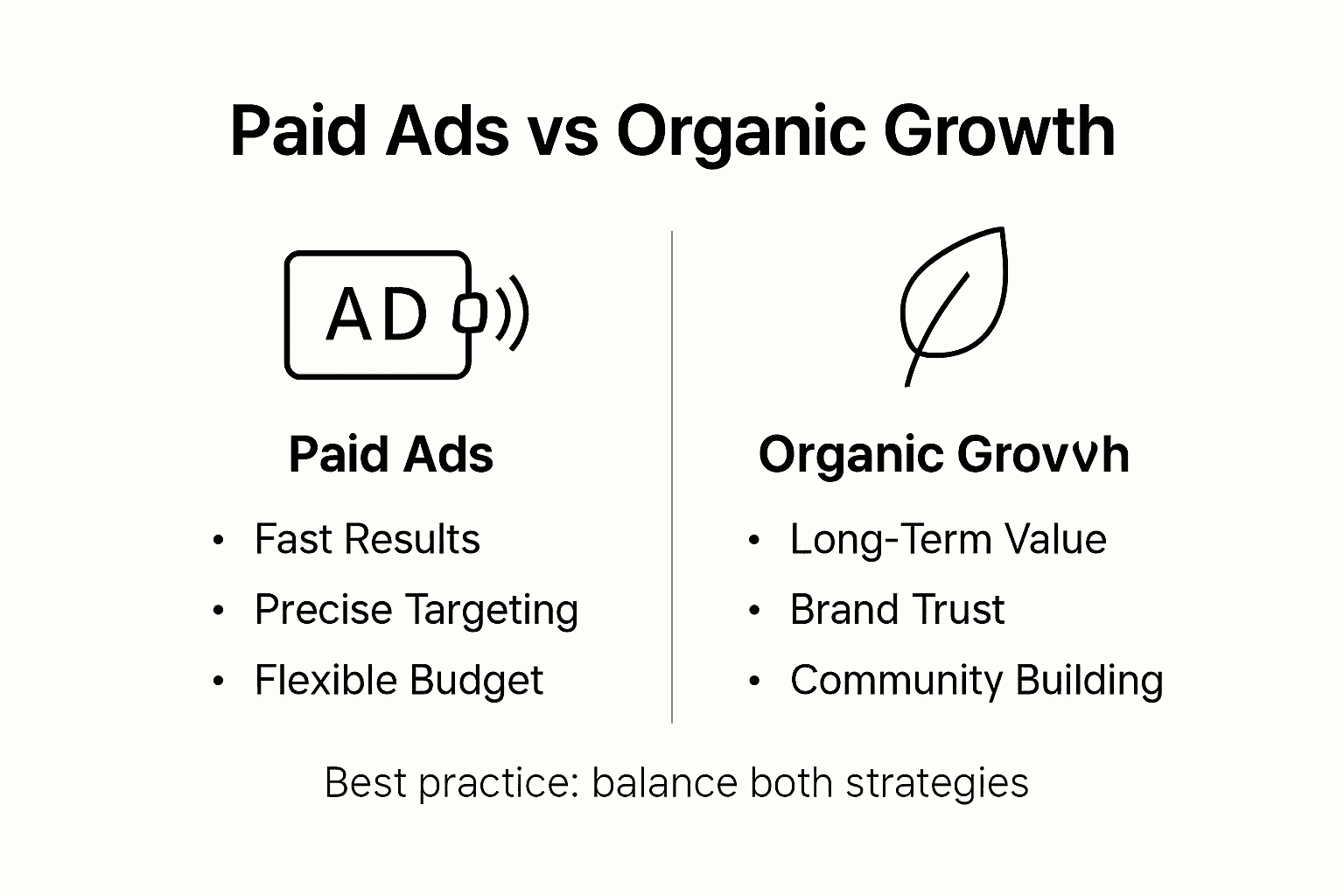
Small businesses in the UK can strategically leverage both paid and organic growth strategies to maximise their digital marketing potential, understanding the unique strengths and limitations of each approach. While organic growth represents a long-term, sustainable approach to building online presence, paid advertising offers immediate visibility and targeted reach.
Key differences between paid and organic growth strategies include:
-
Speed of Results:
- Paid Advertising: Generates immediate visibility and potential customer engagement
- Organic Growth: Requires months of consistent effort to achieve meaningful results
-
Cost Structure:
- Paid Advertising: Direct financial investment with immediate but temporary visibility
- Organic Growth: Requires time investment and consistent content creation with lasting impact
-
Targeting Capabilities:
- Paid Advertising: Precise audience targeting based on demographics, interests, and behaviours
- Organic Growth: Broader, less controlled audience reach
-
Long-Term Sustainability:
- Paid Advertising: Continuous investment needed to maintain visibility
- Organic Growth: Builds cumulative authority and credibility over time
The most effective digital marketing approach for London-based small businesses often involves a balanced combination of both strategies. Restaurants and aesthetic clinics can use paid ads to generate immediate traffic while simultaneously developing robust organic content that establishes long-term credibility and search engine rankings.
Pro tip: Allocate approximately 70% of your marketing efforts to organic growth and 30% to paid advertising to create a sustainable and dynamic digital marketing ecosystem.
Common Mistakes and How to Avoid Them
Small businesses frequently encounter critical errors in their paid advertising strategies that can significantly undermine their marketing efforts and potentially damage their brand reputation. Understanding and proactively addressing these common pitfalls is essential for restaurants, aesthetic clinics, and other local businesses seeking to maximise their digital marketing investments.
The most prevalent mistakes in paid advertising include:
-
Vague or Misleading Ad Content:
- Avoid exaggerated claims
- Ensure all statements are factually verifiable
- Provide clear, transparent information about services and pricing
-
Poor Targeting Strategies:
- Failing to define precise audience demographics
- Not utilising platform-specific targeting tools
- Ignoring customer behaviour and interests
-
Inadequate Budget Management:
- Setting unrealistic advertising budgets
- Not tracking return on investment (ROI)
- Failing to adjust spending based on campaign performance
-
Neglecting Compliance and Regulations:
- Overlooking advertising standards
- Not understanding platform-specific advertising rules
- Risking potential penalties from regulatory bodies
Successful paid advertising requires continuous monitoring and strategic adjustments to ensure campaigns remain effective and compliant. Local businesses must approach digital marketing as an evolving process, consistently refining their strategies based on performance data and audience feedback.
The table below summarises common paid advertising mistakes and their business consequences:
| Mistake Type | Typical Example | Potential Impact on Business |
|---|---|---|
| Vague Ad Content | Unverified claims | Loss of trust; regulatory penalties |
| Poor Targeting | Broad or irrelevant audience | Wasted spend; low engagement |
| Weak Budget Control | Not tracking ROI | Overspending; weak profitability |
| Ignoring Compliance | Overlooking ad regulations | Service suspension; damaged reputation |
Pro tip: Allocate time weekly to review your advertising metrics, comparing actual performance against initial objectives and making data-driven refinements to your targeting and messaging.
Unlock Your Local Business Potential with Targeted Paid Advertising
The challenge many London small businesses face is standing out in a crowded market while managing limited marketing budgets. This article highlights key pain points such as the need for precise audience targeting, measurable results, and immediate visibility through paid ads. At Market Link Solutions, we understand how important it is to attract the right customers efficiently using terms like PPC Advertising and local audience targeting that you’ve just explored.
Why struggle alone when expert help is at hand Dive into our Success Stories Archives – Digital Marketing Agency – Market Link Solutions to see how we have transformed local restaurants and aesthetic clinics with customised paid campaigns and SEO optimisation.
Take advantage of our London-based expertise in Web Design and Development alongside PPC Advertising on Google and Instagram to create high-impact ads that drive results now. Visit https://market-link.co.uk today and connect with a team ready to boost your local business success with strategies perfectly aligned to your goals.
Frequently Asked Questions
What are the main benefits of using paid advertising for local businesses?
Paid advertising offers immediate visibility, precise targeting, measurable results, and flexible budgeting, making it an efficient marketing strategy for local businesses to attract potential customers quickly.
How does paid advertising differ from organic marketing strategies?
Paid advertising provides immediate results and targeted reach, while organic marketing takes longer to build credibility and authority. A balanced approach using both strategies can maximise overall marketing effectiveness.
What types of paid ads are most effective for local businesses?
Pay-Per-Click (PPC) ads, social media advertisements, display ads, and video advertisements are all effective types of paid ads for local businesses, each offering unique targeting and engagement opportunities.
How can local businesses ensure their paid ads are effectively targeted?
Local businesses should utilise geographical precision, demographic segmentation, and behavioural targeting techniques to reach the right audience. Regularly updating targeting parameters based on performance data can further enhance ad effectiveness.
Recommended
- 7 Key Advantages of PPC Ads for London Small Businesses
- Why Invest in PPC: Local Impact for London SMEs
- Google Ads & Instagram Ads Management – High-ROI Paid Advertising – Digital Marketing Agency – Market Link Solutions
- Why Use Google Ads for London Small Businesses
- TRADE BOOSTER Digital Indicator Version 4.0 | FxShop24 Marketplace